
What Small Manufacturers Need to Know Before Starting Product Certification
In today’s competitive and compliance-driven marketplace, product quality and safety are non-negotiable. Customers expect reliable products, regulators demand adherence to standards, and businesses must demonstrate conformity to build trust. For small manufacturers, this often means pursuing product certification — a structured process that verifies products meet defined regulatory and quality requirements.
While certification can open doors to new markets and strengthen brand credibility, many small manufacturers find the process complex and resource-intensive. Understanding the essentials before starting can save time, reduce costs, and improve success rates. Leveraging Product certification services in india helps manufacturers navigate technical requirements, testing procedures, and documentation with confidence.
This article explores what small manufacturers need to know before starting product certification, including benefits, challenges, steps, and best practices for successful compliance.
Understanding Product Certification
Product certification is a formal process that verifies whether a product complies with applicable standards, regulations, and safety requirements. Certification may be mandatory or voluntary depending on product category, industry, and target market.
For small manufacturers, certification demonstrates that products are safe, reliable, and fit for purpose. It also enhances credibility with customers, distributors, and regulatory authorities.
By working with Product certification services in india, manufacturers can ensure alignment with national and international compliance frameworks.
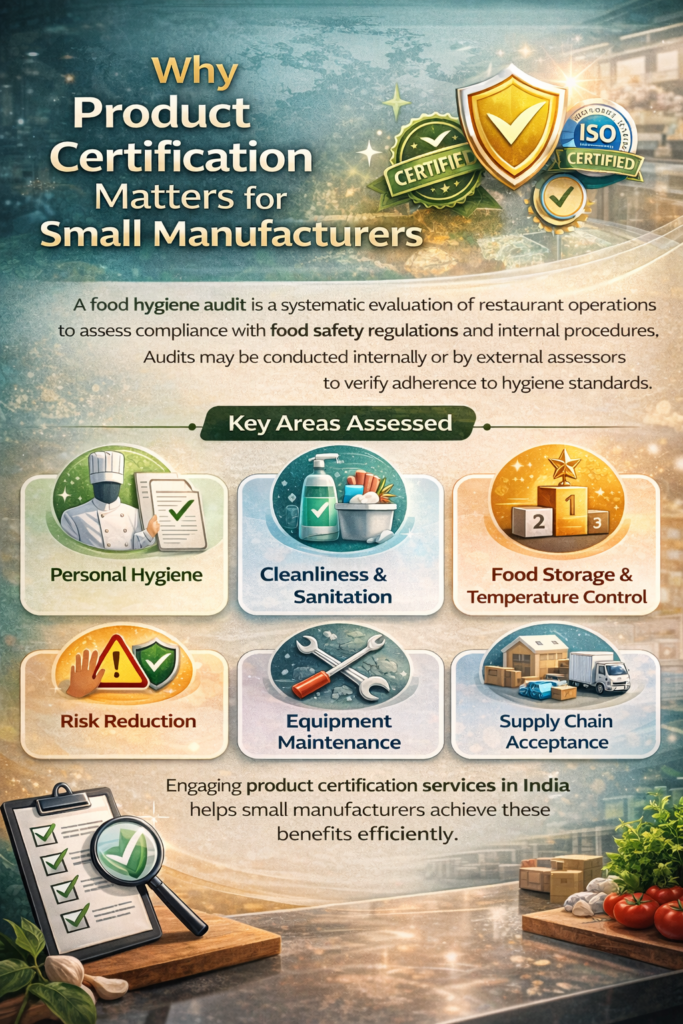
Why Product Certification Matters for Small Manufacturers
Market Access
Many markets require certified products before they can be sold. Certification ensures compliance with regulatory standards, enabling manufacturers to expand their reach.
Customer Trust and Brand Reputation
Certification signals quality assurance, increasing customer confidence and loyalty.
Competitive Advantage
Certified products often stand out in crowded markets, giving small manufacturers an edge over uncertified competitors.
Risk Reduction
Compliance with standards reduces the risk of recalls, penalties, and legal issues.
Supply Chain Acceptance
Retailers and distributors frequently prefer certified products to minimize risk and maintain quality standards.
Engaging Product certification services in india helps small manufacturers achieve these benefits efficiently.
Types of Product Certification
Small manufacturers may encounter different certification types depending on their industry.
Mandatory Certification
Certain products must comply with government regulations before market entry. Examples include electrical equipment, medical devices, and food products.
Voluntary Certification
Manufacturers may pursue voluntary certifications to demonstrate superior quality or sustainability practices.
International Certification
For export markets, international certifications may be required to meet destination country regulations.
Understanding applicable certification categories is a crucial first step in the process.
Key Challenges Small Manufacturers Face
Limited Resources
Small manufacturers often operate with constrained budgets and limited technical expertise, making certification challenging.
Complex Documentation
Certification requires extensive documentation, including technical specifications, test reports, and quality procedures.
Understanding Regulatory Requirements
Navigating multiple standards and regulatory frameworks can be confusing without professional guidance.
Testing and Compliance Costs
Product testing and process adjustments may require investment in equipment and process improvements.
Time Constraints
Certification timelines can affect product launch schedules.
Working with Product certification services in india helps address these challenges by providing structured support and expert guidance.
Steps to Prepare for Product Certification
1. Identify Applicable Standards
Manufacturers must determine which standards apply to their products based on industry, target market, and regulatory requirements.
2. Conduct a Gap Analysis
A gap analysis compares current product design and processes with certification requirements. This helps identify areas needing improvement.
3. Prepare Technical Documentation
Documentation may include:
- Product specifications
- Design drawings
- Bill of materials
- Risk assessments
- Quality control procedures
Accurate documentation is essential for certification success.
4. Product Testing and Evaluation
Testing verifies compliance with performance, safety, and quality standards. This step ensures the product meets certification criteria.
5. Implement Corrective Actions
If testing reveals nonconformities, manufacturers must implement improvements and retest products.
6. Certification Application and Audit
Once compliance is achieved, manufacturers submit applications and undergo audits or inspections.
Product certification services in india support manufacturers through each stage, ensuring smooth progression.
Importance of Quality Management Systems
A strong quality management system supports product certification by ensuring consistent production and process control. Many certification schemes require evidence of quality management practices.
Implementing structured quality processes helps small manufacturers:
- Maintain product consistency
- Reduce defects and rework
- Improve traceability
- Demonstrate compliance during audits
Quality systems complement certification efforts and enhance long-term operational efficiency.
Documentation Requirements for Certification
Documentation plays a central role in product certification. Key documents include:
- Product design and specifications
- Test reports and compliance evidence
- Manufacturing process descriptions
- Quality control records
- User manuals and labeling information
Maintaining organized documentation simplifies audits and ensures transparency.
Role of Testing Laboratories
Testing laboratories evaluate products against defined standards. Test results provide objective evidence of compliance and are often mandatory for certification.
Manufacturers should ensure that testing methods align with certification requirements to avoid delays or rejections.
Benefits of Professional Certification Support
Small manufacturers often benefit from professional guidance during certification.
Technical Expertise
Experts interpret standards and provide clarity on compliance requirements.
Process Efficiency
Professional support reduces delays and improves documentation accuracy.
Risk Mitigation
Early identification of gaps prevents costly rework.
Faster Certification
Structured guidance accelerates the certification process.
Product certification services in india provide valuable expertise that enhances success rates.
Preparing for Certification Audits
Audits assess whether products and processes meet certification requirements. Manufacturers should prepare by:
- Reviewing documentation
- Conducting internal audits
- Training employees on compliance procedures
- Ensuring production consistency
Preparation minimizes audit findings and supports successful certification outcomes.
Certification and Market Expansion
Certification is often a gateway to new markets. Export-oriented manufacturers must meet international regulatory requirements to access global customers.
Certified products demonstrate credibility and compliance, facilitating smoother entry into foreign markets.
Maintaining Certification
Certification is not a one-time achievement. Manufacturers must maintain compliance through periodic surveillance audits and ongoing quality control.
Continuous monitoring ensures sustained product performance and regulatory adherence.
Best Practices for Small Manufacturers
Start Early
Begin certification planning during product design to avoid costly modifications later.
Invest in Training
Educating employees on quality and compliance improves process effectiveness.
Maintain Accurate Records
Well-organized documentation supports audit readiness and transparency.
Collaborate with Experts
Professional guidance simplifies complex certification requirements.
Focus on Continuous Improvement
Regular reviews and updates enhance product quality and compliance.
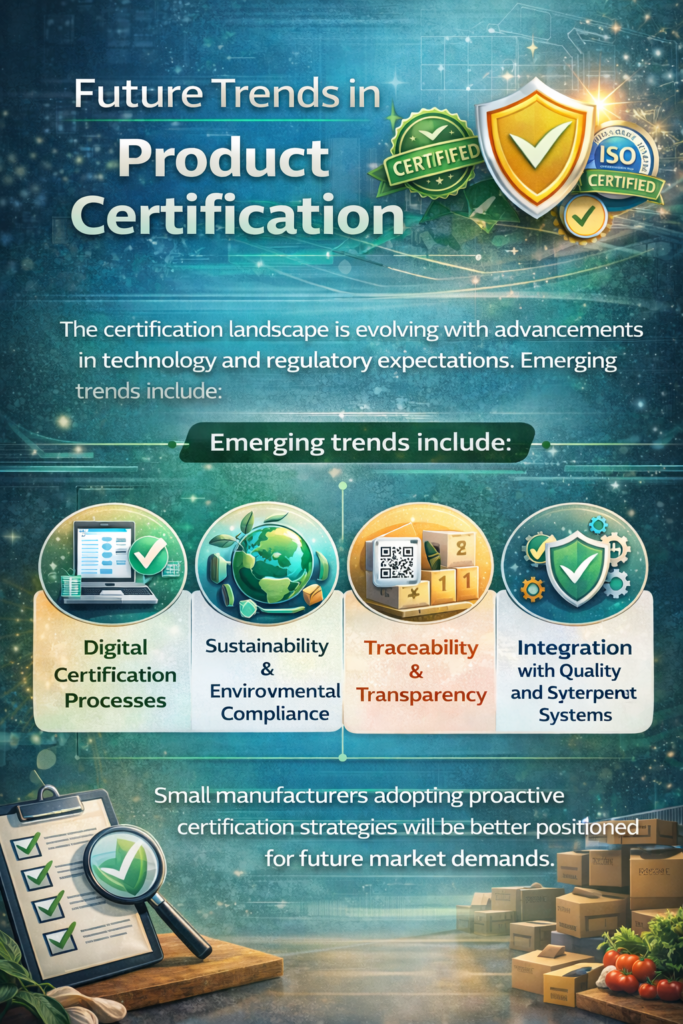
Future Trends in Product Certification
The certification landscape is evolving with advancements in technology and regulatory expectations.
Emerging trends include:
- Digital certification processes
- Increased focus on sustainability and environmental compliance
- Greater emphasis on traceability and transparency
- Integration with quality and safety management systems
Small manufacturers adopting proactive certification strategies will be better positioned for future market demands.
Final Thoughts
Product certification plays a vital role in helping small manufacturers establish credibility, comply with regulatory standards, and expand into competitive markets. By partnering with Product certification services in india, businesses gain structured guidance to understand complex standards and technical requirements.
Professional Product certification services in india support manufacturers in preparing documentation, coordinating product testing, and ensuring audit readiness, which reduces delays and improves certification success rates.
For small manufacturers, working with Product certification services in india simplifies the certification journey by identifying gaps early and implementing corrective actions effectively. Reliable Product certification services in india also help maintain compliance through periodic reviews and continuous improvement initiatives. As markets become more quality-focused, engaging Product certification services in india enables manufacturers to demonstrate reliability and build stronger customer confidence.
Additionally, expert Product certification services in india assist businesses in aligning production processes with evolving regulatory expectations, supporting sustainable growth and export readiness. By leveraging trusted Product certification services in india, manufacturers can transform certification from a compliance requirement into a strategic advantage.
Ultimately, integrating Product certification services in india into business operations enhances product quality, strengthens brand reputation, and ensures long-term success in today’s highly regulated manufacturing landscape.