
ISO 14001 Certification Cost in India: Key Factors Every Business Should Know
Environmental responsibility has become an essential part of modern business strategy. Organizations of all sizes are expected to reduce their environmental impact, comply with applicable regulations, and demonstrate sustainable practices to customers and stakeholders. As a result, many businesses are exploring ISO 14001 certification to strengthen their environmental management systems.
One of the most common questions raised during this journey relates to the iso 14001 certification price. While businesses naturally want to understand the financial aspects of certification, it is equally important to recognize that the overall investment depends on several operational and organizational factors rather than a single fixed amount.
This guide explains the major elements that can influence the iso 14001 certification price and why organizations should focus on long-term value instead of short-term costs.
Understanding ISO 14001
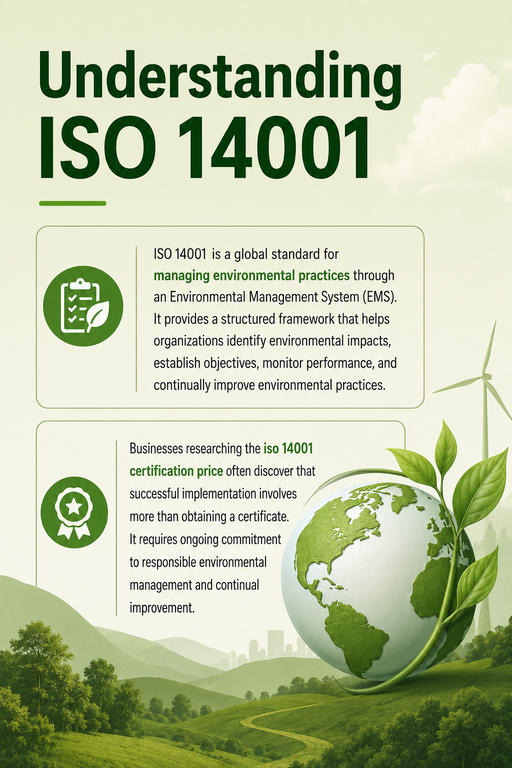
ISO 14001 is a global standard for managing environmental practices through an Environmental Management System (EMS). It provides a structured framework that helps organizations identify environmental impacts, establish objectives, monitor performance, and continually improve environmental practices.
Businesses researching the iso 14001 certification price often discover that successful implementation involves more than obtaining a certificate. It requires ongoing commitment to responsible environmental management and continual improvement.
Why Businesses Pursue ISO 14001
Organizations adopt ISO 14001 for many reasons, including improving operational efficiency, supporting sustainability initiatives, strengthening compliance efforts, and enhancing stakeholder confidence.
Potential benefits include:
- Better environmental performance
- Improved resource management
- Reduced operational waste
- Enhanced organizational reputation
- Stronger risk management
- Greater regulatory preparedness
These long-term advantages often outweigh initial considerations surrounding the iso 14001 certification price.
Organization Size
One of the most significant factors affecting certification planning is the size of the organization.
Larger businesses generally operate across multiple departments, facilities, or locations, requiring broader environmental assessments and more extensive management systems. Smaller organizations may have fewer operational complexities but still require structured documentation and effective controls.
As organizational scale increases, the effort associated with meeting environmental management expectations may also increase.
Scope of Operations
The certification scope defines which activities, products, services, or locations are included within the Environmental Management System.
A narrow scope covering limited operations may require fewer resources than a comprehensive scope encompassing multiple facilities or business units.
Businesses evaluating the iso 14001 certification price should clearly define their intended certification boundaries early in the planning process.
Operational Complexity
Organizations with straightforward operational processes may find implementation relatively manageable.
However, businesses involving manufacturing, logistics, chemical handling, extensive supply chains, or environmentally sensitive activities often require more detailed environmental planning, monitoring, and risk evaluation.
Operational complexity can therefore influence preparation efforts and ongoing management responsibilities.
Existing Environmental Management Practices
Organizations that already maintain structured environmental procedures often have a stronger foundation for ISO 14001 implementation.
Existing documentation, monitoring systems, employee awareness initiatives, and internal review processes may reduce the effort required to establish a compliant Environmental Management System.
Conversely, businesses beginning from scratch may need additional planning before certification readiness is achieved.
Documentation Requirements
Documentation forms an important part of effective environmental management.
Typical documented information may include:
- Environmental policies
- Objectives and targets
- Operational procedures
- Monitoring records
- Compliance evaluations
- Internal review findings
- Corrective actions
- Management reviews
Preparing and maintaining these records contributes to successful implementation and continual improvement.
Employee Awareness and Participation
Employees influence environmental performance through their daily activities.
Organizations often invest in awareness initiatives that encourage responsible practices, improve understanding of environmental objectives, and reinforce operational consistency.
Engaged employees help organizations maintain Environmental Management Systems effectively over the long term.
Internal Audits and Reviews
Regular internal evaluations support continual improvement by identifying strengths, weaknesses, and opportunities for enhancement.
Internal audits help verify whether documented procedures are functioning effectively while encouraging proactive problem-solving before external assessments occur.
Businesses considering the iso 14001 certification price should also account for the importance of ongoing monitoring rather than focusing solely on initial certification activities.
Leadership Commitment
Successful environmental management depends heavily on leadership involvement.
Senior management establishes policies, allocates resources, defines objectives, and supports continual improvement initiatives throughout the organization.
Visible leadership commitment promotes accountability and encourages environmental responsibility across all operational levels.
Risk-Based Environmental Planning
ISO 14001 emphasizes identifying environmental aspects, evaluating associated impacts, and implementing controls that reduce potential risks.
Organizations assess factors such as:
- Resource consumption
- Waste generation
- Emissions
- Energy use
- Water utilization
- Operational activities
- Emergency preparedness
This structured planning strengthens resilience while supporting sustainable business operations.
Continual Improvement
One of ISO 14001’s defining principles is continual improvement.
Rather than treating certification as a one-time achievement, organizations regularly evaluate performance, review objectives, investigate issues, and implement corrective actions that strengthen environmental outcomes.
Businesses focusing solely on the iso 14001 certification price may overlook the lasting operational value generated through continuous enhancement.
Multi-Site Operations
Organizations operating across multiple locations often require coordinated management systems that ensure consistent environmental practices throughout the business.
Additional facilities may involve expanded documentation, monitoring activities, internal reviews, and communication processes to maintain effective system implementation.
Planning for multi-site consistency supports long-term operational efficiency.
Regulatory Considerations
Environmental regulations evolve over time and vary across industries.
Organizations implementing structured management systems often find themselves better prepared to identify applicable obligations, monitor compliance, and adapt to changing legal expectations.
This proactive approach contributes to reduced operational uncertainty and stronger governance.
Data Collection and Performance Measurement
Reliable data enables organizations to monitor environmental objectives and identify opportunities for improvement.
Useful measurements may include:
- Energy consumption
- Resource utilization
- Waste generation
- Recycling performance
- Emissions monitoring
- Water usage trends
Evidence-based decision-making supports continual improvement while strengthening environmental accountability.
Benefits Beyond Compliance
Environmental management extends beyond meeting regulatory obligations.
Organizations implementing structured systems often experience broader advantages such as improved efficiency, stronger stakeholder trust, enhanced operational visibility, and increased employee engagement.
Understanding these benefits helps place the iso 14001 certification price within the broader context of organizational value creation.
Long-Term Return on Investment
Although businesses frequently inquire about certification costs, long-term performance improvements often provide greater strategic value.
Reduced waste, optimized resource utilization, stronger environmental governance, improved reputation, and better operational consistency can contribute positively to sustainable growth.
Viewing certification as an investment rather than an expense encourages more informed business planning.
Choosing the Right Perspective
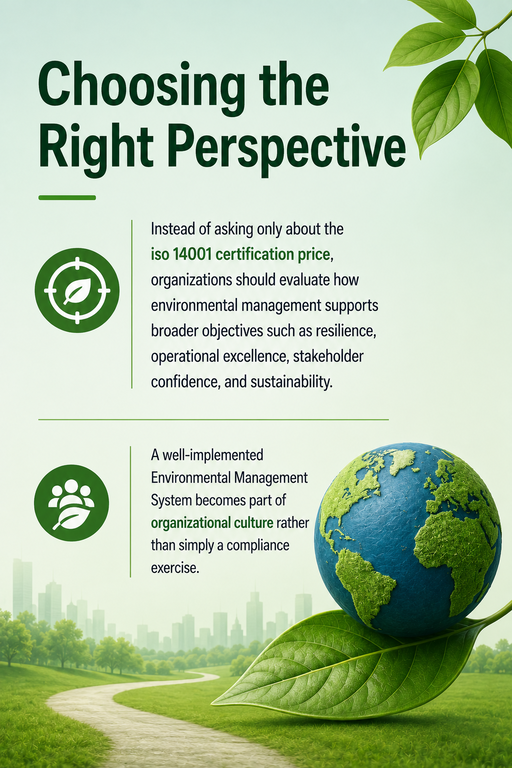
Instead of asking only about the iso 14001 certification price, organizations should evaluate how environmental management supports broader objectives such as resilience, operational excellence, stakeholder confidence, and sustainability.
A well-implemented Environmental Management System becomes part of organizational culture rather than simply a compliance exercise.
Conclusion
When evaluating the iso 14001 certification price, businesses should consider much more than the initial investment involved in the certification process. The overall value of an Environmental Management System lies in its ability to improve operational efficiency, strengthen environmental responsibility, and support long-term sustainability goals. Factors such as organizational size, operational complexity, documentation requirements, employee involvement, leadership commitment, and continual monitoring all influence the journey toward certification and should be viewed as part of a strategic improvement plan rather than a one-time expense.
Focusing only on the iso 14001 certification price can cause organizations to overlook the broader advantages that an effective environmental management system offers. Businesses that invest time and resources into proper planning, performance evaluation, and continuous improvement often experience better resource utilization, enhanced compliance readiness, and stronger stakeholder trust. These long-term benefits can contribute significantly to organizational resilience and responsible business growth.
In addition, understanding the iso 14001 certification price in the context of sustainability initiatives helps organizations make informed decisions that align with future environmental expectations. A structured approach to managing environmental impacts not only supports regulatory preparedness but also encourages a culture of accountability and efficiency across all levels of the organization.
Ultimately, the iso 14001 certification price should be viewed as part of a broader commitment to environmental excellence and continuous improvement.