
The Difference Between Having ISO Documents and Actually Operating an ISO 9001 System
Many organizations assume that preparing policies, procedures, forms, and records is enough to achieve ISO 9001 certification. While documented information is an important part of a quality management system, documents alone do not demonstrate that the system is actually working.
ISO 9001 is designed around how an organization manages its processes, meets customer requirements, evaluates performance, and continually improves. An organization may have a large collection of documents and still struggle to demonstrate effective implementation.
Understanding this difference is especially important for businesses researching how to get your company iso 9001 certified. The objective should not be to create paperwork simply for an audit. The goal should be to establish a quality management system that employees understand and use as part of normal business operations.
What Does Having ISO Documents Mean?
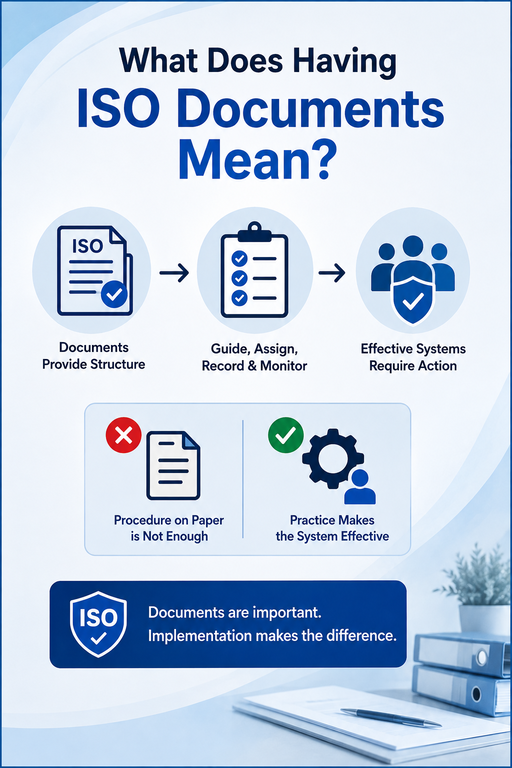
ISO documentation can include policies, procedures, objectives, forms, records, work instructions, and other documented information relevant to the quality management system.
These documents provide structure. They can explain how activities should be performed, who is responsible, what information needs to be recorded, and how results should be monitored.
However, documentation is only one part of the system.
For example, an organization might have a documented customer complaint procedure stating that every complaint must be recorded, investigated, and addressed. If employees do not actually record complaints or investigate their causes, the procedure exists only on paper.
This is one of the biggest differences between having ISO documents and operating an effective quality management system.
What Does Operating an ISO 9001 System Mean?
Operating an ISO 9001 system means integrating quality management into everyday activities.
Employees follow established processes, responsibilities are understood, customer requirements are reviewed, performance is monitored, problems are addressed, and management evaluates whether the system is achieving its intended results.
The system should influence real decisions and activities.
For example, when a customer requirement changes, the organization should have a process for reviewing and communicating that change. When a supplier repeatedly fails to meet requirements, the organization should evaluate the issue and take appropriate action.
The system becomes part of how the business operates rather than a separate set of documents maintained for certification purposes.
Documents Should Reflect Actual Business Practices
One common mistake is creating procedures that do not match the way employees actually work.
A procedure may describe an ideal process, while employees use a completely different method in practice. This creates a gap between documentation and implementation.
Effective documentation should reflect real operations. If a process changes, the relevant documented information should also be reviewed and updated where necessary.
Employees should be able to use the documentation as a practical reference rather than viewing it as an administrative requirement.
Employees Need to Understand Their Responsibilities
A quality management system cannot operate effectively if only one person understands it.
Employees involved in relevant processes should understand what they are responsible for and how their work affects quality and customer satisfaction.
For example, employees responsible for receiving materials should understand applicable requirements, while people handling customer complaints should know how complaints are recorded and escalated.
This does not mean every employee needs to memorize the entire ISO standard. They should understand the processes relevant to their roles and follow them consistently.
Records Provide Evidence of Implementation
Records help demonstrate that processes are actually being performed.
Depending on the organization, records may include customer feedback, inspection results, supplier evaluations, training records, complaints, corrective actions, internal audit results, and performance measurements.
The purpose of records is not simply to produce paperwork. They provide evidence that activities occurred and can help management understand performance.
For example, a documented supplier evaluation procedure is different from having completed supplier evaluations that demonstrate the process is being used.
Internal Audits Can Reveal the Difference
Internal auditing is one of the most useful ways to determine whether an ISO 9001 system is genuinely operating.
An internal audit compares requirements, documented processes, and actual practices. Auditors can speak with employees, review records, observe processes, and identify areas where implementation does not match expectations.
If an organization discovers that employees are not following a procedure, the appropriate response is not necessarily to blame the employees. Management should understand why the gap exists.
Perhaps the procedure is unclear, impractical, outdated, or insufficiently communicated. Identifying the real reason allows the organization to improve the system.
Management Review Keeps the System Active
Management review is another important difference between documentation and implementation.
Leadership should periodically evaluate the performance and suitability of the quality management system. This may involve reviewing customer feedback, audit results, objectives, process performance, nonconformities, corrective actions, risks, and opportunities.
If management only signs documents without reviewing actual performance, the system may gradually become inactive.
A meaningful management review should result in decisions and actions where improvement is needed.
Corrective Action Should Address Root Causes
An organization operating an effective quality management system does not simply correct mistakes. It also considers why problems occurred and whether action is needed to prevent recurrence.
Suppose a customer receives an incorrect product. Replacing the product may correct the immediate issue. However, management should also consider why the error occurred.
Was the order entered incorrectly? Was the requirement unclear? Was the final check skipped? Was the employee working with outdated information?
Investigating the cause can help prevent similar problems from happening again.
Performance Must Be Monitored
An ISO 9001 system should be evaluated using appropriate information.
Organizations can monitor indicators relevant to their activities, such as customer complaints, delivery performance, product or service conformity, process efficiency, rework, or other meaningful measures.
The exact indicators will differ between organizations. What matters is that the organization understands whether its processes are achieving intended results.
Simply having a quality objective written in a document does not demonstrate success. Evidence of monitoring and evaluation provides a clearer picture.
How to Get Your Company ISO 9001 Certified
Understanding how to get your company iso 9001 certified starts with recognizing that certification involves implementation, not just documentation.
First, determine the organization’s context, objectives, relevant requirements, and certification scope. Review existing processes and identify gaps against ISO 9001 requirements.
Next, establish or improve the necessary processes and documented information. Assign responsibilities and ensure employees understand what is expected of them.
After implementation, monitor performance and maintain relevant records. Conduct internal audits to identify weaknesses and complete management reviews to evaluate the effectiveness of the system.
Correct identified issues and make improvements before undergoing an independent certification audit.
This approach creates a stronger foundation for certification because the organization can demonstrate that the management system is being used in practice.
Avoid Creating Documents Only for the Auditor
A common warning sign of a weak system is documentation that employees never use.
If a procedure exists only because someone expects an auditor to see it, it is unlikely to provide much value to the organization.
Instead, ask practical questions:
- Does this procedure reflect how we actually work?
- Do employees understand it?
- Are records being maintained?
- Are results monitored?
- Are problems investigated?
- Does management review the information?
- Are improvements being made?
These questions help move the focus from paperwork to performance.
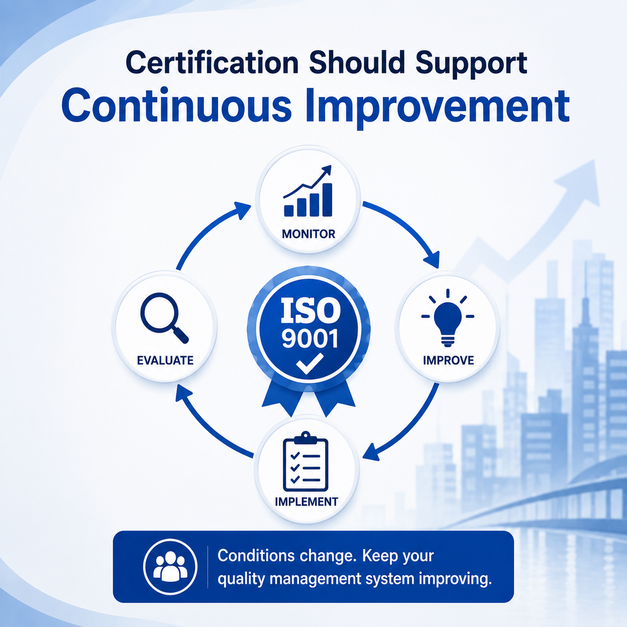
Certification Should Support Continuous Improvement
ISO 9001 is not intended to be a one-time project. Once certification is achieved, organizations should continue monitoring and improving their quality management system.
Business conditions change. Customer expectations evolve, employees change roles, suppliers change, technology develops, and new risks can emerge.
A system that worked well several years ago may need improvement today.
Conclusion
Having ISO documents and operating an ISO 9001 system are two very different things. Documents provide structure, but implementation demonstrates whether that structure actually works.
A functioning system means employees understand their responsibilities, processes are followed, records provide evidence, performance is monitored, problems are investigated, management participates in reviews, and improvements are made when necessary.
For organizations researching how to get your company iso 9001 certified, the most effective approach is to build the system around actual business operations rather than creating paperwork solely for certification.