What Are the ISO Categories? A Complete Guide for Modern Businesses
In today’s competitive marketplace, organizations are expected to maintain quality, improve efficiency, protect information, and operate responsibly. One of the most recognized ways to achieve these goals is by following internationally accepted standards. However, many business owners and professionals are unfamiliar with the types of iso available and how each category serves a different purpose.
Understanding the different types of ISO standards helps businesses choose the ones that best match their goals, industry needs, and future growth plans. From quality management to environmental responsibility and information security, ISO categories provide structured frameworks that encourage consistency and continuous improvement.
What Is an ISO Standard?
ISO standards are internationally recognized guidelines that help organizations establish effective systems, improve performance, and build confidence among customers and stakeholders. These standards are developed to encourage best practices across industries while allowing businesses to adapt them to their own operations.
Learning about the types of iso enables organizations to identify which standards are most relevant to their activities and future goals.
Why Understanding ISO Categories Matters
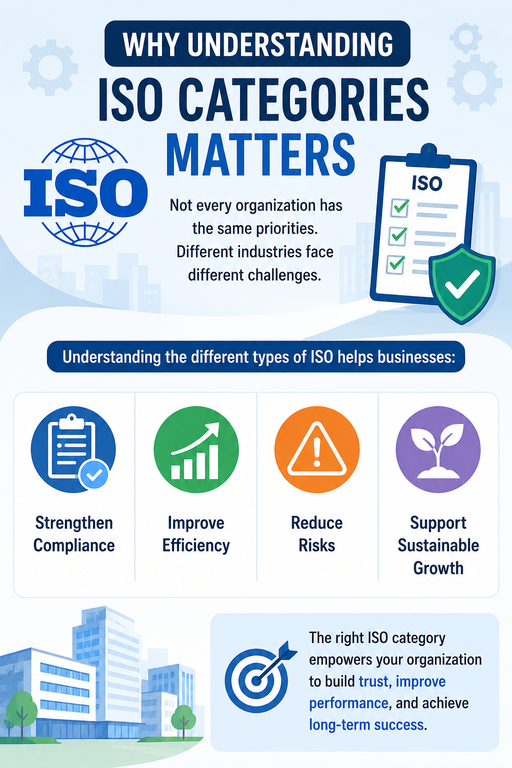
Not every organization has the same priorities. A manufacturing company may focus on quality control, while a technology business may prioritize information security. Healthcare providers, educational institutions, logistics companies, and service organizations all face unique operational challenges.
By understanding the different types of iso, businesses can implement management systems that strengthen compliance, improve efficiency, reduce risks, and support sustainable growth.
Quality Management Standards
One of the best-known categories focuses on quality management. These standards encourage organizations to create reliable processes, improve customer satisfaction, and establish consistent methods for delivering products or services.
Quality management emphasizes:
- Continuous improvement
- Customer-focused operations
- Process consistency
- Performance evaluation
- Risk-based thinking
Businesses that prioritize quality often experience stronger customer trust and more efficient internal operations.
Environmental Management Standards
Sustainability has become an important business objective worldwide. Environmental management standards help organizations understand and reduce their environmental impact through structured planning and responsible resource management.
These standards encourage businesses to:
- Minimize waste
- Improve resource efficiency
- Reduce pollution risks
- Monitor environmental performance
- Promote continual improvement
Among the many types of iso, environmental standards are increasingly relevant for organizations seeking responsible long-term growth.
Information Security Standards
As digital transformation accelerates, protecting sensitive information has become a top priority. Information security standards provide structured approaches for managing confidential data, reducing cybersecurity risks, and strengthening organizational resilience.
Common objectives include:
- Protecting customer information
- Managing cyber risks
- Controlling data access
- Supporting business continuity
- Improving incident response
Implementing appropriate ISO standards for business can strengthen confidence among customers and business partners while reducing potential vulnerabilities.
Occupational Health and Safety Standards
Employee well-being is fundamental to organizational success. Health and safety standards help create safer workplaces by identifying hazards, reducing risks, and encouraging preventive measures.
Organizations following these frameworks often focus on:
- Workplace risk assessments
- Safety awareness
- Incident prevention
- Continuous monitoring
- Employee participation
Strong safety practices contribute to healthier work environments and improved operational reliability.
Food Safety Standards
Businesses involved in food production, processing, storage, or distribution often rely on food safety management standards to maintain product quality and consumer confidence.
These standards encourage systematic monitoring of potential hazards while promoting hygiene, traceability, and consistent safety practices throughout the supply chain.
Understanding the relevant types of iso is particularly important for organizations operating in food-related industries.
Energy Management Standards
Energy efficiency has become an important priority for businesses aiming to reduce costs and environmental impact. Energy management standards encourage organizations to measure energy use, identify improvement opportunities, and establish ongoing optimization strategies.
Benefits may include:
- Improved resource utilization
- Lower energy consumption
- Better operational planning
- Enhanced sustainability initiatives
Organizations adopting energy-focused management systems often gain both environmental and operational advantages.
Business Continuity Standards
Unexpected disruptions can affect organizations of any size. Business continuity standards provide frameworks for preparing for emergencies, minimizing downtime, and recovering effectively from unforeseen events.
Planning ahead helps businesses protect essential operations and maintain service delivery during challenging situations.
These standards demonstrate that many types of iso focus not only on quality but also on resilience and long-term stability.
Risk Management and Governance
Modern organizations operate in increasingly complex environments involving regulatory obligations, supply chain challenges, technological changes, and evolving customer expectations.
ISO-based management approaches encourage structured risk identification, assessment, monitoring, and improvement. Rather than reacting to problems after they occur, businesses can proactively strengthen decision-making processes and operational controls.
Effective governance contributes to sustainable organizational success.
Can Businesses Implement Multiple ISO Categories?
Yes. Many organizations adopt more than one management standard because their operations involve multiple priorities.
For example, a business may simultaneously focus on:
- Quality management
- Information security
- Occupational safety
- Environmental responsibility
Combining complementary types of iso often creates integrated systems that improve efficiency while reducing duplicated processes.
Advantages of Understanding ISO Categories
Organizations that understand available ISO categories can make better strategic decisions. Potential benefits include:
- Stronger customer confidence
- Better process consistency
- Improved regulatory readiness
- Enhanced operational efficiency
- Greater focus on continual improvement
- Increased organizational transparency
- Better resource management
- Reduced operational risks
These advantages support both short-term performance and long-term competitiveness.
Selecting the Right ISO Category
Choosing an appropriate standard depends on several factors, including:
- Industry sector
- Business objectives
- Regulatory environment
- Customer expectations
- Operational risks
- Long-term growth plans
Rather than pursuing every available framework, organizations often benefit from identifying the management systems most closely aligned with their priorities.
Understanding ISO certification benefits helps businesses evaluate which standards can create meaningful value without unnecessary complexity.
Common Misconceptions About ISO Standards
Some organizations assume ISO standards are relevant only for large corporations. In reality, businesses of various sizes can implement structured management systems appropriate to their scale and operations.
Another misconception is that ISO standards guarantee perfect outcomes. Instead, they provide frameworks that encourage continuous improvement, documentation, consistency, and effective management practices.
Success depends on ongoing commitment rather than one-time implementation.
The Future of ISO Standards
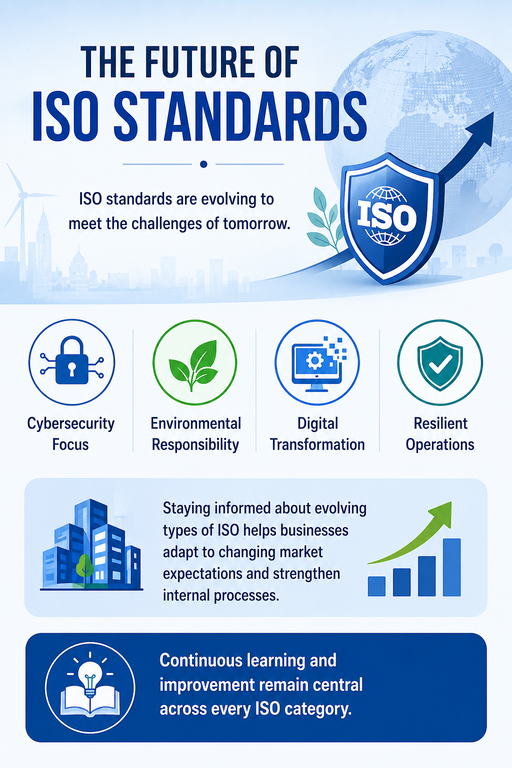
As technology, sustainability expectations, and global markets continue evolving, ISO standards are adapting to address emerging challenges. Organizations increasingly seek guidance on cybersecurity, environmental responsibility, digital transformation, and resilient operations.
Businesses that stay informed about evolving types of iso position themselves to respond proactively to changing market expectations while strengthening internal processes.
Continuous learning and improvement remain central principles across virtually every ISO category.
Building a Culture of Continuous Improvement
Perhaps the greatest value of ISO frameworks lies in the mindset they encourage. Rather than viewing compliance as a final destination, organizations are encouraged to regularly evaluate performance, identify opportunities, and implement improvements.
This culture supports innovation, accountability, collaboration, and adaptability in rapidly changing business environments.
Employees take a more active role in improving processes, leaders get a clearer view of how the business operates, and customers receive more consistent products and services.
Conclusion
Understanding the various types of iso is essential for modern businesses seeking structured growth, operational excellence, and long-term sustainability. From quality management and information security to environmental responsibility, workplace safety, food safety, energy efficiency, and business continuity, each category addresses unique organizational needs while promoting continual improvement.
Instead of treating ISO standards as simple compliance tools, businesses should view them as strategic frameworks that strengthen resilience, efficiency, and stakeholder confidence. Selecting the right categories based on organizational objectives allows companies to create management systems that support measurable progress and adaptability in an increasingly competitive world.
As industries continue to evolve, organizations that understand the types of iso and apply relevant best practices will be better positioned to improve performance, manage risks, and build lasting success through informed decision-making and a commitment to excellence.