
What Are the Four Pillars of ISO 22000 and Why Do They Matter?
Food safety has become one of the most important priorities for food businesses worldwide. Customers today expect safe, hygienic, and high-quality food products at every stage of the supply chain. Whether it is food manufacturing, packaging, catering, transportation, storage, or retail, maintaining food safety standards is essential for protecting public health and maintaining customer trust.
This growing focus on food safety has increased the importance of iso 22000 certification for modern food businesses. ISO 22000 is an internationally recognized food safety management standard that helps organizations identify, control, and reduce food safety risks across operations.
One of the key strengths of ISO 22000 is its foundation on four important pillars that work together to create a strong food safety management system. Understanding these four pillars helps businesses improve compliance, reduce contamination risks, and maintain operational consistency.
What Is ISO 22000?
ISO 22000 is a food safety management system standard designed for organizations involved in the food supply chain. It combines food safety principles, hazard prevention systems, and management practices to ensure food products remain safe for consumption.
The standard applies to:
- Food manufacturers
- Restaurants
- Catering services
- Food packaging companies
- Storage facilities
- Food transportation businesses
- Retail food companies
Organizations implementing iso 22000 certification aim to improve food safety systems, strengthen hygiene practices, and maintain customer confidence.
ISO 22000 focuses on proactive food safety management rather than reacting after contamination occurs.
Understanding the Four Pillars of ISO 22000
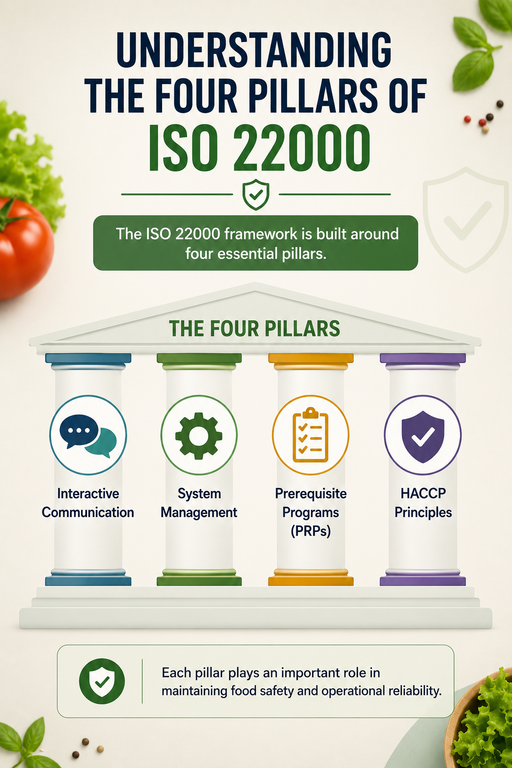
The ISO 22000 framework is built around four essential pillars that support effective food safety management.
The four pillars are:
- Interactive Communication
- System Management
- Prerequisite Programs (PRPs)
- HACCP Principles
Each pillar plays an important role in maintaining food safety and operational reliability.
Pillar 1: Interactive Communication
Interactive communication is one of the most important aspects of food safety management. Food safety risks can arise at multiple stages of the food supply chain, making communication essential for identifying and controlling hazards.
Effective communication involves:
- Suppliers
- Employees
- Customers
- Regulatory authorities
- Transport providers
- Distributors
Clear communication helps businesses share important food safety information quickly and accurately.
For example, communication may involve:
- Ingredient safety information
- Allergen warnings
- Storage requirements
- Temperature guidelines
- Product recalls
A strong communication system helps businesses respond faster to food safety concerns and reduce operational risks.
Organizations implementing food safety management certification often focus heavily on communication systems because they directly affect operational transparency and food safety control.
Why Interactive Communication Matters
In 2026, food supply chains will become more global and complex. Ingredients often move across multiple suppliers, storage facilities, and transportation networks before reaching customers.
Without proper communication:
- Contamination risks may increase
- Product recalls may become delayed
- Customer safety may be affected
- Regulatory compliance may become difficult
Interactive communication improves coordination and supports faster decision-making during food safety incidents.
Pillar 2: System Management
System management refers to the structured management approach used to maintain food safety operations effectively.
ISO 22000 follows a process-based management system that integrates food safety into everyday business operations.
System management includes:
- Food safety policies
- Operational planning
- Risk management
- Internal audits
- Continuous improvement
- Documentation control
A structured management system helps organizations maintain consistency across all operational activities.
Businesses pursuing iso 22000 certification often benefit from improved workflow efficiency, stronger compliance systems, and better operational monitoring.
Importance of System Management
Food safety cannot depend only on individual employees or occasional inspections. Organizations need structured systems that support long-term consistency and accountability.
Strong system management helps businesses:
- Reduce operational confusion
- Improve employee responsibilities
- Strengthen compliance monitoring
- Maintain standardized procedures
- Improve audit readiness
In modern food industries, system management also supports digital documentation, automated monitoring, and operational transparency.
Pillar 3: Prerequisite Programs (PRPs)
Prerequisite Programs, commonly called PRPs, are the basic hygiene and environmental conditions required to maintain safe food production environments.
PRPs create the foundation for effective food safety management.
Examples of PRPs include:
- Cleaning and sanitation
- Pest control
- Equipment maintenance
- Personal hygiene
- Waste management
- Water quality management
- Storage controls
These programs help reduce contamination risks before food processing even begins.
A reliable food hygiene management system depends heavily on strong prerequisite programs to maintain operational cleanliness and hygiene consistency.
Why PRPs Matter
Without proper hygiene controls, food safety risks can quickly increase.
Poor sanitation may lead to:
- Bacterial contamination
- Cross-contamination
- Food spoilage
- Product recalls
- Customer complaints
PRPs help businesses create safe operational environments where food products can be handled safely.
In 2026, customers are highly aware of hygiene standards, making prerequisite programs more important than ever.
Pillar 4: HACCP Principles
HACCP means Hazard Analysis and Critical Control Points. It is a preventive food safety approach designed to identify and control hazards before they become serious risks.
The HACCP system focuses on:
- Hazard analysis
- Critical control points
- Monitoring procedures
- Corrective actions
- Verification systems
- Documentation practices
HACCP principles help organizations identify possible food safety risks during food preparation, processing, packaging, storage, and transportation.
Businesses implementing hazard analysis and food safety compliance systems often use HACCP principles to strengthen contamination prevention efforts.
Importance of HACCP in ISO 22000
HACCP is considered one of the strongest preventive food safety tools available.
It helps businesses:
- Reduce contamination risks
- Improve monitoring systems
- Strengthen corrective actions
- Improve product consistency
- Maintain customer trust
HACCP allows organizations to control food safety risks systematically rather than relying only on final product inspections.
How the Four Pillars Work Together
The four pillars of ISO 22000 are interconnected and support each other to create a complete food safety management system.
For example:
- Communication helps share food safety information
- System management maintains operational structure
- PRPs ensure hygienic conditions
- HACCP controls food safety hazards
Together, these pillars improve operational consistency, contamination prevention, and regulatory compliance.
Organizations implementing iso 22000 certification often experience stronger food safety cultures and better customer confidence because all operational areas work together systematically.
Benefits of ISO 22000 Certification
Implementing ISO 22000 provides several important business advantages.
Improved Food Safety
Structured systems help reduce contamination risks and improve hygiene standards.
Better Customer Confidence
Customers trust businesses that maintain internationally recognized food safety systems.
Stronger Regulatory Compliance
Organizations can maintain better compliance with food safety regulations and industry requirements.
Improved Operational Efficiency
Standardized systems improve workflow consistency and reduce operational mistakes.
Better Market Opportunities
Many retailers and international markets prefer businesses with recognized food safety certifications.
Employee Training and Awareness
Employee awareness is essential for maintaining effective food safety systems.
Important training areas include:
- Personal hygiene
- Safe food handling
- Cleaning procedures
- Temperature monitoring
- Cross-contamination prevention
Organizations that invest in employee training often experience fewer food safety incidents and stronger operational consistency.
Technology and Food Safety Management
Technology is transforming food safety management systems in modern businesses.
Many organizations now use:
- Digital monitoring systems
- Automated temperature tracking
- Cloud-based audit records
- Smart inventory systems
- Digital hygiene inspection tools
Technology improves monitoring accuracy, traceability, and operational transparency.
Challenges During Implementation
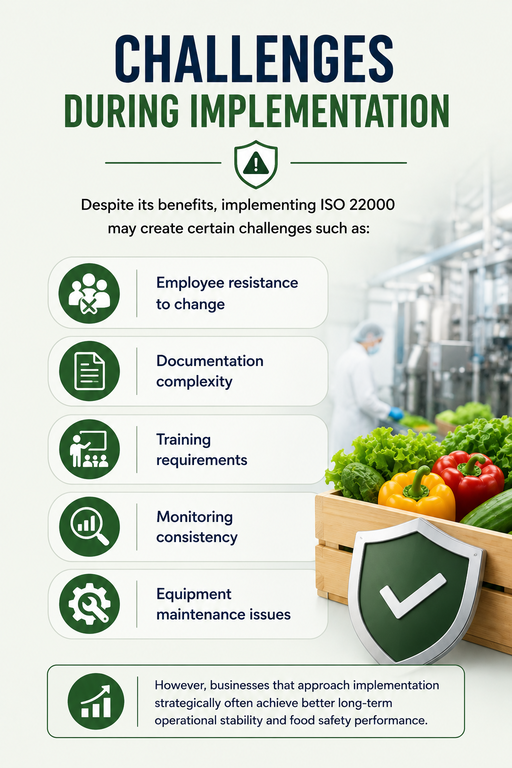
Despite its benefits, implementing ISO 22000 may create certain challenges such as:
- Employee resistance to change
- Documentation complexity
- Training requirements
- Monitoring consistency
- Equipment maintenance issues
However, businesses that approach implementation strategically often achieve better long-term operational stability and food safety performance.
Conclusion
The four pillars of ISO 22000 — Interactive Communication, System Management, Prerequisite Programs, and HACCP Principles — form the foundation of an effective food safety management system. These pillars work together to improve food safety, reduce contamination risks, strengthen operational consistency, and maintain customer trust.
Organizations implementing iso 22000 certification can improve hygiene standards, enhance regulatory compliance, and build stronger food safety cultures across operations. In today’s highly competitive and customer-focused food industry, maintaining effective food safety systems is essential for long-term operational success.
Businesses that prioritize communication, hygiene, hazard prevention, and continuous improvement will remain better prepared to meet evolving customer expectations and food safety regulations in 2026 and beyond.