Why Choosing the Right ISO Certification Institute Matters More in 2026
In today’s highly competitive business environment, organizations are increasingly focusing on quality standards, operational efficiency, customer satisfaction, and regulatory compliance. As industries continue to evolve in 2026, international certifications have become more valuable than ever for businesses seeking long-term growth and market credibility. This growing demand has increased interest in iso certification in india across industries such as manufacturing, healthcare, IT, logistics, food processing, education, and construction.
However, obtaining ISO certification is not only about completing documentation or passing audits. Choosing the right ISO certification institute has become equally important because the quality of certification support directly affects compliance success, operational improvement, and long-term business reputation.
Organizations that choose the right certification partner are usually better at staying compliant, improving their systems, and growing steadily.
Understanding ISO Certification
ISO certification refers to compliance with internationally recognized standards developed to improve quality, safety, efficiency, and consistency across business operations.
Some commonly implemented ISO standards include:
- ISO 9001 for quality management
- ISO 14001 for environmental management
- ISO 45001 for occupational health and safety
- ISO 22000 for food safety management
- ISO 27001 for information security management
Businesses seeking iso certification in india often aim to improve operational reliability, customer confidence, and regulatory compliance.
ISO standards provide structured frameworks that help organizations identify risks, improve performance, and maintain continuous improvement practices.
Why ISO Certification Matters More in 2026
Business environments have changed significantly in recent years. Customers today expect higher quality, better transparency, and stronger operational consistency from organizations.
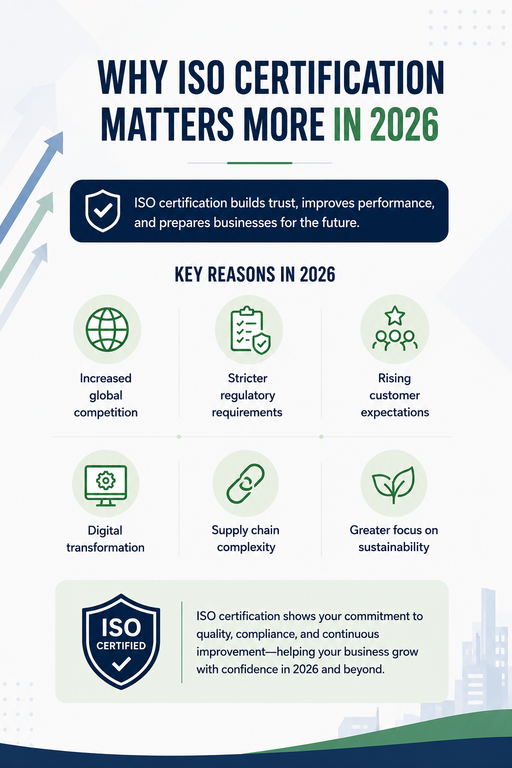
Several factors are increasing the importance of ISO certification in 2026:
- Increased global competition
- Stricter regulatory requirements
- Rising customer expectations
- Digital transformation
- Supply chain complexity
- Greater focus on sustainability
Organizations with ISO-certified management systems are often viewed as more trustworthy and operationally reliable.
As a result, businesses are paying closer attention not only to certification itself but also to the credibility and expertise of the certification institute they choose.
The Importance of Choosing the Right ISO Certification Institute
The effectiveness of ISO implementation depends heavily on the certification process and the guidance businesses receive during implementation and audits.
A reliable certification institute helps organizations:
- Understand ISO requirements clearly
- Improve operational systems
- Prepare for audits effectively
- Maintain long-term compliance
- Strengthen documentation practices
- Improve employee awareness
Choosing the wrong certification institute may lead to poor implementation, compliance gaps, audit failures, and operational inefficiencies.
This is why selecting a trusted provider for quality management certification services has become more important in modern business environments.
Better Understanding of Industry Requirements
Different industries face unique operational challenges and compliance requirements. A qualified certification institute understands industry-specific risks, regulations, and operational expectations.
For example:
- Manufacturing industries focus on process consistency
- Healthcare organizations prioritize patient safety
- Food industries require hygiene and contamination control
- IT businesses focus on data security and service management
An experienced certification institute helps businesses implement ISO standards in ways that align with their operational needs.
This improves both compliance effectiveness and long-term operational performance.
Improved Audit Preparation
Internal and external audits are important parts of the ISO certification process.
A reliable certification institute helps organizations prepare for audits through:
- Documentation reviews
- Internal assessments
- Compliance evaluations
- Employee training
- Risk identification support
Proper audit preparation reduces compliance risks and improves certification success rates.
Businesses pursuing iso certification in india often prefer structured audit support because it helps avoid operational disruptions and non-conformities.
Stronger Documentation Management
Documentation is a major requirement for most ISO standards. Businesses must maintain accurate records, policies, procedures, and compliance reports.
A professional certification institute helps organizations improve:
- Documentation accuracy
- Record management systems
- Process traceability
- Audit readiness
- Compliance consistency
In 2026, digital documentation systems are becoming increasingly important due to automation and remote operational management.
Organizations with well-managed documentation systems often experience smoother audits and stronger operational control.
Better Employee Awareness and Training
Employees play a major role in maintaining ISO compliance. Even strong systems may fail if employees are not properly trained.
A reliable certification institute supports organizations through:
- Employee awareness programs
- Internal auditor training
- Risk management education
- Operational process training
- Compliance workshops
Well-trained employees improve operational consistency and reduce compliance-related mistakes.
Businesses implementing ISO compliance and audit solutions often focus heavily on employee awareness because it directly impacts long-term certification success.
Continuous Improvement Support
ISO standards focus on continuous improvement. Certification is not a one-time task but an ongoing process.
The right certification institute helps organizations:
- Monitor operational performance
- Improve internal systems
- Identify process inefficiencies
- Strengthen risk management
- Maintain updated compliance practices
Continuous improvement helps businesses remain competitive and adaptable in changing market conditions.
Organizations that regularly improve their systems are more likely to maintain customer trust and operational efficiency.
Importance of Accreditation and Credibility
The credibility of ISO certification depends significantly on the certification institute’s reputation and accreditation status.
A recognized certification process improves:
- Customer confidence
- International business opportunities
- Supplier trust
- Regulatory acceptance
- Market reputation
Businesses should ensure that certification activities follow internationally accepted compliance practices.
A credible certification institute provides greater confidence to customers, stakeholders, and business partners.
Industry-Specific Expertise Matters
In 2026, businesses are becoming more specialized and technology-driven. Generic compliance approaches may not work effectively across all industries.
An experienced certification institute understands sector-specific challenges such as:
- Cybersecurity risks in IT industries
- Food contamination risks in food processing
- Workplace hazards in manufacturing
- Environmental compliance requirements
Industry expertise helps organizations implement practical and effective management systems.
This is especially important for businesses seeking business process certification services to improve operational efficiency and regulatory compliance.
Technology and Digital Compliance Systems
Technology is transforming ISO certification processes significantly.
Modern certification systems now include:
- Digital documentation platforms
- Cloud-based audit records
- Automated compliance tracking
- Real-time monitoring systems
- AI-supported risk analysis
Businesses increasingly prefer certification institutes that understand digital operational environments and modern compliance technologies.
Technology improves transparency, monitoring accuracy, and audit efficiency.
Long-Term Business Benefits
Choosing the right certification institute provides several long-term advantages.
Improved Operational Efficiency
Structured systems improve workflow consistency and reduce operational errors.
Better Customer Trust
Customers prefer businesses that maintain internationally recognized standards.
Stronger Competitive Advantage
Certified businesses often gain better opportunities in domestic and international markets.
Reduced Compliance Risks
Effective compliance systems help businesses avoid penalties and operational disruptions.
Better Organizational Culture
ISO systems encourage accountability, continuous learning, and process improvement.
Challenges Businesses May Face
Even with the benefits, organizations may face some challenges when implementing certification.
Common challenges include:
- Employee resistance to change
- Documentation complexity
- Lack of internal awareness
- Resource limitations
- Audit preparation difficulties
However, businesses working with experienced certification institutes are generally better prepared to overcome these challenges effectively.
How Businesses Can Choose the Right ISO Certification Institute
Organizations should carefully evaluate certification institutes before beginning implementation.
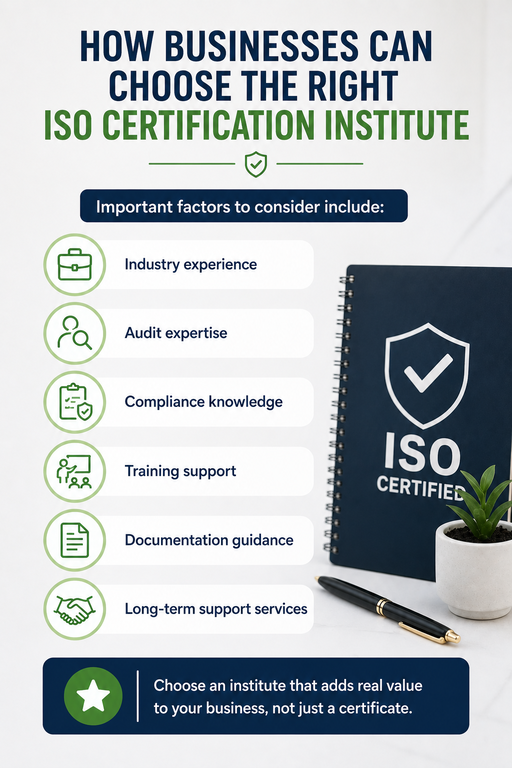
Important factors to consider include:
- Industry experience
- Audit expertise
- Compliance knowledge
- Training support
- Documentation guidance
- Long-term support services
Businesses should prioritize quality, transparency, and operational understanding instead of focusing only on certification speed.
Conclusion
Choosing the right certification institute matters more in 2026 because businesses now operate in more competitive, regulated, and customer-focused environments. ISO certification is no longer only about obtaining a certificate. It is about improving operational systems, maintaining compliance, strengthening customer trust, and supporting continuous improvement.
Organizations seeking iso certification in india should focus on selecting certification partners that understand industry-specific challenges, compliance requirements, and modern operational expectations. A reliable certification institute helps businesses improve documentation, prepare for audits, strengthen employee awareness, and maintain long-term compliance success.
As industries continue evolving, businesses that invest in effective ISO systems and reliable certification support will remain better prepared for sustainable growth, operational excellence, and future market opportunities.