
ISO 37001 vs ISO 37002: Key Differences Every Organization Should Know
As organizations operate in increasingly complex regulatory and ethical environments, strong governance and transparency have become essential for long-term success. Businesses are expected to prevent misconduct, encourage accountability, and establish systems that promote ethical decision-making. Two internationally recognized standards that support these objectives are ISO 37001 and ISO 37002.
Although they share a focus on integrity and organizational trust, they address different aspects of compliance and governance. Understanding these differences is important for leaders, compliance professionals, and organizations considering iso 37001 Certification as part of their risk management strategy.
Understanding ISO 37001
ISO 37001 is an international standard designed to help organizations establish, implement, maintain, and continually improve an anti-bribery management system. It provides a structured framework for identifying bribery risks, implementing preventive measures, promoting ethical conduct, and monitoring compliance.
Organizations pursuing iso 37001 Certification often aim to strengthen internal controls, encourage transparency, and demonstrate a commitment to preventing bribery-related risks across their operations.
Rather than guaranteeing that misconduct will never occur, the standard helps organizations create systems intended to reduce risk and support responsible governance.
Understanding ISO 37002
ISO 37002 focuses on whistleblowing management systems. It provides guidance on establishing processes that enable individuals to report concerns regarding suspected misconduct in a confidential, fair, and effective manner.
The standard emphasizes trust, impartiality, protection, accessibility, and appropriate follow-up when handling reports. It supports organizations in creating environments where employees and stakeholders feel comfortable raising concerns without fear of retaliation.
Unlike iso 37001 Certification, ISO 37002 serves primarily as guidance rather than a certifiable management system standard.
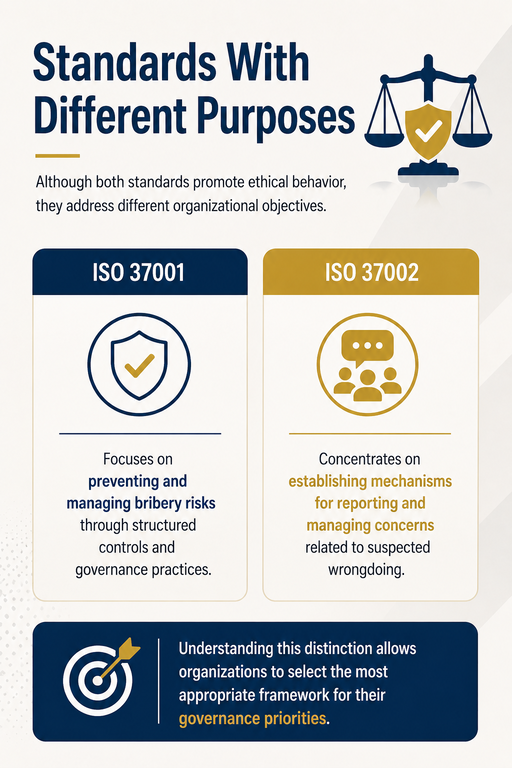
Standards With Different Purposes
Although both standards promote ethical behavior, they address different organizational objectives.
ISO 37001 focuses on preventing and managing bribery risks through structured controls and governance practices.
ISO 37002 concentrates on establishing mechanisms for reporting and managing concerns related to suspected wrongdoing.
Understanding this distinction allows organizations to select the most appropriate framework for their governance priorities.
Prevention Versus Reporting
Perhaps the clearest difference lies in their primary emphasis.
ISO 37001 aims to prevent bribery through policies, procedures, leadership commitment, risk assessments, monitoring, and continual improvement.
ISO 37002 focuses on how organizations receive, assess, investigate, and respond to reports of suspected misconduct.
Many organizations pursuing iso 37001 Certification also recognize the importance of effective whistleblowing processes as complementary governance tools.
Leadership Responsibilities
Leadership commitment plays an important role in both standards.
For ISO 37001, management should support anti-bribery policies, provide resources, assign responsibility, and encourage ongoing improvements.
ISO 37002 similarly encourages leadership to foster trust, protect reporting individuals, and ensure impartial handling of disclosures.
Visible leadership involvement strengthens credibility and organizational culture.
Organizational Culture Matters
Policies alone cannot eliminate misconduct. An ethical organizational culture encourages employees to act responsibly, follow established procedures, and raise concerns when necessary.
Organizations investing in iso 37001 Certification often emphasize awareness programs, leadership engagement, and accountability to reinforce integrity throughout daily operations.
Whistleblowing systems work better when employees trust that their concerns will be handled fairly and kept confidential.
Risk-Based Thinking
ISO 37001 incorporates risk-based thinking by encouraging organizations to identify, evaluate, and manage bribery-related risks according to their operations and activities.
This includes considering factors such as:
- Business relationships
- Geographic locations
- Industry characteristics
- Transaction types
- Organizational structure
Risk assessments support informed decision-making while helping prioritize preventive measures.
Confidential Reporting Systems
A central focus of ISO 37002 is the establishment of reporting mechanisms that individuals trust and are willing to use.
Effective whistleblowing systems typically emphasize:
- Confidentiality
- Accessibility
- Fair treatment
- Timely responses
- Protection against retaliation
- Transparent procedures
These principles encourage early reporting, allowing organizations to address concerns before they escalate.
Documentation and Governance
Organizations implementing iso 37001 Certification generally maintain documented policies, procedures, risk assessments, monitoring activities, and management reviews to demonstrate effective anti-bribery controls.
ISO 37002 also values documentation but primarily focuses on managing whistleblowing processes, case handling, and follow-up activities.
Both standards benefit from organized recordkeeping that supports accountability and continual improvement.
Internal Investigations
When concerns arise, organizations require structured approaches to evaluation and response.
ISO 37002 provides guidance on handling reports fairly, objectively, and consistently while protecting relevant parties throughout the process.
Meanwhile, organizations following iso 37001 Certification may integrate investigative procedures into broader anti-bribery management activities as part of maintaining effective governance.
Employee Awareness and Training
Employees contribute significantly to organizational integrity.
Regular awareness initiatives help personnel understand ethical expectations, recognize potential risks, and respond appropriately when concerns arise.
Training may encourage:
- Ethical decision-making
- Compliance awareness
- Reporting responsibilities
- Recognition of warning signs
- Respect for organizational policies
Knowledgeable employees strengthen both prevention and reporting systems.
Can Organizations Use Both Standards?
Yes. Many organizations benefit from combining anti-bribery controls with effective whistleblowing management practices.
ISO 37001 supports prevention through governance structures and risk management, while ISO 37002 strengthens reporting mechanisms that identify potential issues requiring attention.
Together, they contribute to a more comprehensive compliance framework capable of supporting organizational transparency and accountability.
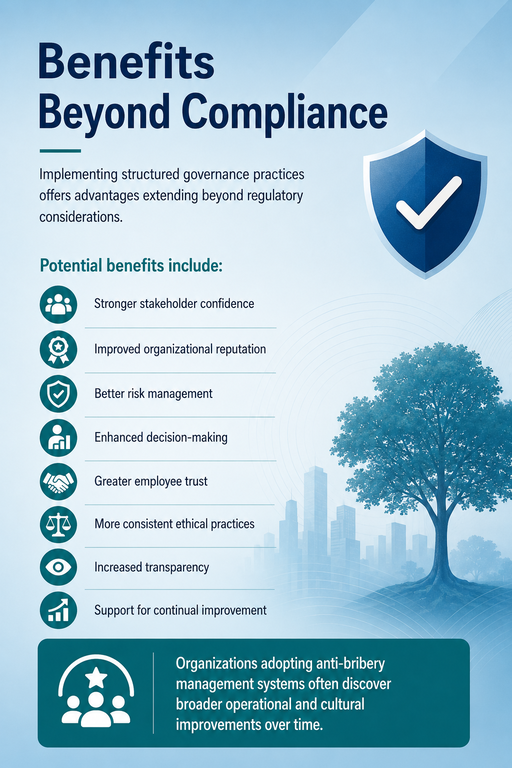
Benefits Beyond Compliance
Implementing structured governance practices offers advantages extending beyond regulatory considerations.
Potential benefits include:
- Stronger stakeholder confidence
- Improved organizational reputation
- Better risk management
- Enhanced decision-making
- Greater employee trust
- More consistent ethical practices
- Increased transparency
- Support for continual improvement
Organizations adopting anti-bribery management systems often discover broader operational and cultural improvements over time.
Adapting to Changing Expectations
Stakeholders increasingly expect organizations to demonstrate responsible governance and ethical conduct.
Customers, employees, investors, regulators, and business partners all value transparency and accountability when evaluating organizational performance.
Businesses that proactively strengthen governance systems position themselves to adapt more effectively to evolving expectations while protecting long-term credibility.
Building Long-Term Trust
Trust develops gradually through consistent actions rather than isolated initiatives.
Organizations that establish clear policies, encourage responsible reporting, respond appropriately to concerns, and demonstrate ethical leadership create environments where integrity becomes part of everyday operations.
Pursuing iso 37001 Certification can contribute to this objective by promoting systematic anti-bribery practices supported by leadership commitment and continual improvement.
Conclusion
ISO 37001 and ISO 37002 each play an important role in strengthening organizational governance, but they are designed for different purposes. ISO 37001 provides a structured framework for preventing and managing bribery risks through effective policies, leadership involvement, risk assessments, and continual improvement. In contrast, ISO 37002 focuses on creating reliable whistleblowing processes that encourage individuals to report concerns in a confidential and fair manner. Understanding these distinctions helps organizations make informed decisions when developing comprehensive compliance strategies and considering iso 37001 Certification as part of their long-term governance goals.
Choosing iso 37001 Certification is about much more than meeting formal requirements or implementing documentation. It reflects an organization’s commitment to promoting ethical business practices, reducing the likelihood of bribery-related risks, and creating a culture of accountability across all levels of operation. Through iso 37001 Certification, businesses can establish stronger internal controls, improve transparency, and encourage responsible decision-making that supports long-term stability and stakeholder trust.
When combined with effective reporting mechanisms and ongoing monitoring, iso 37001 Certification helps organizations identify potential issues early and respond appropriately before they escalate into larger challenges. It also supports continual evaluation and improvement, ensuring that anti-bribery measures remain relevant as regulations, business environments, and operational risks evolve over time.
Ultimately, organizations that invest in iso 37001 Certification demonstrate a proactive approach to integrity and responsible governance. By embedding ethical principles into daily operations, maintaining leadership commitment, and encouraging employee awareness, businesses can strengthen compliance efforts and build lasting credibility. In today’s competitive and highly regulated environment, iso 37001 Certification offers a valuable foundation for sustainable growth, improved stakeholder confidence, and resilient organizational performance while reinforcing a culture where transparency and accountability remain central to long-term success.