
The Mumbai Business Process Gap: What Companies Often Miss Before an ISO Audit
Mumbai has businesses across manufacturing, logistics, finance, healthcare, technology, construction, trading, and professional services. As companies grow, their processes can become more complex. Teams may have established ways of working, but those practices are not always documented, consistently followed, or regularly reviewed.
This becomes important when an organization prepares for an ISO audit. Many businesses concentrate on creating documents shortly before the audit while overlooking gaps in everyday operations. A successful audit is not only about having policies and procedures. Auditors also look for evidence that the management system is implemented and effective.
For organizations considering an ISO certification agency Mumbai, understanding common process gaps early can make preparation smoother and help build a management system that supports the business.
What Is a Business Process Gap?
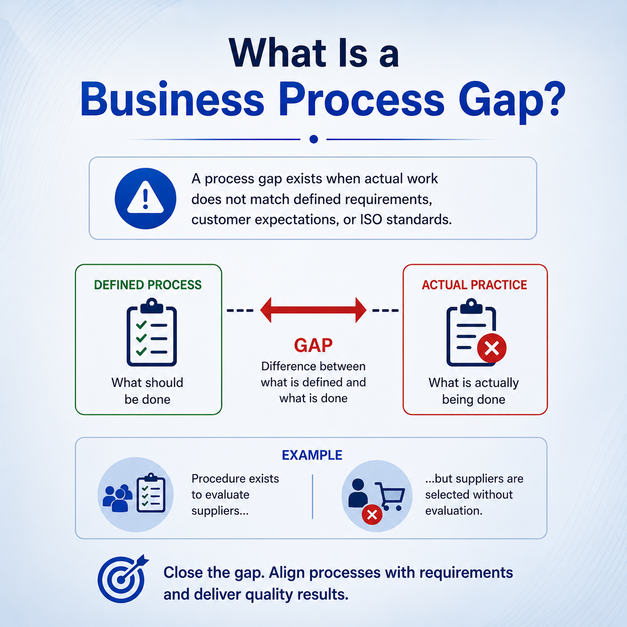
A process gap exists when the way work is actually performed does not fully match the organization’s defined requirements, customer expectations, or applicable ISO standard.
For example, a company may have a procedure for evaluating suppliers, but employees may select suppliers without completing the required evaluation. Similarly, a quality objective may exist on paper while nobody regularly reviews the related performance data.
Documentation Does Not Equal Implementation
One common mistake before an ISO audit is focusing too heavily on documentation.
Organizations may prepare policies, procedures, forms, and records because they believe these documents will satisfy the auditor. However, documentation should describe and support processes that actually operate within the business.
If a procedure says customer complaints must be recorded and analyzed, the organization should be able to demonstrate examples of complaints being recorded, investigated, and followed up.
Employees May Not Know the Process
Another common issue is limited employee awareness.
Management may understand ISO requirements, while employees responsible for daily activities may know very little about the processes established for their roles.
During an audit, employees may be asked how they perform specific activities, where they find relevant information, how they handle problems, or what they do when requirements are not met.
Customer Requirements Can Be Overlooked
Businesses sometimes focus on internal procedures and forget to demonstrate how customer requirements are identified and controlled.
Customer specifications, delivery expectations, service requirements, technical details, and changes should be properly reviewed and communicated to relevant teams.
Supplier Management Needs Attention
Supplier performance is another area where process gaps can appear.
Organizations may have approved supplier lists but lack evidence showing how suppliers were evaluated, monitored, or re-evaluated.
If a supplier repeatedly causes delays, quality problems, or other issues, there should be a defined method for identifying and addressing the problem.
Records May Be Incomplete
Records show that processes are being followed. However, businesses often discover missing signatures, incomplete fields, outdated formats, inconsistent dates, or records that cannot be traced to a particular activity.
Organizations should review important records before an audit and check whether they are complete, accurate, accessible, and appropriately controlled.
Internal Audits Should Not Be a Formality
An internal audit should help the organization identify problems before the external audit.
A weak internal audit may simply confirm that documents exist without checking whether employees actually follow them.
For companies working toward ISO certification agency Mumbai requirements, treating internal audits as an improvement tool rather than a formality can make a significant difference.
Corrective Actions Need Root-Cause Thinking
Another process gap occurs when organizations correct a problem without understanding why it happened.
Suppose an incorrect product is delivered to a customer. Replacing the product addresses the immediate issue, but the organization should also consider why the error occurred.
Was the order entered incorrectly? Was the requirement unclear? Was an inspection skipped? Was outdated information used?
Corrective action should address the cause when appropriate and include a method for checking whether the action was effective.
Management Review Should Lead to Decisions
Management review is sometimes treated as a meeting held simply to produce a record.
An effective review should give leadership an opportunity to evaluate management system performance and make decisions about improvements, resources, risks, objectives, and other relevant issues.
The meeting should result in meaningful actions where improvement is needed.
Risks and Opportunities Are Often Underdeveloped
Organizations may identify risks during initial implementation but fail to update them as business conditions change.
Mumbai businesses can face changing customer expectations, supplier disruptions, workforce changes, technology developments, regulatory requirements, and operational pressures.
Risk assessment should therefore be connected to real business activities. It should not be a static document prepared only for certification.
Process Performance Needs Evidence
An organization may state that its processes are effective, but an auditor may look for evidence supporting that statement.
Performance indicators should be relevant to the organization’s activities. Depending on the business, these may include customer complaints, delivery performance, defects, rework, response times, service performance, or other meaningful measures.
Outdated Information Can Create Problems
Processes change over time. New employees join, responsibilities shift, suppliers change, software is replaced, and customer requirements evolve.
If procedures and forms are not reviewed, employees may continue using outdated information.
Before an ISO audit, organizations should check whether important documented information is current and whether obsolete versions are properly controlled.
How to Prepare Before the ISO Audit
Preparation should begin with a realistic review of daily operations rather than a last-minute document exercise.
Start by mapping important processes and identifying responsible employees. Compare actual practices with documented requirements. Review records, customer requirements, supplier controls, performance indicators, internal audits, corrective actions, and management reviews.
Speak with employees and ask simple questions about how they perform their work. Their answers can reveal gaps that may not be visible in documentation.
Address significant findings, verify corrective actions, and ensure the management system is being used consistently before the external assessment.
Why Local Business Context Matters
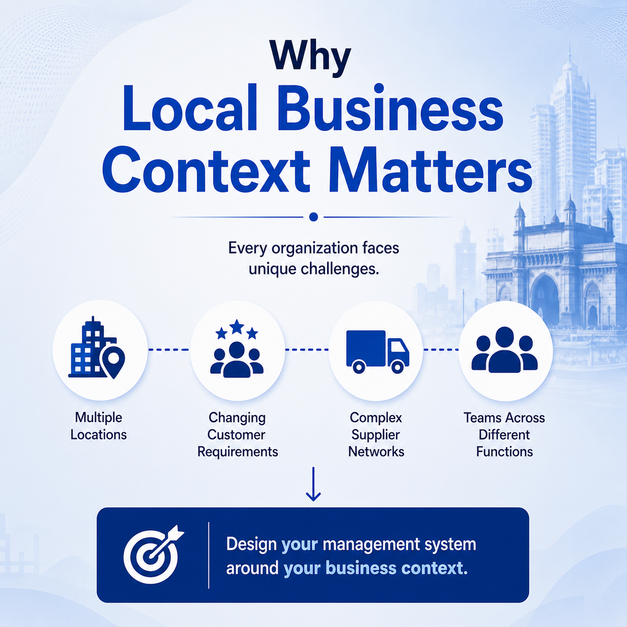
Every organization has different operational challenges. A growing business in Mumbai may have multiple locations, changing customer requirements, complex supplier networks, or teams working across different functions.
The management system should therefore be designed around the organization’s actual context rather than copied from another business.
Choosing Certification Support
Organizations preparing for certification should distinguish between implementing their management system and receiving independent certification.
If external support is used, businesses should clearly understand the role of consultants, auditors, and certification bodies. The certification assessment should remain independent and objective.
When researching an ISO certification agency Mumbai, businesses should also verify the relevant certification scope, accreditation arrangements, standard requirements, and experience applicable to their needs.
Conclusion
The biggest gap before an ISO audit is often not missing paperwork. It is the difference between what the organization says it does and what employees actually do.
Strong preparation means checking whether processes are understood, customer requirements are controlled, suppliers are monitored, records are complete, internal audits are meaningful, corrective actions address causes, and management reviews lead to decisions.
For businesses considering an ISO certification agency Mumbai, the best approach is to treat the audit as an opportunity to examine and improve everyday operations.
An effective management system should not exist only to satisfy an auditor. It should help the organization work consistently, identify problems, manage risks, meet customer expectations, and improve performance.
By identifying process gaps early and correcting them before the audit, businesses can approach certification with greater confidence and build a system that continues to provide value after the audit is complete.