The Cleaning Schedule Is Complete—So Why Are Hygiene Problems Still Appearing?
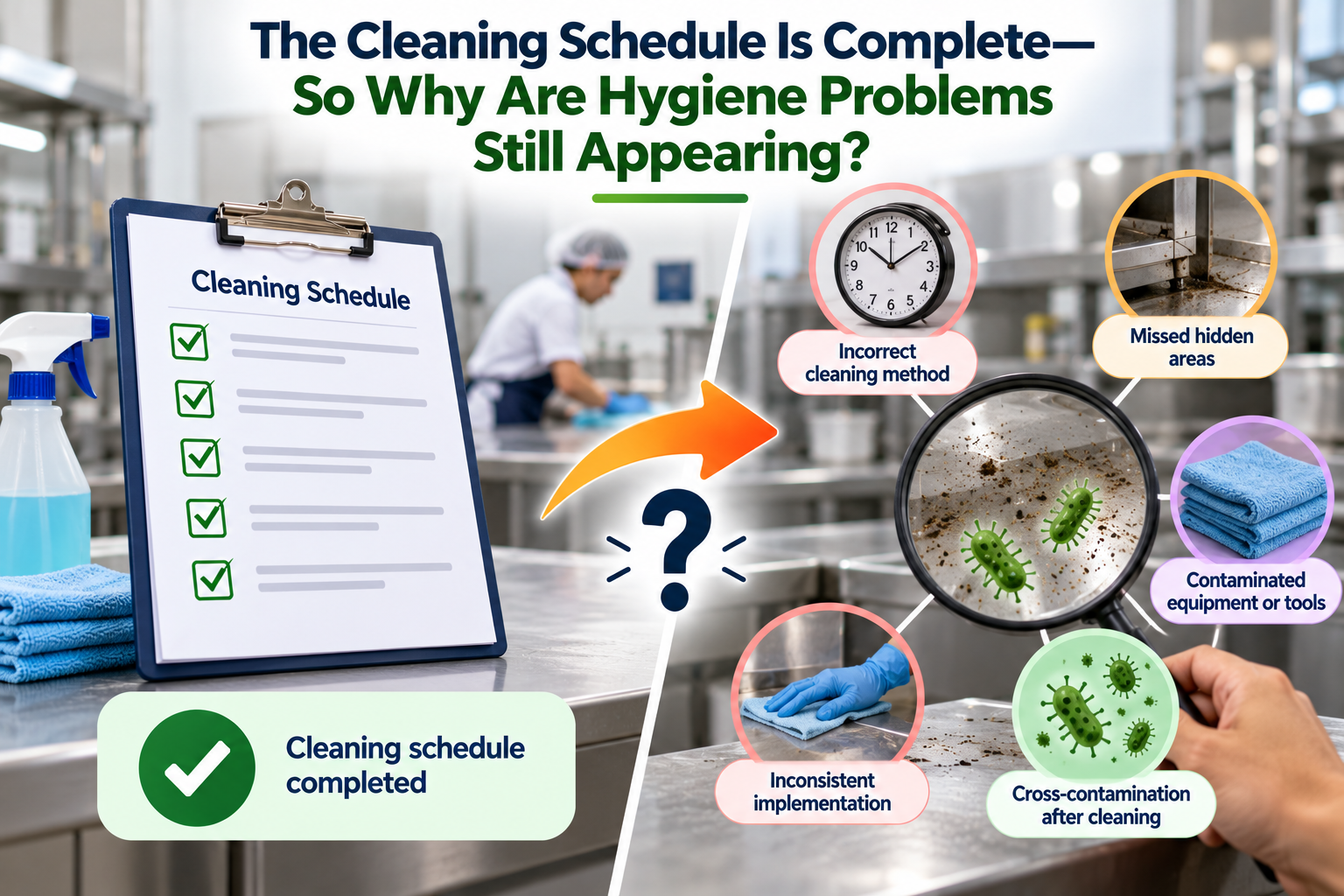
Every cleaning task has been signed off. Floors look spotless, equipment shines, and the daily checklist shows no missed activities. Yet an inspection finds food residue beneath a machine, unexpected microbial results, or contamination risks near preparation areas. How can hygiene problems continue when the schedule says everything is complete?
The answer often lies in the difference between completing a task and proving that it worked. A food hygiene audit looks beyond signatures to examine cleaning methods, employee practices, equipment condition, and the evidence that hygiene controls are effective. Understanding these gaps helps food businesses prevent recurring problems instead of repeatedly correcting their symptoms.
A Completed Checklist Does Not Prove Cleanliness
Cleaning records show that someone reported performing an activity. They do not automatically establish that the correct method was followed or that contamination was removed. A worker might tick a box after wiping a surface without checking difficult corners, joints, or contact points.
Supervisors can strengthen cleaning schedule compliance by observing tasks occasionally, inspecting finished areas, and questioning unexplained patterns. If every checklist is completed at exactly the same time, for example, it may be worth checking whether the allocated time is realistic.
The purpose is not to distrust employees. It is to ensure that records accurately reflect the condition of the workplace and that cleaning expectations are practical.
Cleaning and Sanitising Are Different Activities
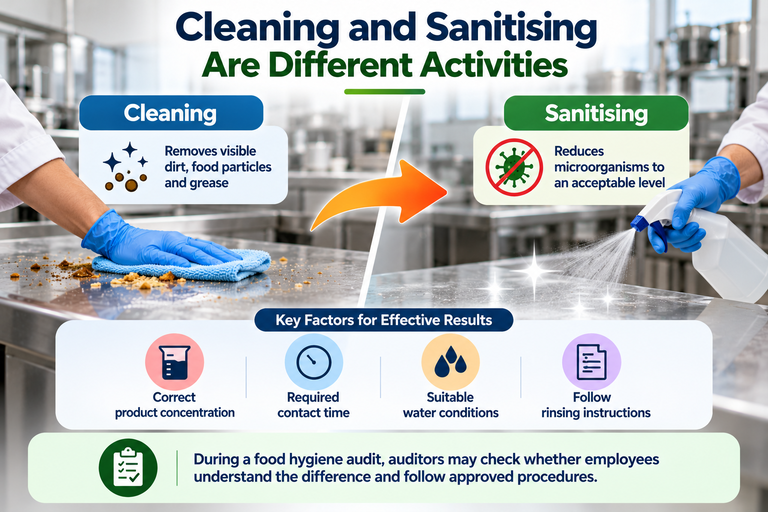
Removing visible dirt is not the same as reducing microorganisms to an acceptable level. Cleaning generally removes food particles, grease, and other soil. Where sanitising or disinfection is required, it follows an appropriate cleaning step using a suitable product and procedure.
A surface can look clean while still presenting a microbial risk. Conversely, applying disinfectant to heavy food residue may prevent it from working as intended. Product concentration, contact time, water conditions, and rinsing instructions can all influence the result.
During a food hygiene audit, auditors may examine whether employees understand these differences and follow the approved instructions. They may also check that chemicals are labelled, stored safely, and used according to their intended purpose.
Hidden Equipment Areas Remain Neglected
Food residue often collects where routine cleaning is difficult: beneath conveyor belts, around seals, inside guards, behind panels, and near drains. A general cleaning schedule may identify the machine but fail to specify which components require access or dismantling.
When equipment design restricts access, employees may clean only the visible surfaces. Over time, trapped moisture and residue can create conditions that support contamination.
An effective food sanitation checklist should identify hard-to-reach areas, explain safe access methods, and assign responsibility for periodic deeper cleaning. Maintenance personnel may need to support tasks requiring specialised access. Cleaning procedures must also protect equipment integrity and employee safety.
Cleaning Frequency May Not Match Actual Risk
A schedule created months ago may no longer reflect production volumes, menu changes, new ingredients, or different operating hours. Equipment used more frequently may require additional cleaning, especially when switching between products with different allergen profiles.
Consider a preparation table cleaned thoroughly each evening but used repeatedly throughout the day. If spills and cross-contact risks arise between activities, end-of-day cleaning alone may be insufficient.
A food hygiene audit can reveal whether cleaning frequency reflects how facilities are actually used. Risk-based schedules consider the nature of food handled, contact surfaces, contamination opportunities, and changes in operations rather than relying exclusively on fixed calendar intervals.
Employees May Lack Practical Guidance
Training attendance records can be complete even when workers remain unsure about dilution instructions, cleaning sequence, equipment dismantling, or safe chemical handling. Temporary staff and employees moving between shifts may receive different explanations of the same procedure.
Clear demonstrations, accessible instructions, and practical competency checks help reduce inconsistency. Supervisors should encourage workers to report when cleaning tools are unavailable or when production pressures prevent adequate cleaning time.
A strong food safety management system supports employees with realistic procedures and suitable resources. Hygiene cannot depend entirely on individual effort when instructions, equipment, or staffing arrangements make correct practice difficult.
Cross-Contamination Can Undo Good Cleaning
Even correctly cleaned surfaces can become contaminated again. Workers may move between raw and ready-to-eat areas, reuse unsuitable cloths, place cleaned utensils on dirty surfaces, or handle waste before touching food-contact equipment.
Poor separation of cleaning tools can also transfer contamination from drains or floors to preparation areas. Colour coding and designated storage may help, but only when staff understand and consistently follow the arrangements.
An auditor will often observe the movement of people, tools, ingredients, and waste rather than looking at cleaning records alone. This wider perspective reveals how hygiene failures develop between scheduled tasks.
Verification Is Missing or Too Superficial
Visual inspection is useful, but it cannot detect every contamination problem. Depending on the risks, facilities may need additional verification such as targeted surface swabbing, microbiological testing, or appropriate rapid hygiene checks. Each method has limitations and must be interpreted against suitable criteria.
Verification should be planned independently of the person performing the cleaning where practical. Results need to be recorded, reviewed, and investigated when they indicate a problem.
A food hygiene audit assesses whether the organisation checks cleaning effectiveness rather than simply confirming task completion. Repeated failures in the same location may suggest that the method, equipment condition, or verification plan needs changing.
Poor Maintenance Can Defeat Cleaning Efforts
Cracked surfaces, damaged seals, leaking pipes, worn joints, and poorly draining floors can retain moisture and food debris. Employees may clean these areas repeatedly without being able to remove the underlying contamination risk.
Cleaning records cannot compensate for equipment that is no longer hygienically designed or maintained. Maintenance reports, repair priorities, and inspection findings should therefore be considered alongside sanitation records.
When problems recur, managers should ask whether the surface is genuinely cleanable. Repairing or replacing damaged components may be more effective than increasing cleaning frequency without addressing the cause.
Corrective Actions Must Go Beyond Recleaning
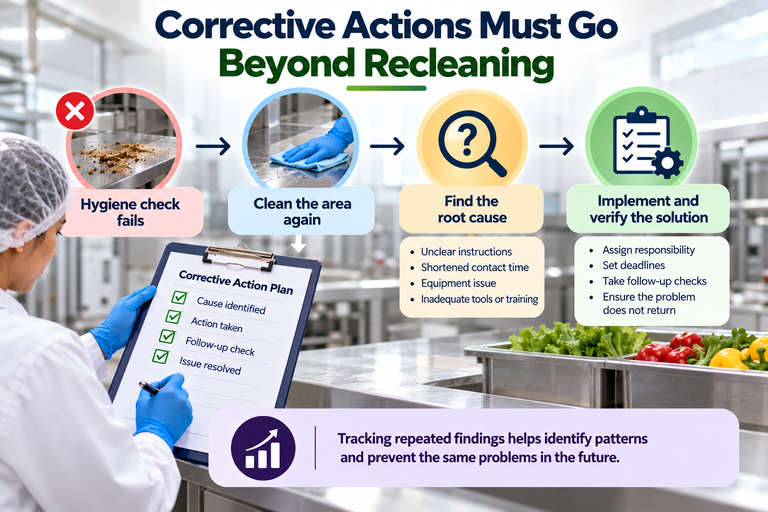
If a hygiene check fails, the area should be cleaned again, but more steps may be needed to fix the problem. Managers need to establish why the failure occurred and whether affected food or equipment requires additional controls.
Was the cleaning instruction unclear? Was contact time shortened? Did a damaged seal trap residue? Did employees have the right tools to do their work? Each cause demands a different solution.
Tracking repeated findings helps identify patterns across shifts, equipment, and production areas. Effective corrective actions include responsibility, deadlines, and follow-up checks demonstrating that the problem has not returned.
Conclusion
A completed cleaning schedule demonstrates that assigned tasks have been recorded, but it cannot guarantee that every food preparation area is hygienic. Residue beneath equipment, incorrect chemical dilution, damaged surfaces, and inconsistent employee practices can create contamination risks even when checklists appear perfect.
A food hygiene audit helps identify these weaknesses by comparing written procedures with actual workplace conditions. Rather than relying only on signed records, a food hygiene audit examines cleaning techniques, staff knowledge, equipment accessibility, and the effectiveness of verification activities. This approach helps managers understand why problems continue despite regular cleaning.
Improving cleaning schedule compliance requires realistic cleaning frequencies, clear responsibilities, appropriate tools, and supervision that focuses on results. A practical food sanitation checklist should identify hidden contact points, difficult equipment areas, and tasks requiring additional attention. Employees also need opportunities to report obstacles without fear of blame.
A food hygiene audit can reveal whether corrective actions address underlying causes or merely repeat unsuccessful cleaning activities. Findings should inform maintenance decisions, refresher training, and risk-based changes to procedures. Within a dependable food safety management system, these improvements should be documented, monitored, and reviewed for lasting effectiveness.
Ultimately, a food hygiene audit is valuable because it connects everyday cleaning activities with measurable hygiene outcomes. Scheduling tasks is only the beginning; demonstrating that those tasks control contamination is what matters. By using evidence from each food hygiene audit, organisations can strengthen accountability, prevent recurring failures, protect consumers, and build a workplace culture where cleanliness is consistently verified rather than simply assumed.