Understanding ISI and BIS: Differences, Benefits & Usage
In today’s competitive marketplace, product quality, safety, and compliance are more important than ever. Consumers expect reliable products, while regulatory authorities demand strict adherence to national standards. In India, two key terms often come up in this context: ISI and BIS. Although they are closely related, they serve different purposes. Businesses looking to meet compliance requirements often rely on Product certification services in India to navigate these standards effectively.
Understanding the difference between ISI and BIS, along with their benefits and usage, is essential for manufacturers, importers, and distributors who want to build trust and ensure market acceptance.
What Is BIS?
The Bureau of Indian Standards (BIS) is the national standards body of India responsible for developing, maintaining, and promoting quality standards across various industries. BIS ensures that products meet safety, quality, and reliability requirements before they reach consumers.
BIS operates under a structured framework that includes standard formulation, certification, and quality assurance. Businesses often seek Product certification services in India to comply with BIS regulations and streamline the certification process.
What Is ISI Mark?
The ISI mark is a certification mark issued under BIS that indicates a product conforms to Indian standards. It is one of the most recognized quality symbols in India and is mandatory for certain products.
Products bearing the ISI mark have undergone rigorous testing and inspection to ensure compliance with safety and quality standards. Companies use Product certification services in India to obtain the ISI mark efficiently and meet regulatory requirements.
Key Difference Between ISI and BIS
While ISI and BIS are interconnected, they are not the same:
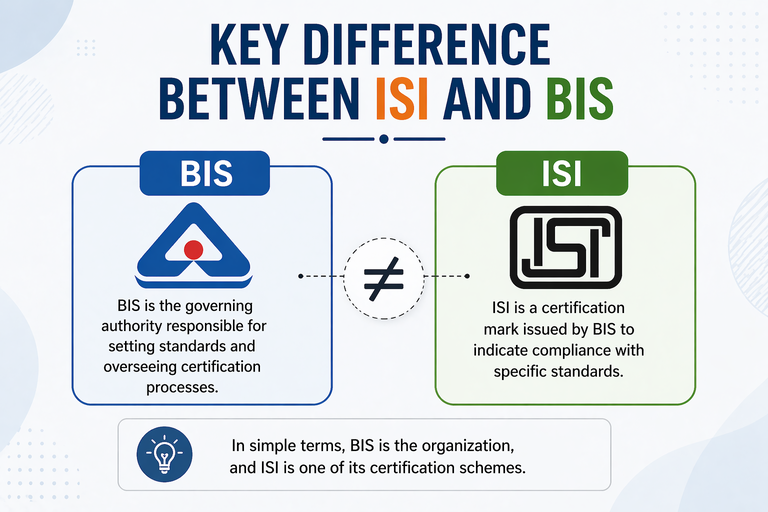
- BIS is the governing authority responsible for setting standards and overseeing certification processes.
- ISI is a certification mark issued by BIS to indicate compliance with specific standards.
In simple terms, BIS is the organization, and ISI is one of its certification schemes.
Businesses often depend on Product certification services in India to understand these differences and ensure correct compliance.
Importance of ISI and BIS Certification
Both ISI and BIS certifications play a vital role in maintaining product quality and protecting consumer interests. They ensure that products meet predefined standards and reduce the risk of defects or hazards.
For businesses, certification enhances credibility and builds trust among customers. By working with Product certification services in India, companies can achieve compliance and strengthen their market position.
Benefits of BIS Certification
1. Ensures Product Quality
BIS certification guarantees that products meet established quality standards, ensuring consistency and reliability.
2. Builds Consumer Trust
Consumers are more likely to trust products that comply with recognized standards. Certification acts as a mark of assurance.
3. Facilitates Market Access
Certain products require mandatory BIS certification before they can be sold in India. Compliance ensures smooth market entry.
4. Enhances Brand Reputation
Certified products reflect a company’s commitment to quality and safety.
Businesses often use Product certification services in India to achieve these benefits efficiently.
Benefits of ISI Mark
1. Indicates Compliance
The ISI mark confirms that a product meets Indian standards.
2. Mandatory for Specific Products
Certain items such as electrical appliances and construction materials require ISI certification.
3. Improves Safety
Products with the ISI mark undergo strict testing, ensuring safety for consumers.
4. Competitive Advantage
Having the ISI mark can differentiate products in a crowded market.
Companies rely on Product certification services in India to obtain the ISI mark without complications.
Products That Require ISI Certification
ISI certification is mandatory for several categories, including:
- Electrical appliances
- Cement and construction materials
- Gas cylinders
- Automotive components
- Household products
Manufacturers in these sectors must comply with ISI requirements to sell their products legally. Product certification services in India help businesses identify applicable standards and complete the certification process.
BIS Certification Schemes
BIS offers various certification schemes to cater to different industries:
1. ISI Certification Scheme
Applies to products that require mandatory certification.
2. Compulsory Registration Scheme (CRS)
Covers electronic and IT products.
3. Foreign Manufacturers Certification Scheme (FMCS)
Allows foreign manufacturers to obtain BIS certification.
Each scheme has specific requirements, and businesses often seek Product certification services in India for guidance.
Steps to Obtain BIS and ISI Certification
The certification process involves several steps:
1. Application Submission
Businesses submit an application with required documents.
2. Product Testing
Samples are tested in BIS-approved laboratories.
3. Factory Inspection
Authorities inspect manufacturing facilities.
4. Compliance Verification
All processes are evaluated for adherence to standards.
5. Certification Approval
Upon successful evaluation, certification is granted.
Navigating these steps can be complex, which is why companies prefer Product certification services in India for professional assistance.
Challenges in Certification
Obtaining BIS or ISI certification can be challenging due to:
- Complex documentation requirements
- Strict testing procedures
- Frequent regulatory updates
- Time-consuming processes
Without proper guidance, businesses may face delays or rejections. Product certification services in India help overcome these challenges by providing structured support.
Role of Professional Certification Services
Professional certification services play a crucial role in simplifying the process. They provide end-to-end support, including documentation, testing coordination, and compliance management.
By working with Product certification services in India, businesses can ensure that their applications meet all requirements and are processed efficiently.
Why Certification Matters in Today’s Market
In today’s competitive environment, certification is not just a regulatory requirement it is a strategic advantage. Consumers are more aware of product quality and safety, making certification an essential factor in purchasing decisions.
Businesses that invest in certification demonstrate their commitment to excellence. With the help of Product certification services in India, they can achieve compliance and build long-term trust.
Future of Product Certification in India
As industries evolve, the importance of product certification is expected to grow. Technological advancements and increasing consumer awareness will drive stricter standards and greater emphasis on compliance.
Businesses that stay ahead of these changes will have a competitive edge. Product certification services in India will continue to play a key role in helping organizations adapt to evolving requirements.
Final Thoughts
Understanding the difference between ISI and BIS is essential for businesses that aim to maintain high product quality and meet regulatory standards. BIS functions as the governing authority that develops and enforces standards, while the ISI mark represents certification that a product complies with those standards. This distinction is important for companies that want to ensure both legal compliance and customer trust. By using Product certification services in India, businesses can clearly understand these requirements and implement them effectively.
Both ISI and BIS certifications play a significant role in ensuring safety, reliability, and consistency in products. They help protect consumers while also enhancing the credibility of manufacturers in the market. However, the certification process can be complex, involving documentation, testing, and inspections. This is where Product certification services in India become highly valuable, as they provide structured guidance and simplify each stage of the process. With the support of Product certification services in India, businesses can avoid delays and ensure that all compliance requirements are met accurately.
In today’s competitive market, quality and compliance are not optional; they are essential for success. Companies that invest in proper certification demonstrate their commitment to excellence and gain a strong competitive advantage. Product certification services in India help organizations align their processes with national standards and maintain consistency in quality. By choosing Product certification services in India, businesses can confidently move forward with certification and focus on growth.
With the right planning, expert support, and a clear understanding of standards, organizations can achieve compliance, strengthen their reputation, and build a sustainable future in the industry.