
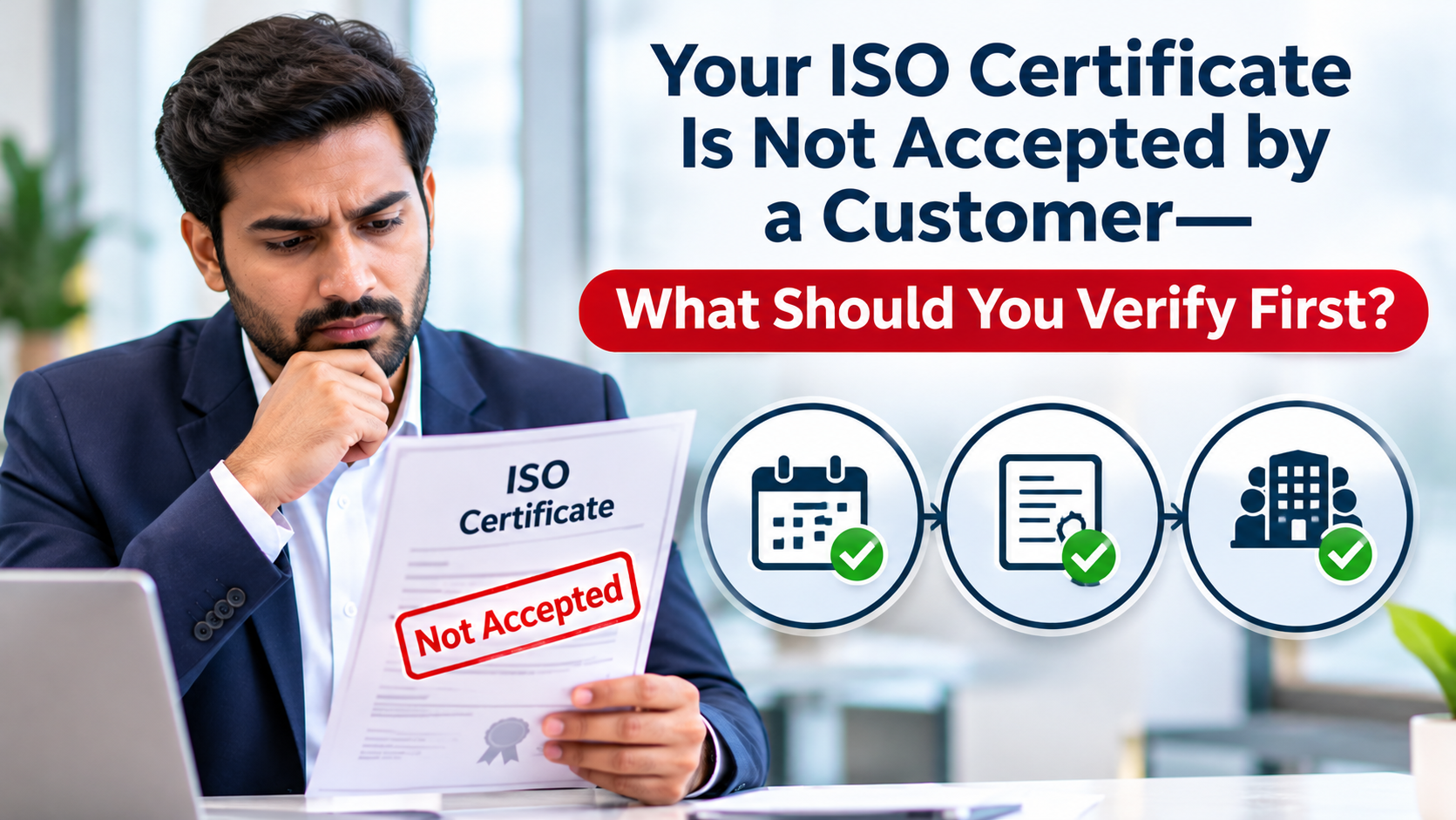
Your ISO Certificate Is Not Accepted by a Customer—What Should You Verify First?
If a customer rejects your ISO certificate, first verify its validity, accreditation, certification scope and alignment with contractual requirements. Businesses searching for the best iso certification company in india should understand that possessing a certificate does not automatically guarantee customer acceptance. The certificate must satisfy the customer’s specific qualification criteria.
Why Would a Customer Reject an ISO Certificate?
A customer may reject an ISO certificate because it does not meet their supplier qualification requirements. The problem could involve accreditation, certification validity, incorrect organisational details or insufficient scope coverage.
For example, a manufacturer may hold ISO 9001 certification, but its customer specifically requires ISO 14001 certification as part of an environmental management policy.
Before questioning the certificate’s authenticity, ask the customer to explain the rejection. Understanding their requirements helps businesses determine whether the issue involves documentation or a more significant certification gap.
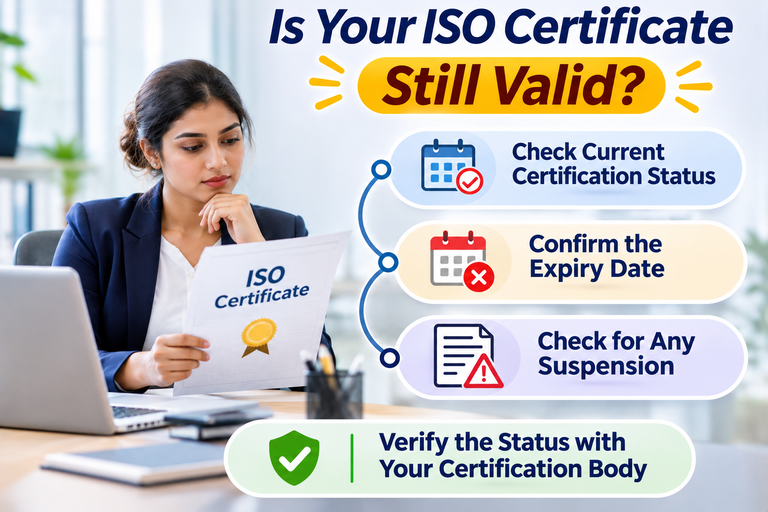
Is Your ISO Certificate Still Valid?
Checking the current certification status should be your first priority. A certificate displaying a future expiry date may still be suspended or withdrawn.
Has Your Certificate Expired?
Review the expiry date and confirm whether recertification has been completed successfully. Customers may reject documents that no longer represent active certification.
Has Your Certification Been Suspended?
Missed surveillance audits or unresolved significant nonconformities may result in certification suspension.
Effective ISO certificate verification involves confirming the current status with the issuing certification body rather than relying exclusively on printed dates.
Is Your Certification Body Properly Accredited?
Accreditation becomes particularly important when customers require independently recognised management system certification.
ISO/IEC 17021-1 establishes requirements concerning the competence, consistency and impartiality of bodies providing management system auditing and certification.
Businesses searching for the best iso certification company in india should verify whether the certification body holds appropriate accreditation for the required standard.
Accreditation for one management system standard does not automatically establish accreditation for every other standard.
Customers operating internationally may also specify accreditation recognised under relevant multilateral recognition arrangements.
Checking these requirements before selecting certification services can help prevent subsequent supplier approval difficulties.
Does Your Certificate Cover the Required Activities?
The certification scope must cover the activities relevant to the customer’s requirements. A valid certificate may still be unsuitable if its scope excludes the services or products being supplied.
For instance, a business certified for product distribution may begin manufacturing those products later. Its existing certificate may not cover the newly introduced manufacturing operations.
Reviewing the ISO certification scope helps determine whether the customer’s intended business relationship falls within the assessed management system boundaries.
If additional activities require coverage, discuss an appropriate scope extension with your certification body.
Are Your Business Details Correct?
Incorrect business information can create difficulties during customer verification.
Check whether the certificate contains accurate information regarding:
- Registered legal business name.
- Certified operational locations.
- Applicable management system standard.
- Certificate identification number.
- Certification scope and validity dates.
Businesses undergoing restructuring, relocation or legal name changes should notify their certification body promptly.
Even minor discrepancies between certification documents and supplier registration records may trigger additional questions.
An accurate certificate allows customers to establish a clear connection between the certified organisation and the business providing goods or services.
Can Your Certificate Be Verified Online?
Yes, accredited management system certificates may be verified through relevant certification databases.
The IAF CertSearch database provides information concerning certification status, applicable standards, scope, certified locations and accreditation arrangements.
However, an unsuccessful database search does not independently prove that a certificate is fraudulent. Contact the issuing certification body for clarification when information is unavailable or inconsistent.
Reliable ISO certificate verification requires checking authoritative records rather than depending entirely on logos, QR codes or promotional statements printed on certificates.
Does Your Customer Require a Specific Certification?
Some customers establish additional certification requirements based on industry risks, contractual obligations or supplier management policies.
A general quality management certificate may not satisfy requirements involving information security, environmental management or food safety.
Similarly, customers may require certification covering a particular manufacturing location rather than the organisation’s administrative headquarters.
When evaluating accredited ISO certification, businesses should compare customer expectations with their existing certification arrangements.
Obtaining written clarification helps avoid unnecessary audits or certificate modifications that fail to address the actual rejection reason.
What Would This Look Like in a Real Business?
Consider an automotive components manufacturer in Pune holding a valid ISO 9001 certificate.
The business submits its certification documents while applying for supplier registration with a prospective international customer.
However, the customer rejects the certificate because its scope covers component distribution, while the proposed contract involves manufacturing automotive components.
The manufacturer contacts its certification body and requests an evaluation of its manufacturing operations for appropriate scope extension.
Following the necessary assessment and approval, revised certification documents are issued.
This hypothetical example demonstrates that certificate rejection does not always indicate fraudulent certification. Sometimes, the existing ISO certification scope simply does not match commercial requirements.
What Should You Do After Certificate Rejection?
Begin by obtaining the customer’s rejection reason in writing. Compare their requirements against your certificate and supporting accreditation information.
Contact your certification body to discuss any discrepancies, missing information or required scope changes.
Businesses searching for the best iso certification company in india should prioritise transparent communication, appropriate accreditation and accessible verification arrangements.
Explore available ISO certification services when reviewing your organisation’s certification requirements.
Avoid obtaining another certificate immediately without identifying the original problem. Otherwise, your business may encounter the same rejection again.
How Can You Prevent Future Certificate Rejections?
Businesses can reduce rejection risks by reviewing customer requirements before applying for certification or entering new commercial agreements.
Maintain updated certification documents, complete surveillance assessments on schedule and communicate significant operational changes promptly.
Regular internal reviews should confirm that certificate details remain consistent with actual business activities.
Effective accredited ISO certification management also involves monitoring changes in customer qualification criteria.
Assign responsibility for maintaining certification records so that sales, procurement and compliance teams can access accurate information whenever customers request verification.

Conclusion
Customer rejection of an ISO certificate should encourage investigation rather than immediate replacement. Certification validity, accreditation, scope coverage and business identification must be examined alongside specific customer requirements.
Businesses looking for the best iso certification company in india should prioritise reliable assessment, transparent accreditation and accurate certification documentation.
Maintaining accredited ISO certification requires ongoing attention to organisational changes and contractual expectations. By identifying the actual rejection reason and implementing appropriate corrective measures, businesses can improve supplier qualification readiness, prevent recurring verification difficulties and maintain stronger customer confidence.
Frequently Asked Questions
1. Can a Customer Reject a Valid ISO Certificate?
Yes. A valid certificate may not satisfy specific contractual requirements. Businesses seeking the best iso certification company in india should understand customer expectations before selecting certification arrangements.
2. How Can I Check Whether My ISO Certificate Is Genuine?
Conduct ISO certificate verification through relevant databases and the issuing certification body. Confirm certification status, accreditation information, organisational details and applicable standards.
3. Does Every Customer Accept Accredited ISO Certification?
Not necessarily. Although accredited ISO certification supports confidence in independent assessment, customers may impose additional industry, contractual or accreditation requirements.
4. Can an Incorrect Certification Scope Cause Rejection?
Yes. An inaccurate or insufficient ISO certification scope may result in rejection when the activities required by the customer are not covered by existing certification.
5. Do I Need Another Audit After Certificate Rejection?
Not always. Following ISO certificate verification, administrative errors may require documentation updates, while significant scope changes or certification gaps could require additional assessment.