
What Are the 7 Quality Management Principles of ISO 9001? Complete Guide
In today’s competitive business environment, delivering consistent quality is essential for long-term success. Organizations across industries are adopting structured frameworks to improve their processes, enhance customer satisfaction, and maintain operational excellence. One of the most recognized standards that supports these goals is iso 9001 certification.
ISO 9001 is based on seven key quality management principles (QMPs). These principles form the foundation of a strong Quality Management System (QMS) and guide organizations in achieving consistent performance and continuous improvement. If you are planning to implement iso 9001 certification, understanding these principles is crucial.
What is ISO 9001 Certification?
ISO 9001 certification is an internationally recognized standard that defines the requirements for establishing, implementing, and maintaining a quality management system within an organization. It is designed to help businesses consistently deliver products and services that meet both customer expectations and regulatory requirements. By adopting iso 9001 certification, organizations can create a structured framework that improves operational efficiency, enhances process control, and reduces the chances of errors.
The primary objective of iso 9001 certification is to ensure consistency in quality while promoting a systematic approach to managing processes. It focuses on key elements such as customer satisfaction, leadership involvement, risk management, and continuous improvement. When businesses implement iso 9001 certification, they are better equipped to identify inefficiencies, streamline workflows, and maintain high standards across all operations.
Moreover, iso 9001 certification encourages organizations to adopt a process-based approach, where every activity is monitored, measured, and improved over time. This not only improves productivity but also helps in building trust with customers and stakeholders. Companies that invest in iso 9001 certification often experience better internal coordination, improved communication, and enhanced overall performance. Ultimately, iso 9001 certification serves as a powerful tool for achieving long-term business success and maintaining a strong market reputation.
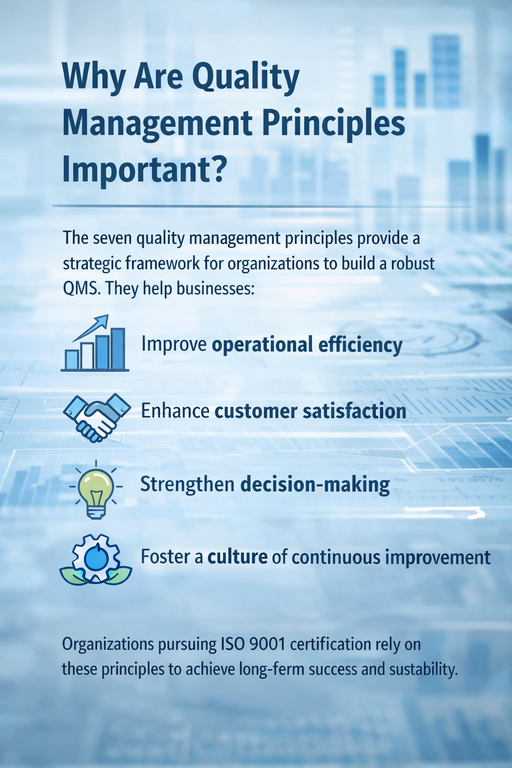
Why Are Quality Management Principles Important?
The seven quality management principles provide a strategic framework for organizations to build a robust QMS. They help businesses:
- Improve operational efficiency
- Enhance customer satisfaction
- Strengthen decision-making
- Foster a culture of continuous improvement
Organizations pursuing iso 9001 certification rely on these principles to achieve long-term success and sustainability.
The 7 Quality Management Principles of ISO 9001
Let’s explore each principle in detail and understand how they contribute to business excellence.
1. Customer Focus
The main principle of ISO 9001 is focusing on the customer. Organizations must understand and meet customer needs while striving to exceed expectations.
Key Elements:
- Understanding customer requirements
- Measuring customer satisfaction
- Responding to feedback
Benefits:
- Increased customer loyalty
- Improved brand reputation
- Higher customer retention
With iso 9001 certification, businesses can align their processes with customer expectations and deliver consistent value.
2. Leadership
Strong leadership is essential for establishing a clear vision and direction for the organization.
Key Elements:
- Setting quality objectives
- Creating a positive work culture
- Ensuring employee engagement
Benefits:
- Improved organizational alignment
- Better decision-making
- Increased employee motivation
Leadership plays a critical role in the successful implementation of iso 9001 certification.
3. Engagement of People
Employees are the backbone of any organization. Their involvement is crucial for achieving quality objectives.
Key Elements:
- Employee training and development
- Empowerment and accountability
- Open communication
Benefits:
- Higher productivity
- Improved innovation
- Stronger teamwork
Organizations with iso 9001 certification focus on engaging employees at all levels to drive continuous improvement.
4. Process Approach
The process approach focuses on handling activities as linked processes.
Key Elements:
- Identifying key processes
- Defining inputs and outputs
- Monitoring performance
Benefits:
- Improved efficiency
- Reduced errors
- Better resource management
By adopting this principle, businesses implementing iso 9001 certification can achieve consistent and predictable results.
5. Improvement
Continuous improvement is a key principle of ISO 9001.
Key Elements:
- Identifying opportunities for improvement
- Implementing corrective actions
- Monitoring progress
Benefits:
- Enhanced performance
- Increased competitiveness
- Long-term growth
Organizations with iso 9001 certification are committed to ongoing improvement in all aspects of their operations.
6. Evidence-Based Decision Making
Decisions should be based on data and analysis rather than assumptions.
Key Elements:
- Collecting accurate data
- Analyzing performance metrics
- Using insights for decision-making
Benefits:
- Better problem-solving
- Reduced risks
- Improved outcomes
This principle ensures that businesses with iso 9001 certification make informed and effective decisions.
7. Relationship Management
Managing relationships with stakeholders is essential for sustained success.
Key Elements:
- Building strong supplier relationships
- Collaborating with partners
- Maintaining stakeholder trust
Benefits:
- Improved supply chain performance
- Increased reliability
- Long-term partnerships
Organizations implementing iso 9001 certification benefit from strong and mutually beneficial relationships.
How These Principles Work Together
The seven principles of ISO 9001 are interconnected and support each other in building a comprehensive quality management system.
- Customer focus drives process improvement
- Leadership ensures alignment and direction
- Employee engagement enhances performance
- Data-driven decisions improve outcomes
By integrating these principles, businesses can maximize the benefits of iso 9001 certification.
Benefits of ISO 9001 Certification
Implementing ISO 9001 offers numerous advantages:
1. Improved Product and Service Quality
Ensures consistent delivery of high-quality outputs.
2. Increased Customer Satisfaction
Meets and exceeds customer expectations.
3. Enhanced Operational Efficiency
Streamlines processes and reduces waste.
4. Strong Market Reputation
Builds trust and credibility.
5. Better Risk Management
Identifies and mitigates potential risks.
Organizations that achieve iso 9001 certification gain a competitive edge in their industry.
Common Challenges in Implementation
While ISO 9001 provides significant benefits, businesses may face challenges such as:
- Resistance to change
- Lack of awareness
- Resource limitations
- Complex documentation
Overcoming these challenges requires commitment, training, and effective planning.
Tips for Successful ISO 9001 Implementation
To successfully implement iso 9001 certification, organizations should:
- Conduct a gap analysis
- Train employees regularly
- Maintain proper documentation
- Monitor performance continuously
- Focus on continuous improvement
These steps ensure a smooth implementation process and long-term success.
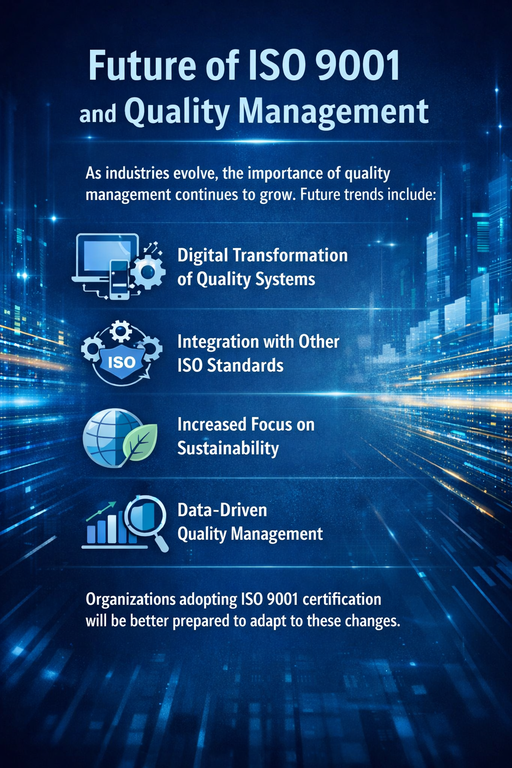
Future of ISO 9001 and Quality Management
As industries evolve, the importance of quality management continues to grow. Future trends include:
- Digital transformation of quality systems
- Integration with other ISO standards
- Increased focus on sustainability
- Data-driven quality management
Organizations adopting iso 9001 certification will be better prepared to adapt to these changes.
Final Thoughts
The seven quality management principles of ISO 9001 provide a solid and reliable foundation for building an effective quality management system. These principles guide organizations in improving their processes, increasing efficiency, and delivering consistent value to customers. By understanding and applying these principles, businesses can achieve higher levels of operational excellence and long-term sustainability.
Implementing iso 9001 certification goes beyond simply meeting standard requirements. It helps organizations create a culture that prioritizes quality, accountability, and continuous improvement. With iso 9001 certification, businesses can focus on identifying opportunities for growth, minimizing risks, and enhancing overall performance. This proactive approach ensures that organizations remain competitive in a constantly evolving market.
Furthermore, iso 9001 certification plays a crucial role in strengthening customer relationships by ensuring that expectations are consistently met or exceeded. It also improves decision-making by encouraging data-driven strategies and regular performance evaluations. Organizations that adopt iso 9001 certification are better positioned to adapt to changes, manage challenges effectively, and sustain long-term growth.
In conclusion, iso 9001 certification is not just a compliance requirement but a strategic investment in quality and excellence. Businesses that embrace iso 9001 certification can build a strong foundation for success, enhance their credibility, and maintain a competitive edge in the global marketplace.