
What Are the Key Pillars of ISO 27001? Everything You Need to Know
In an era where data breaches and cyber threats are increasing rapidly, protecting sensitive information has become a top priority for businesses of all sizes. Organizations must ensure that their data is secure, well-managed, and protected against risks. This is where ISO 27001 certification becomes important.
ISO 27001 is the globally recognized standard for information security management systems (ISMS). It provides a structured framework to help organizations identify risks, implement controls, and continuously improve their data security practices. If you are considering iso 27001 Certification, understanding its key pillars is essential for effective implementation and long-term success.
What is ISO 27001 Certification?
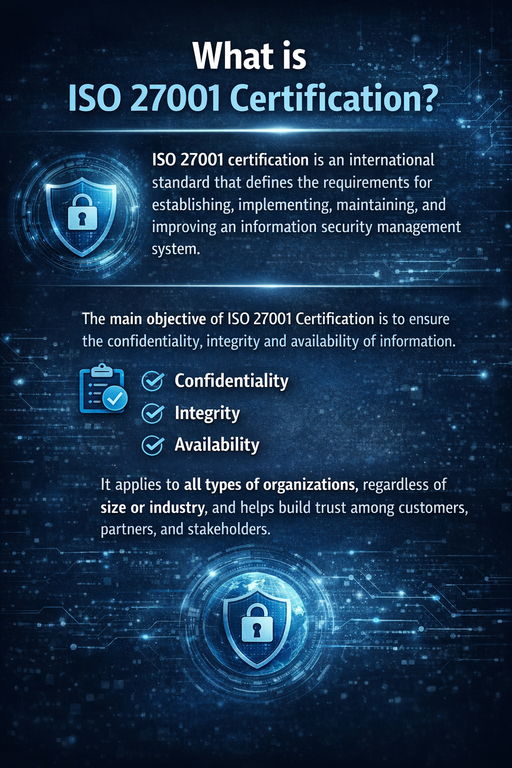
ISO 27001 certification is an international standard that defines the requirements for establishing, implementing, maintaining, and improving an information security management system.
The main objective of iso 27001 Certification is to ensure the confidentiality, integrity, and availability of information. It applies to all types of organizations, regardless of size or industry, and helps build trust among customers, partners, and stakeholders.
Why ISO 27001 Matters for Businesses
With increasing reliance on digital systems, businesses face constant threats such as data breaches, hacking, and unauthorized access. iso 27001 Certification helps organizations:
- Protect sensitive data
- Manage information security risks
- Ensure regulatory compliance
- Improve customer trust
- Strengthen business resilience
By implementing iso 27001 Certification, companies can create a secure environment for managing information assets.
Understanding the Key Pillars of ISO 27001
ISO 27001 is built on several core pillars that form the foundation of an effective information security management system. These pillars ensure that security is not just a technical function but an integrated part of the organization.
1. Information Security Policy
The first pillar of iso 27001 Certification is the establishment of a clear information security policy.
What It Includes:
- Security objectives
- Roles and responsibilities
- Commitment from top management
This policy acts as a guiding framework for all security-related activities within the organization.
Why It Matters:
A strong policy ensures that everyone in the organization understands the importance of information security and follows standardized practices.
2. Risk Assessment and Management
Risk management is at the core of iso 27001 Certification. Organizations must identify potential threats and vulnerabilities that could impact their information assets.
Key Steps:
- Identify risks
- Analyze their impact
- Implement mitigation strategies
Benefits:
- Reduces the likelihood of security incidents
- Helps prioritize security measures
- Ensures efficient use of resources
This pillar ensures proactive management of risks rather than reactive responses.
3. Asset Management
Asset management involves identifying and managing all information assets within the organization.
Examples of Assets:
- Data and databases
- Software systems
- Hardware devices
- Intellectual property
With iso 27001 Certification, businesses must maintain an inventory of assets and ensure they are adequately protected.
Importance:
Proper asset management ensures that critical information is not lost, misused, or accessed without authorization.
4. Access Control
Access control is a critical pillar that ensures only authorized individuals can access specific information.
Key Practices:
- User authentication
- Role-based access
- Password management
- Monitoring access logs
Benefits:
- Prevents unauthorized access
- Protects sensitive data
- Enhances accountability
Implementing access control measures is essential for maintaining data security.
5. Cryptography and Data Protection
Cryptography plays a vital role in protecting sensitive information.
Key Elements:
- Data encryption
- Secure communication channels
- Protection of stored data
With iso 27001 Certification, organizations must implement appropriate cryptographic controls to safeguard information.
Why It’s Important:
Encryption ensures that even if data is intercepted, it cannot be accessed or misused.
6. Physical and Environmental Security
Information security is not limited to digital systems. Physical security is equally important.
Measures Include:
- Secure office premises
- Access control systems
- Surveillance and monitoring
- Protection against environmental threats
This pillar ensures that physical access to sensitive information is restricted and controlled.
7. Operations Security
Operations security focuses on managing and protecting day-to-day IT operations.
Key Areas:
- Change management
- Backup procedures
- Malware protection
- System monitoring
With iso 27001 Certification, organizations must ensure that their operational processes are secure and well-managed.
8. Incident Management
Even with precautions, security incidents can still happen. This pillar focuses on how organizations respond to such incidents.
Key Components:
- Incident detection
- Reporting mechanisms
- Response strategies
- Recovery plans
Benefits:
- Minimizes damage
- Ensures quick recovery
- Improves future response
Managing incidents well is crucial to keeping the business running smoothly.
9. Business Continuity Management
Business continuity ensures that operations continue even during disruptions.
Key Aspects:
- Disaster recovery planning
- Backup systems
- Risk mitigation strategies
With iso 27001 Certification, businesses must prepare for unexpected events and ensure minimal disruption to operations.
10. Compliance and Legal Requirements
Organizations must comply with legal, regulatory, and contractual requirements related to information security.
Includes:
- Data protection laws
- Industry regulations
- Internal policies
This pillar ensures that businesses avoid legal penalties and maintain compliance.
How These Pillars Work Together
The pillars of iso 27001 Certification are interconnected and work together to create a comprehensive security framework.
- Policies define the direction
- Risk management identifies threats
- Controls mitigate risks
- Monitoring ensures effectiveness
This integrated approach ensures that information security is embedded across all levels of the organization.
Benefits of Implementing ISO 27001 Pillars
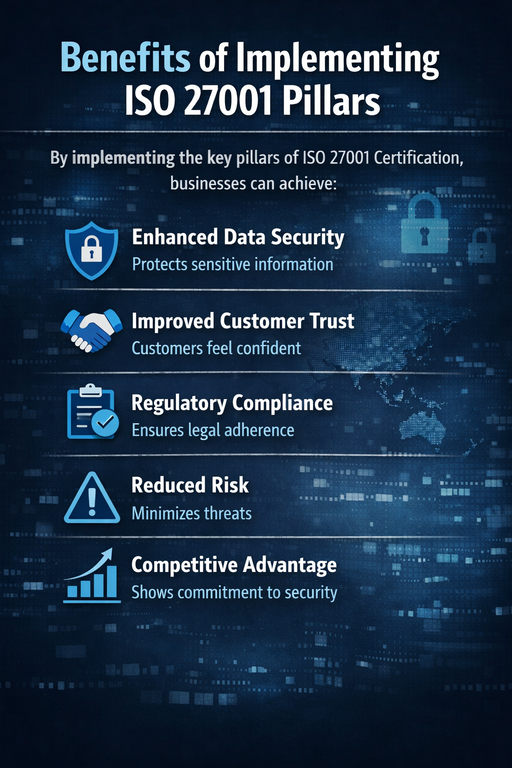
By implementing the key pillars of iso 27001 Certification, businesses can achieve:
1. Enhanced Data Security
Protects sensitive information from breaches and unauthorized access.
2. Improved Customer Trust
Customers feel confident in sharing their data.
3. Regulatory Compliance
Ensures adherence to legal requirements.
4. Reduced Risk
Minimizes potential threats and vulnerabilities.
5. Competitive Advantage
Demonstrates commitment to security and professionalism.
Common Challenges in Implementation
While iso 27001 Certification offers numerous benefits, businesses may face challenges such as:
- Lack of awareness
- Resource constraints
- Complex documentation
- Resistance to change
Overcoming these challenges requires proper planning and commitment.
Tips for Successful ISO 27001 Implementation
To successfully implement iso 27001 Certification, businesses should:
- Conduct a thorough risk assessment
- Train employees regularly
- Maintain proper documentation
- Monitor systems continuously
- Focus on continuous improvement
These steps ensure effective implementation and long-term success.
Future of ISO 27001 and Information Security
As cyber threats evolve, the importance of iso 27001 Certification will continue to grow.
Future trends include:
- Increased use of AI in security
- Stronger data protection regulations
- Greater focus on cloud security
- Automation of security processes
Organizations that adopt ISO 27001 will be better prepared to handle these challenges.
Final Thoughts
ISO 27001 certification is more than just a technical requirement; it is a strategic framework that enables organizations to manage information security in a structured and effective way. By implementing the key pillars of iso 27001 Certification, businesses can establish strong controls that protect sensitive data, reduce risks, and ensure uninterrupted operations. This approach not only strengthens internal processes but also builds confidence among customers and stakeholders.
The strength of iso 27001 Certification lies in its comprehensive framework, where each pillar works together to create a proactive security system. From identifying risks to managing incidents and ensuring continuous improvement, iso 27001 Certification helps organizations stay prepared for evolving cyber threats. It ensures that information assets are safeguarded through well-defined policies, access controls, and monitoring systems.
Today, data is one of the most valuable assets for any organization. Investing in iso 27001 Certification allows businesses to protect this asset while maintaining compliance with global standards. Moreover, iso 27001 Certification enhances credibility and provides a competitive advantage in the market.
Ultimately, adopting iso 27001 Certification is a long-term investment in security, trust, and growth. Organizations that prioritize iso 27001 Certification are better equipped to handle challenges, maintain business continuity, and succeed in a highly competitive and data-driven environment.