Why Take a Food Hygiene Audit Course? Benefits & Career Scope
In today’s rapidly growing food industry, maintaining safety and hygiene is not just a regulatory requirement, it’s a responsibility. From restaurants and food processing units to cloud kitchens and catering services, every food business must ensure that the products they serve are safe for consumption. This is where a food hygiene audit plays a crucial role.
With increasing awareness about food safety and stricter regulations, professionals trained in food hygiene audit practices are in high demand. Taking a food hygiene audit course can open doors to a rewarding career while helping organizations maintain high safety standards.
What is a Food Hygiene Audit?
A food hygiene audit is a systematic evaluation of a food business to ensure that it complies with established hygiene and safety standards. It assesses processes such as food handling, storage, sanitation, and employee hygiene.
According to industry insights, a food hygiene audit helps verify whether businesses follow proper hygiene policies and reduces the risk of unsafe food reaching consumers.
Additionally, a food hygiene audit ensures that organizations meet legal requirements, maintain quality standards, and continuously improve their processes.
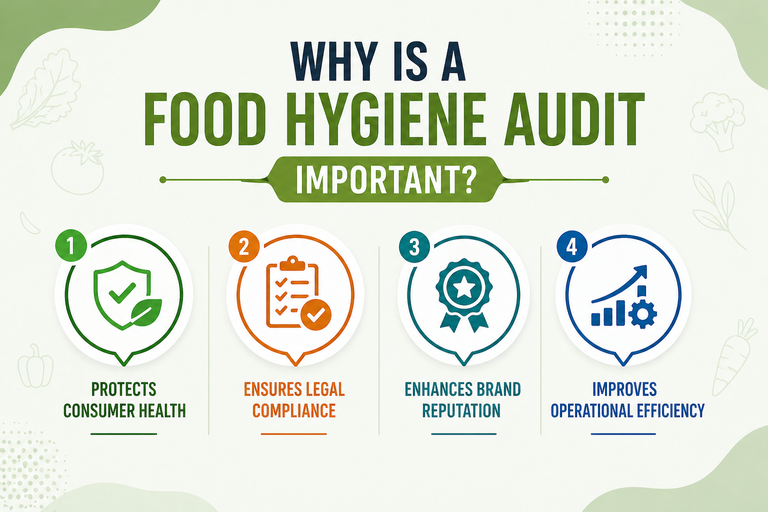
Why is a Food Hygiene Audit Important?
The importance of a food hygiene audit cannot be overstated. It directly impacts public health, business reputation, and operational efficiency.
Here are some key reasons why it matters:
1. Protects Consumer Health
A food hygiene audit helps identify contamination risks and ensures safe food handling practices. This helps lower the risk of foodborne illnesses.
2. Ensures Legal Compliance
Food businesses must follow strict safety regulations. Regular food hygiene audit processes help meet these requirements and avoid penalties.
3. Enhances Brand Reputation
A strong hygiene system builds customer trust. Businesses that follow proper food hygiene audit practices gain a competitive advantage.
4. Improves Operational Efficiency
Audits highlight inefficiencies and help businesses improve processes, reduce waste, and optimize performance.
What is a Food Hygiene Audit Course?
A food hygiene audit course is designed to train individuals in evaluating food safety systems, identifying risks, and ensuring compliance with hygiene standards.
Such courses typically cover:
- Food safety regulations and standards
- Audit techniques and methodologies
- Risk assessment and hazard analysis
- Documentation and reporting
- Corrective action planning
Completing a food hygiene audit course equips learners with practical skills required to perform audits effectively and professionally.
Key Benefits of Taking a Food Hygiene Audit Course
Enrolling in a food hygiene audit course offers multiple advantages for both individuals and organizations.
1. High Demand Career Opportunities
With the expansion of the food industry, the demand for trained auditors is increasing. Professionals skilled in food hygiene audit are needed across restaurants, manufacturing units, and regulatory bodies.
2. Strong Knowledge of Food Safety Standards
A food hygiene audit course provides in-depth knowledge of hygiene regulations, helping professionals ensure compliance and maintain quality.
3. Skill Development
The course enhances essential skills such as:
- Analytical thinking
- Attention to detail
- Risk assessment
- Problem-solving
These skills are crucial for conducting effective food hygiene audit processes.
4. Better Job Security
Food safety is a critical aspect of the industry, making it a stable career option. Professionals trained in food hygiene audit are always in demand.
5. Contribution to Public Health
By conducting a food hygiene audit, professionals play a vital role in ensuring safe food consumption and protecting public health.
Career Scope After a Food Hygiene Audit Course
A food hygiene audit course opens up diverse career opportunities in the food and hospitality sectors.
1. Food Safety Auditor
Professionals can work as auditors who inspect food businesses and ensure compliance with safety standards.
2. Quality Assurance Manager
Organizations require experts to maintain hygiene standards and oversee quality control processes.
3. Food Safety Consultant
Consultants help businesses implement and improve food hygiene audit systems.
4. Compliance Officer
These professionals ensure that organizations follow legal and regulatory requirements.
5. Trainer or Instructor
Experienced professionals can also train others in food hygiene audit practices.
Industry reports indicate that food safety auditors are responsible for evaluating hygiene practices, identifying risks, and recommending corrective actions.
Skills You Gain from a Food Hygiene Audit Course
To succeed in this field, professionals need a combination of technical and soft skills.
Technical Skills
- Knowledge of food safety standards (HACCP, ISO)
- Understanding of hygiene practices
- Audit planning and execution
- Documentation and reporting
Soft Skills
- Communication skills
- Critical thinking
- Attention to detail
- Time management
These skills are essential for performing a successful food hygiene audit and ensuring compliance.
Who Should Take a Food Hygiene Audit Course?
A food hygiene audit course is suitable for:
- Food industry professionals
- Quality control staff
- Restaurant managers
- Food business owners
- Students in food science or hospitality
Anyone involved in food handling or safety can benefit from learning food hygiene audit practices.
How a Food Hygiene Audit Course Improves Business Performance
Organizations that invest in training employees in food hygiene audit benefit significantly.
✔ Reduced Risk
Regular audits minimize contamination risks and improve safety standards.
✔ Cost Savings
Identifying inefficiencies helps reduce waste and operational costs.
✔ Better Compliance
A well-trained team ensures adherence to regulations.
✔ Improved Customer Trust
Customers prefer businesses that prioritize hygiene and safety.
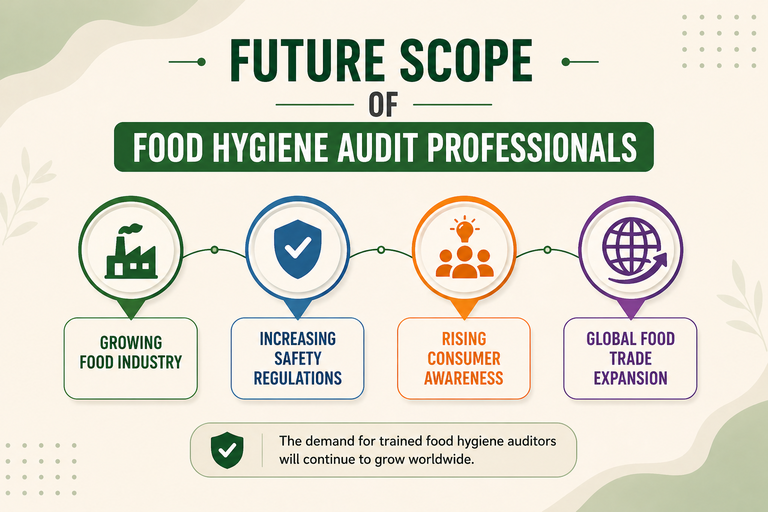
Future Scope of Food Hygiene Audit Professionals
The future of food hygiene audit professionals looks promising due to:
- Growing food industry
- Increasing safety regulations
- Rising consumer awareness
- Global food trade expansion
As food safety becomes a priority worldwide, the demand for trained auditors will continue to grow.
Final Thoughts
A food hygiene audit course is more than just a certification; it serves as a strong foundation for building a meaningful and rewarding career in the food industry. It equips individuals with the essential knowledge and practical skills required to maintain safety standards, protect public health, and support long-term business growth. By understanding the principles of a food hygiene audit, professionals can ensure that food handling, storage, and preparation processes meet strict safety requirements.
In today’s competitive and highly regulated food sector, maintaining high standards of hygiene is not optional. Businesses are expected to follow strict guidelines to prevent contamination and ensure consumer safety. This is where expertise in food hygiene audit becomes highly valuable. Professionals trained in food hygiene audit practices can identify risks, recommend improvements, and help organizations maintain compliance with food safety regulations.
One of the key advantages of learning food hygiene audit techniques is the ability to create safer food environments. By conducting regular audits, professionals can detect potential hazards early and take corrective actions before they lead to serious issues. This proactive approach not only protects consumers but also enhances the reputation of food businesses. Organizations that prioritize food hygiene audit processes are more likely to gain customer trust and loyalty.
Moreover, a career in food hygiene audit offers long-term stability and growth opportunities. As the demand for safe and high-quality food continues to rise, skilled auditors are needed across various sectors, including restaurants, food manufacturing units, and catering services. Having expertise in food hygiene audit gives professionals a competitive edge and increases their chances of securing better roles in the industry.
Another important benefit is the contribution to public health. Professionals involved in food hygiene audit play a critical role in preventing foodborne illnesses and ensuring that consumers receive safe and hygienic food. This responsibility makes the role both impactful and rewarding.
Whether you are just starting your career or looking to upgrade your skills, investing in a food hygiene audit course is a smart decision. It not only enhances your professional capabilities but also opens doors to diverse career opportunities. Mastering food hygiene audit practices allows individuals to make a significant difference in the food industry while achieving personal and professional growth.