
Who Is Eligible for ISO Certification? A Simple Breakdown
In today’s competitive business environment, organizations are constantly looking for ways to improve credibility, efficiency, and customer trust. A highly effective way to do this is by getting ISO certification. However, a common question many business owners ask is: Who is actually eligible for ISO certification?
If you are planning to apply for iso certification in india, understanding eligibility is the first step toward making an informed decision. The good news is that ISO certification is not limited to large corporations—it is accessible to businesses of all sizes and industries.
In this guide, we will break down eligibility in simple terms, explain who can apply, and help you understand the requirements involved.
What is ISO Certification?
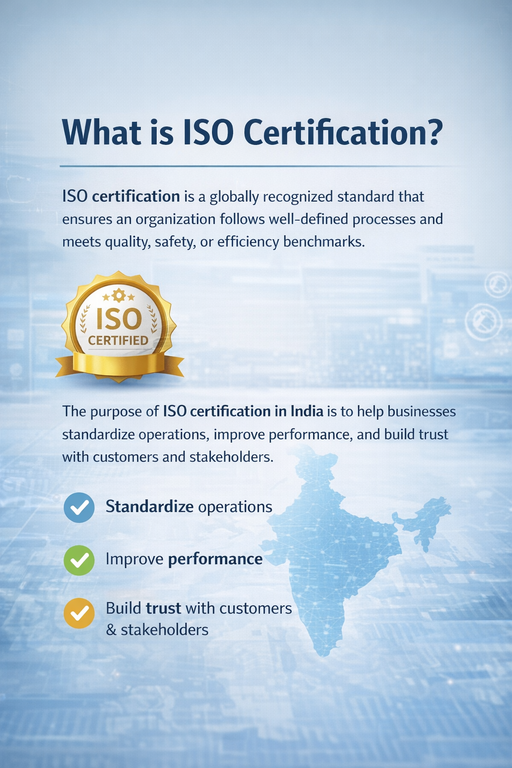
ISO certification is a globally recognized standard that ensures an organization follows well-defined processes and meets quality, safety, or efficiency benchmarks. It is not awarded to products but to management systems within an organization.
The purpose of iso certification in india is to help businesses standardize operations, improve performance, and build trust with customers and stakeholders.
Who Can Apply for ISO Certification?
One of the biggest advantages of ISO certification is its flexibility. There are no strict limitations on who can apply.
1. Small and Medium Enterprises (SMEs)
Small businesses are fully eligible for ISO certification. In fact, many startups and SMEs pursue iso certification in india to enhance their credibility and compete with larger organizations.
Benefits for SMEs:
- Improved brand image
- Better customer trust
- Increased business opportunities
2. Large Corporations
Large organizations often adopt ISO standards to maintain consistency across multiple departments and locations.
For them, iso certification in india helps:
- Standardize global operations
- Improve risk management
- Enhance efficiency
3. Startups and New Businesses
Even newly established businesses can apply for ISO certification. There is no minimum operational period required.
Startups seeking iso certification in india can benefit from:
- Early process standardization
- Strong market positioning
- Better scalability
4. Manufacturing Companies
Manufacturing businesses are among the most common applicants for ISO certification.
They use iso certification in india to:
- Improve product quality
- Reduce defects
- Ensure compliance with industry standards
5. Service-Based Businesses
Service providers such as IT companies, consultancies, and logistics firms are also eligible.
For them, iso certification in india helps:
- Improve service delivery
- Enhance customer satisfaction
- Streamline operations
6. Government and Public Sector Organizations
Government bodies and public sector units can also apply for ISO certification.
It helps them:
- Improve efficiency
- Enhance transparency
- Deliver better public services
7. Non-Profit Organizations (NGOs)
Non-profit organizations are equally eligible for ISO certification.
They can use iso certification in india to:
- Improve operational effectiveness
- Build donor trust
- Ensure accountability
Are There Any Eligibility Criteria?
While ISO certification is open to all types of organizations, there are certain basic requirements that must be met.
1. Defined Processes
Organizations must have clearly defined processes for their operations.
2. Documentation
Proper documentation is essential for compliance and audits.
3. Implementation of Standards
Businesses must implement the chosen ISO standard within their operations.
4. Internal Audits
Regular internal audits are required to ensure compliance.
5. Management Commitment
Top management must be actively involved in maintaining the system.
Meeting these requirements ensures smooth approval for iso certification in india.
Does Business Size Matter?
No, business size does not affect eligibility.
Whether you are a small startup or a large enterprise, you can apply for iso certification in india. ISO standards are designed to be scalable and adaptable to different organizational sizes.
Does Industry Type Matter?
ISO certification is not restricted to any specific industry.
It is applicable across:
- Manufacturing
- IT and software
- Healthcare
- Education
- Logistics
- Food and hospitality
This makes iso certification in india highly versatile and relevant for all sectors.
Common Misconceptions About Eligibility
Many businesses hesitate to apply due to misunderstandings.
Myth 1: Only Big Companies Can Apply
Reality: Businesses of all sizes are eligible.
Myth 2: Certification is Only for Manufacturing
Reality: Service industries can also apply.
Myth 3: You Need Years of Experience
Reality: Even startups can apply.
Myth 4: Complex Requirements
Reality: Requirements are structured but manageable.
Understanding these facts encourages more businesses to pursue iso certification in india.
How to Determine the Right ISO Standard
Eligibility is not just about applying—it’s also about choosing the right standard.
Popular ISO Standards:
- ISO 9001 (Quality Management)
- ISO 14001 (Environmental Management)
- ISO 45001 (Occupational Health and Safety)
- ISO 27001 (Information Security)
Selecting the right standard ensures maximum benefit from iso certification in india.
Steps to Become Eligible for ISO Certification
Even though most organizations qualify, they must prepare properly.
Step 1: Understand Requirements
Learn about the chosen ISO standard.
Step 2: Implement Processes
Align your operations with ISO guidelines.
Step 3: Train Employees
Ensure staff understands the system.
Step 4: Conduct Internal Audits
Identify and fix gaps.
Step 5: Apply for Certification
Undergo external audit for approval.
These steps help businesses achieve iso certification in india smoothly.
Benefits of ISO Certification for Eligible Businesses
Once eligible and certified, businesses gain several advantages:
1. Improved Efficiency
Streamlined processes reduce waste and errors.
2. Enhanced Credibility
Certification builds trust with customers.
3. Better Market Opportunities
Opens doors to new clients and contracts.
4. Regulatory Compliance
Ensures adherence to legal requirements.
5. Continuous Improvement
Encourages ongoing development.
These benefits make iso certification in india a valuable investment.
Challenges Businesses May Face
While eligibility is broad, implementation can be challenging.
Common Challenges:
- Lack of awareness
- Limited resources
- Resistance to change
- Documentation complexity
Overcoming these challenges is essential for successful certification.
Tips to Ensure Eligibility and Success
To improve your chances of success:
- Start with a gap analysis
- Maintain proper documentation
- Train employees regularly
- Monitor processes continuously
- Focus on improvement
These practices help businesses achieve and maintain iso certification in india effectively.
Future Scope of ISO Certification
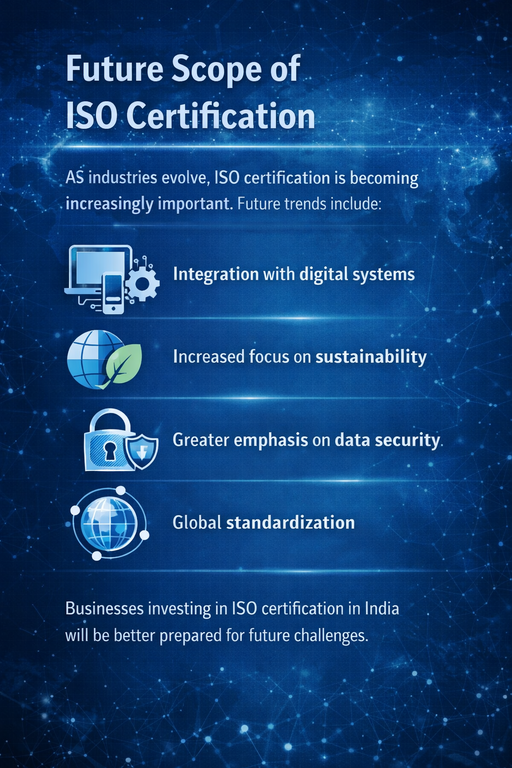
As industries evolve, ISO certification is becoming increasingly important.
Future trends include:
- Integration with digital systems
- Increased focus on sustainability
- Greater emphasis on data security
- Global standardization
Businesses investing in iso certification in india will be better prepared for future challenges.
Final Thoughts
ISO certification is accessible to almost every organization, regardless of its size, industry, or level of experience. The real focus is not on eligibility limitations but on how effectively a business can implement and maintain standardized processes. Organizations that are committed to improving their systems, maintaining proper documentation, and following structured practices can successfully achieve certification and sustain it over time.
For businesses planning to invest in iso certification in india, understanding eligibility is an essential first step toward building a strong operational foundation. The value of iso certification in india lies in its ability to help organizations streamline processes, improve efficiency, and enhance customer satisfaction. Whether it is a startup aiming to establish credibility or a large enterprise seeking consistency, iso certification in india offers a scalable framework for growth and performance improvement.
Moreover, adopting iso certification in india encourages businesses to focus on continuous improvement and long-term sustainability. It helps organizations identify gaps, reduce risks, and align their operations with global standards. Companies that prioritize iso certification in india are better equipped to compete in dynamic markets and build trust with customers and stakeholders.
Ultimately, ISO certification is not about restrictions or complex barriers—it is about unlocking opportunities. By committing to quality and embracing iso certification in india, businesses can achieve operational excellence, strengthen their market presence, and ensure long-term success in an increasingly competitive environment.