
ISO 50001 Latest Version: Updates, Changes & Key Features Explained
Energy efficiency and sustainability have become critical priorities for businesses worldwide. Organizations are now expected to manage energy consumption responsibly while improving operational performance. This is where ISO 50001 plays a vital role. With recent updates and amendments, the standard has evolved to address modern challenges like climate change and energy optimization. Businesses seeking compliance often work with an iso 50001 Certification body in India to implement the latest requirements effectively.
Understanding the latest version of ISO 50001, including its updates, changes, and key features, is essential for organizations aiming to stay competitive and sustainable.
What Is ISO 50001?
ISO 50001 is an international standard for energy management systems (EnMS). It provides a structured framework that helps organizations monitor, control, and improve energy performance.
The standard follows a continuous improvement approach, enabling businesses to reduce energy consumption, lower costs, and minimize environmental impact. Organizations typically collaborate with an iso 50001 Certification body in India to align their systems with these global standards.
Overview of the Latest ISO 50001 Version
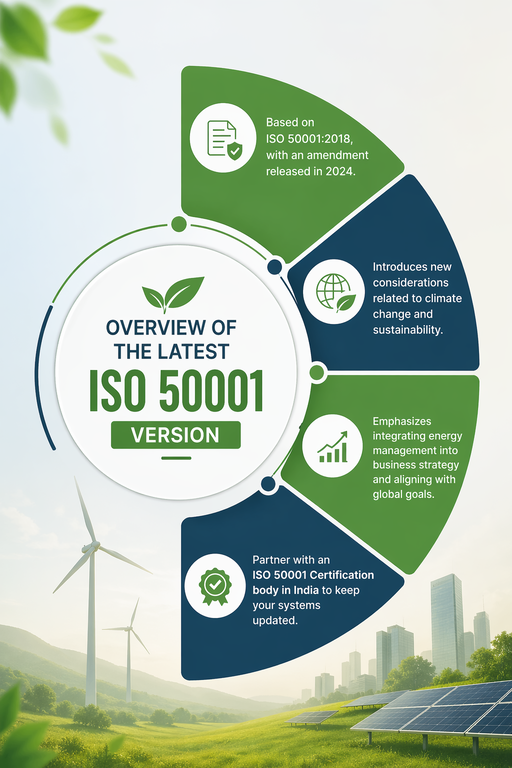
The current version of ISO 50001 is based on ISO 50001:2018, with a significant amendment released in 2024. This amendment introduces new considerations related to climate change and sustainability.
The updated version emphasizes integrating energy management into overall business strategy and aligning it with global environmental goals.
Businesses working with an iso 50001 Certification body in India can ensure that their systems are updated according to these latest requirements.
Key Updates in ISO 50001 Latest Version
1. Integration of Climate Change Considerations
One of the most important updates is the inclusion of climate change as a key factor in energy management systems. Organizations are now required to evaluate how climate-related issues impact their operations.
This update ensures that businesses consider environmental risks and opportunities as part of their strategic planning.
An experienced iso 50001 Certification body in India helps organizations integrate these requirements effectively.
2. Enhanced Organizational Context Analysis
The latest version strengthens the requirement to understand internal and external factors affecting energy performance. Companies must now assess broader environmental and stakeholder expectations.
This ensures a more comprehensive approach to energy management and long-term sustainability.
3. Stronger Leadership Involvement
Leadership plays a critical role in the success of an energy management system. The updated ISO 50001 places greater emphasis on top management involvement.
Organizations must demonstrate commitment through policy development, resource allocation, and continuous improvement initiatives.
Working with an iso 50001 Certification body in India ensures that leadership responsibilities are clearly defined and implemented.
4. Improved Risk-Based Thinking
The latest version reinforces the importance of identifying risks and opportunities related to energy performance. Businesses must proactively address potential challenges and leverage opportunities for improvement.
This approach aligns ISO 50001 with other management system standards and promotes better decision-making.
5. Alignment with High-Level Structure (HLS)
ISO 50001 follows a standardized framework known as the High-Level Structure. This allows easy integration with other ISO standards such as quality and environmental management systems.
The alignment ensures consistency across management systems and simplifies implementation.
6. Focus on Data-Driven Energy Management
The updated standard emphasizes the use of data and performance indicators to monitor energy consumption.
Organizations are required to establish energy baselines and performance indicators to track improvements effectively.
An iso 50001 Certification body in India helps businesses implement data-driven systems for accurate monitoring and reporting.
Key Features of ISO 50001
1. Energy Performance Improvement
ISO 50001 enables organizations to achieve measurable improvements in energy efficiency. Studies have shown that companies implementing the standard can achieve significant energy savings over time.
2. Continuous Improvement Framework
The standard follows the Plan-Do-Check-Act (PDCA) cycle, ensuring continuous monitoring and improvement of energy performance.
3. Cost Reduction
By optimizing energy usage, organizations can reduce operational costs and improve profitability.
4. Environmental Sustainability
ISO 50001 supports global sustainability goals by reducing greenhouse gas emissions and promoting responsible energy use.
5. Regulatory Compliance
The standard helps organizations comply with legal and regulatory requirements related to energy management.
Benefits of ISO 50001 Certification
1. Improved Energy Efficiency
Organizations can identify inefficiencies and implement measures to optimize energy use.
2. Competitive Advantage
Certification enhances credibility and demonstrates commitment to sustainability.
3. Reduced Environmental Impact
Lower energy consumption leads to reduced carbon emissions.
4. Better Decision-Making
Data-driven insights enable informed decisions and strategic planning.
Businesses often rely on an iso 50001 Certification body in India to achieve these benefits effectively.
How the Latest Updates Impact Businesses
The recent updates to ISO 50001 require organizations to adopt a more holistic approach to energy management. Companies must now:
- Consider climate change in their strategy
- Improve data collection and analysis
- Strengthen leadership involvement
- Align energy goals with business objectives
These changes ensure that energy management systems remain relevant in a rapidly evolving global environment.
Steps to Implement ISO 50001
1. Conduct Energy Review
Analyze current energy usage and identify areas for improvement.
2. Establish Energy Policy
Define objectives and commitments related to energy performance.
3. Set Targets and Action Plans
Develop measurable goals and strategies.
4. Implement Energy Management System
Align processes with ISO 50001 requirements.
5. Monitor and Measure Performance
Use data and indicators to track progress.
6. Certification Audit
An external audit is conducted by a certification body.
Working with an iso 50001 Certification body in India ensures a smooth implementation and certification process.
Common Challenges in ISO 50001 Implementation
- Lack of awareness about requirements
- Difficulty in data collection and analysis
- Resistance to change within organizations
- Complex documentation processes
Professional guidance helps overcome these challenges and ensures successful certification.
Why Businesses Need Expert Guidance
Implementing ISO 50001 requires technical expertise and a clear understanding of standards. Professional support simplifies the process and ensures compliance.
An iso 50001 Certification body in India provides end-to-end assistance, including documentation, audits, and system implementation.
This support helps organizations achieve certification efficiently and avoid common pitfalls.
Future of ISO 50001
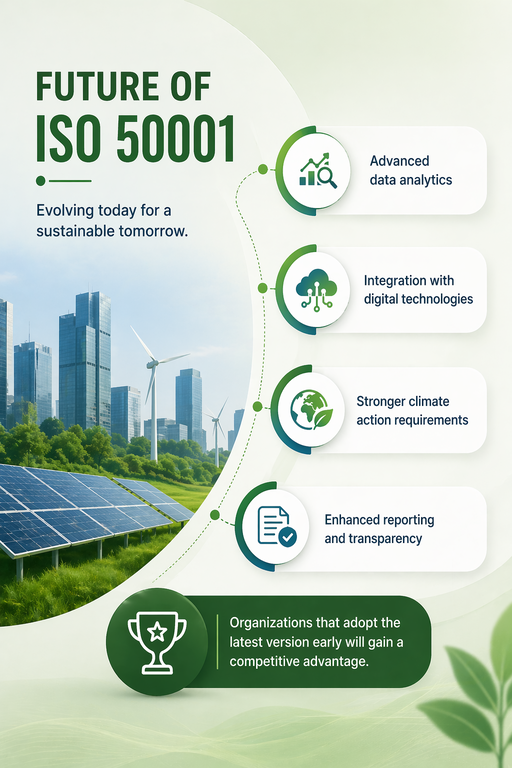
As sustainability becomes a global priority, ISO 50001 will continue to evolve. Future updates are expected to focus on:
- Advanced data analytics
- Integration with digital technologies
- Stronger climate action requirements
- Enhanced reporting and transparency
Organizations that adopt the latest version early will gain a competitive advantage.
Final Thoughts
The latest version of ISO 50001 clearly highlights the growing importance of energy management and sustainability in today’s competitive business environment. With new updates focusing on climate change, data-driven decision-making, and stronger leadership involvement, the standard offers a well-structured framework for improving overall energy performance. Organizations that want to stay competitive must adapt to these changes, and working with an iso 50001 Certification body in India makes this transition more effective and organized.
By choosing an iso 50001 Certification body in India, businesses can ensure that all updated requirements are properly understood and implemented. An experienced iso 50001 Certification body in India helps in aligning internal processes with the latest standards, reducing errors and improving efficiency. This support also ensures smooth documentation, accurate audits, and timely certification.
In today’s world, where efficiency and sustainability are key drivers of success, ISO 50001 is not just a compliance requirement but a strategic advantage. Partnering with an iso 50001 Certification body in India enables organizations to strengthen their energy management practices while maintaining regulatory compliance. Ultimately, with the guidance of an iso 50001 Certification body in India, businesses can achieve long-term growth, reduce environmental impact, and build a strong foundation for sustainable success.