
Understanding the 7 Core Principles Behind ISO Standards
In today’s global business environment, maintaining quality, consistency, and efficiency is essential for long-term success. This is where ISO standards play a crucial role. Organizations across industries adopt ISO frameworks to improve operations, enhance customer satisfaction, and achieve international recognition. To truly understand how these standards work, it is important to explore the foundation behind them—the seven core principles.
These principles are especially relevant when exploring different types of ISO, as they form the backbone of widely used standards like ISO 9001, ISO 14001, and ISO 45001. By understanding these principles, businesses can implement ISO systems more effectively and achieve sustainable growth.
What Are ISO Standards?
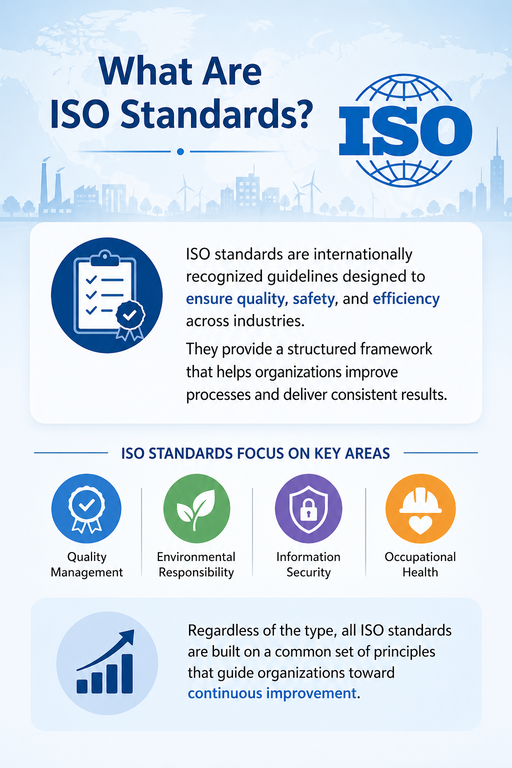
ISO standards are internationally recognized guidelines designed to ensure quality, safety, and efficiency across industries. They provide a structured framework that helps organizations improve processes and deliver consistent results.
There are various types of ISO standards, each focusing on a specific area such as quality management, environmental responsibility, information security, and occupational health. Regardless of the type, all ISO standards are built on a common set of principles that guide organizations toward continuous improvement.
Why the 7 Principles Matter
The seven core principles form the conceptual foundation of ISO standards, particularly ISO 9001. These principles are not rules but guiding values that help organizations build effective management systems and improve performance.
They were developed by international experts to ensure that businesses worldwide follow consistent practices. These principles focus on customer satisfaction, leadership, process efficiency, and long-term improvement.
Understanding these principles helps organizations implement different types of ISO more effectively and achieve better results.
The 7 Core Principles of ISO Standards
1. Customer Focus
Customer focus is the primary principle behind ISO standards. Organizations must understand customer needs, meet their expectations, and strive to exceed them.
Businesses that prioritize customer satisfaction build trust and long-term relationships. This principle ensures that all processes are aligned with delivering value to customers.
When implementing different types of ISO, customer focus remains a central objective.
2. Leadership
Leadership plays a critical role in the success of any ISO system. Strong leadership provides direction, sets objectives, and creates a culture of quality within the organization.
Leaders are responsible for aligning the organization’s goals with ISO requirements and ensuring that employees are motivated to achieve them.
Effective leadership is essential across all types of ISO standards.
3. Engagement of People
People are the backbone of any organization. ISO standards emphasize the importance of involving employees at all levels to improve performance and efficiency.
Engaged employees contribute to innovation, problem-solving, and continuous improvement. This principle ensures that everyone in the organization plays an active role in achieving quality objectives.
This principle is applicable to all types of ISO systems, regardless of industry.
4. Process Approach
The process approach focuses on managing activities as interconnected processes rather than isolated tasks. This helps organizations achieve consistent and predictable results.
By understanding how processes interact, businesses can improve efficiency, reduce errors, and enhance productivity.
Applying the process approach is crucial for implementing various types of ISO effectively.
5. Improvement
Continuous improvement is a key principle of ISO standards. Organizations must constantly evaluate their performance and identify areas for enhancement.
This principle encourages businesses to adopt a proactive approach, ensuring that they remain competitive and adaptable in changing environments.
All types of ISO standards emphasize ongoing improvement as a core objective.
6. Evidence-Based Decision Making
Decisions should be based on data and analysis rather than assumptions. This principle ensures that organizations make informed choices that lead to better outcomes.
Using reliable data helps businesses identify trends, measure performance, and implement effective solutions.
Evidence-based decision-making is essential across different types of ISO frameworks.
7. Relationship Management
Organizations depend on relationships with stakeholders such as suppliers, partners, and customers. Managing these relationships effectively is crucial for long-term success.
Strong relationships improve collaboration, enhance trust, and create mutual benefits for all parties involved.
This principle supports the successful implementation of all types of ISO standards.
How These Principles Apply Across Different ISO Standards
While the seven principles are most commonly associated with ISO 9001, they are also relevant to other ISO standards.
For example:
- Quality Management (ISO 9001): Focuses on customer satisfaction and continuous improvement
- Environmental Management (ISO 14001): Emphasizes sustainability and resource efficiency
- Information Security (ISO 27001): Ensures data protection and risk management
- Occupational Health & Safety (ISO 45001): Promotes workplace safety
Each of these types of ISO incorporates the same foundational principles, ensuring consistency across different management systems.
Benefits of Applying ISO Principles
Organizations that adopt the seven principles can achieve several benefits:
1. Improved Efficiency
Structured processes help reduce waste and improve productivity.
2. Enhanced Customer Satisfaction
Focusing on customer needs leads to better products and services.
3. Better Decision-Making
Data-driven decisions improve accuracy and outcomes.
4. Stronger Relationships
Effective collaboration with stakeholders enhances trust and reliability.
5. Continuous Growth
Ongoing improvement ensures long-term success.
By applying these principles, businesses can maximize the value of different types of ISO certifications.
Challenges in Implementing ISO Principles
While the benefits are significant, organizations may face challenges such as:
- Resistance to change
- Lack of awareness or training
- Difficulty in data collection
- Complex documentation requirements
Overcoming these challenges requires proper planning, leadership commitment, and employee involvement.
Why Understanding ISO Principles Is Important
Many organizations focus only on certification without understanding the underlying principles. This approach often leads to ineffective implementation.
By understanding the seven principles, businesses can:
- Build stronger management systems
- Improve operational efficiency
- Achieve better compliance
- Enhance overall performance
A deep understanding of these principles ensures successful adoption of various types of ISO standards.
Future of ISO Standards
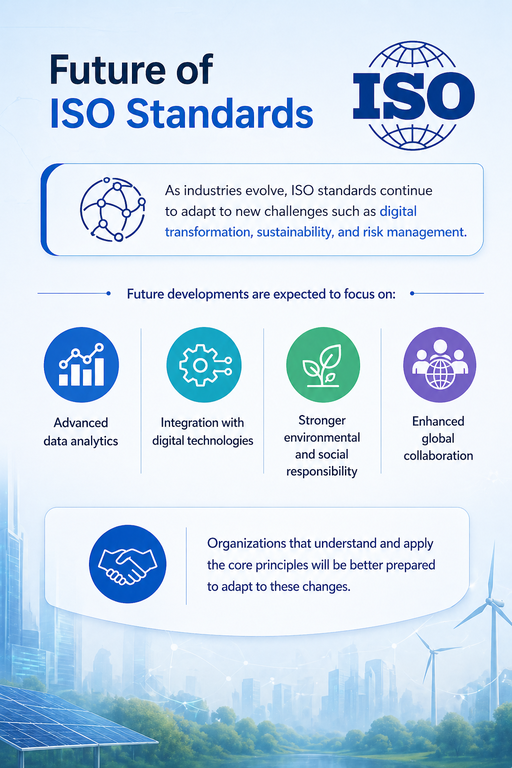
As industries evolve, ISO standards continue to adapt to new challenges such as digital transformation, sustainability, and risk management.
Future developments are expected to focus on:
- Advanced data analytics
- Integration with digital technologies
- Stronger environmental and social responsibility
- Enhanced global collaboration
Organizations that understand and apply the core principles will be better prepared to adapt to these changes.
Final Thoughts
The seven core principles behind ISO standards create a strong and reliable foundation for organizations aiming to build effective management systems. These principles guide businesses in improving quality, enhancing customer satisfaction, and achieving consistent long-term success. When organizations understand how these principles apply across different types of ISO, they can move beyond basic compliance and focus on meaningful improvements. The value of types of ISO lies not just in certification but in how effectively these principles are implemented in daily operations.
Understanding these principles is essential for applying various types of ISO in a structured and strategic way. Many businesses make the mistake of treating ISO as a checklist, but successful organizations view types of ISO as a framework for continuous improvement. By aligning processes with these principles, companies can create systems that are efficient, adaptable, and result-oriented. This approach ensures that types of ISO are not just implemented but also sustained over time.
Focusing on customer needs, leadership involvement, process efficiency, and data-driven decision-making allows organizations to unlock the full potential of types of ISO. These elements help in building strong internal systems while also improving external trust and credibility. When businesses consistently apply these principles across all types of ISO, they achieve better performance, reduced risks, and improved operational control.
In today’s competitive environment, adopting types of ISO based on these core principles is not just beneficial but necessary. Organizations that effectively use types of ISO gain a competitive advantage by delivering quality, maintaining consistency, and adapting to changing market demands. With the right approach, types of ISO become a powerful tool for sustainable growth, innovation, and global success.