
ISO 20000 Certification Duration for Medium Businesses Explained
In today’s competitive digital landscape, IT service management plays a critical role in business success. Organizations that want to streamline their IT processes and build trust often turn to ISO 20000 certification requirements as a benchmark for excellence. But one of the most common questions medium-sized businesses ask is: How long does ISO 20000 certification actually take?
The answer is not one-size-fits-all. The duration depends on several factors, including your organization’s current IT maturity, internal resources, and readiness level. In this detailed guide, we’ll break down everything you need to know about ISO 20000 certification timelines, stages, and influencing factors.
What is ISO 20000 Certification?
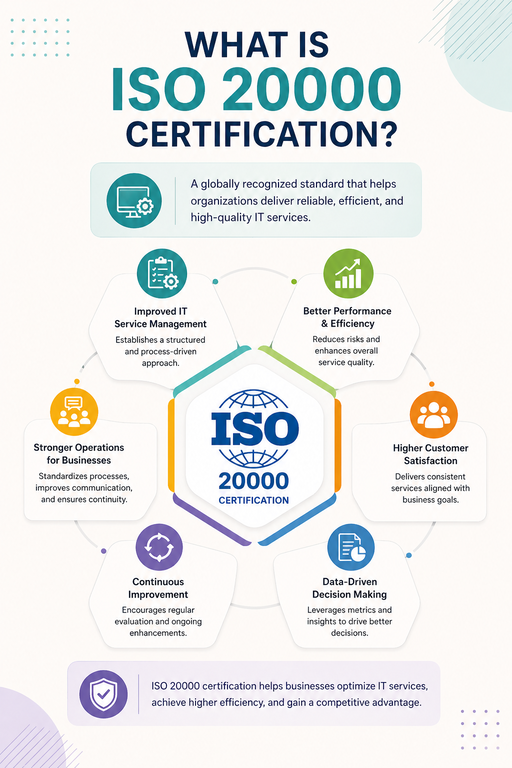
ISO 20000 certification is a globally recognized standard designed to improve IT Service Management (ITSM) within organizations. It provides a systematic and process-driven approach that enables businesses to deliver reliable, efficient, and high-quality IT services. By following iso 20000 certification requirements, organizations can ensure that their IT operations are aligned with international best practices and customer expectations.
The foundation of ISO 20000 certification lies in establishing a Service Management System (SMS). This system acts as a framework that helps businesses define policies, set objectives, and monitor performance effectively. When organizations adopt iso 20000 certification requirements, they gain better control over service delivery, reduce operational risks, and enhance overall service quality.
One of the key advantages of ISO 20000 certification is its focus on continuous improvement. Businesses are encouraged to regularly evaluate their IT processes and make necessary enhancements. This ensures that services remain consistent, scalable, and adaptable to changing business needs. By implementing iso 20000 certification requirements, companies can build a culture of accountability and efficiency within their IT departments.
For medium-sized businesses, ISO 20000 certification plays a crucial role in strengthening operational performance. It helps standardize processes, improve communication between teams, and eliminate inefficiencies. When organizations follow iso 20000 certification requirements, they are better equipped to manage incidents, handle service requests, and maintain service continuity without disruptions.
Another important aspect of ISO 20000 certification is its ability to enhance customer satisfaction. By aligning IT services with business goals, companies can deliver consistent and predictable outcomes. Adhering to iso 20000 certification requirements ensures that service levels are clearly defined, monitored, and improved over time, leading to stronger client trust and long-term relationships.
In addition, ISO 20000 certification supports better decision-making. With structured documentation and performance metrics in place, businesses can analyze data more effectively and identify areas for improvement. Implementing iso 20000 certification requirements enables organizations to make informed decisions that drive growth and innovation.
Overall, ISO 20000 certification is not just a compliance standard but a strategic tool that helps businesses optimize their IT services. By consistently following iso 20000 certification requirements, medium businesses can achieve higher efficiency, improved service quality, and a competitive advantage in the market.
Average ISO 20000 Certification Duration
Let’s get straight to the point.
For medium-sized businesses, the typical timeline for achieving ISO 20000 certification ranges between:
- 3 to 6 months (if systems and processes are already in place)
- Up to 12 months (if starting from scratch or lacking ITSM structure)
Industry data suggests that small to medium organizations can usually complete certification within 3–6 months, while larger or more complex organizations may require 6–12 months.
So, if your organization already follows structured IT processes, you can expect a faster certification journey.
Key Phases of ISO 20000 Certification
Understanding the process helps you estimate the timeline more accurately. ISO 20000 certification involves several stages:
1. Gap Analysis (2–4 Weeks)
This is the starting point where your current processes are evaluated against ISO 20000 certification requirements.
- Identify missing elements
- Review documentation
- Assess IT service maturity
This phase sets the foundation for the entire certification process.
2. Planning and Documentation (3–8 Weeks)
In this stage, businesses develop policies, procedures, and documentation required for compliance.
Key activities include:
- Defining service management scope
- Creating process workflows
- Establishing performance metrics
This phase may take longer if documentation is incomplete or inconsistent.
3. Implementation (4–12 Weeks)
Now comes the execution phase.
- Deploy ITSM processes
- Train employees
- Monitor system performance
- Conduct internal audits
ISO 20000 emphasizes continuous improvement, so organizations must ensure processes are functioning effectively.
4. Internal Audit and Management Review (2–4 Weeks)
Before the final certification audit, internal audits are done to check if everything follows the required standards.
- Identify non-conformities
- Implement corrective actions
- Review performance with management
This step is critical to avoid delays in certification.
5. Certification Audit (2–6 Weeks)
The certification audit is typically conducted in two stages:
- Stage 1 Audit – Documentation review
- Stage 2 Audit – Process implementation evaluation
The purpose is to ensure that your IT service management system is fully compliant and operational.
6. Certification Approval
Once all requirements are met and any issues are resolved, the certification is granted.
After certification:
- Validity: 3 years
- Annual surveillance audits required
- Recertification after 3 years
Factors That Affect Certification Duration
Not every medium business will complete certification in the same timeframe. Several factors influence the duration:
1. Current ITSM Maturity
Organizations already using structured IT processes can complete certification faster. If you are starting from scratch, expect longer timelines.
2. Size and Complexity
Even within medium-sized businesses, complexity varies:
- Multiple departments
- Diverse IT services
- Multi-location operations
More complexity = longer certification time.
3. Resource Availability
Having a dedicated team speeds up implementation.
- Skilled IT staff
- Internal auditors
- Management support
Lack of resources can significantly delay progress.
4. Documentation Readiness
Incomplete or outdated documentation can slow down the process.
ISO 20000 requires clear and structured documentation for:
- Policies
- Procedures
- Service reports
5. Employee Training
Your team must understand and follow ITSM processes.
Training takes time but ensures:
- Smooth implementation
- Reduced errors
- Faster audit clearance
6. Internal Audit Efficiency
Strong internal audits help identify issues early, preventing delays during certification audits.
How Medium Businesses Can Speed Up Certification
If your goal is to achieve ISO 20000 certification quickly, consider these strategies:
✔ Conduct a Pre-Assessment
Identify gaps early and create a roadmap.
✔ Use Existing Frameworks
If you already follow ITIL or similar frameworks, aligning with ISO 20000 certification requirements becomes easier.
✔ Assign a Dedicated Team
Having a focused team ensures faster implementation.
✔ Automate Processes
Using ITSM tools can reduce manual effort and improve efficiency.
✔ Focus on Documentation Early
Clear documentation avoids last-minute delays.
Common Challenges in ISO 20000 Certification
Even well-prepared organizations face challenges such as:
- Lack of management support
- Resistance to process changes
- Poor documentation practices
- Inadequate training
Addressing these early can significantly reduce certification time.
Why Certification Duration Matters
Understanding the timeline helps businesses:
- Plan resources effectively
- Set realistic expectations
- Avoid unnecessary delays
- Align certification with business goals
For medium businesses, balancing speed and quality is crucial. Rushing the process may lead to non-compliance, while delays can increase costs and effort.
Long-Term Commitment After Certification
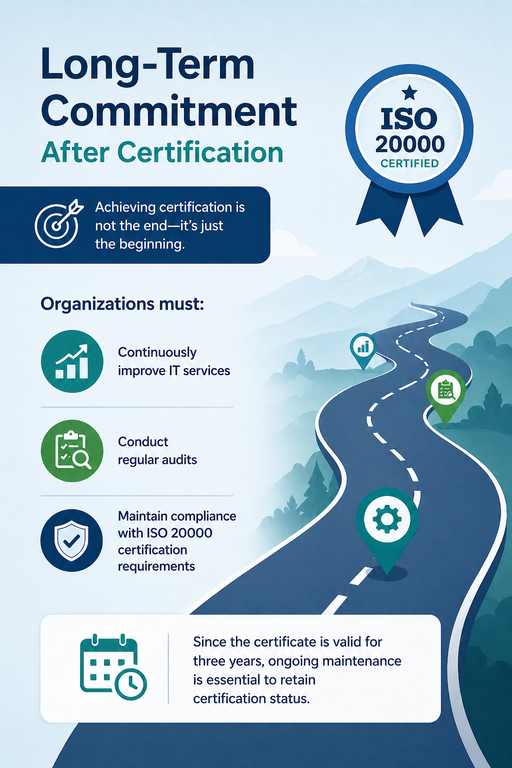
Achieving certification is not the end—it’s just the beginning.
Organizations must:
- Continuously improve IT services
- Conduct regular audits
- Maintain compliance with ISO 20000 certification requirements
Since the certificate is valid for three years, ongoing maintenance is essential to retain certification status.
Final Thoughts
For medium-sized businesses, ISO 20000 certification is a valuable investment that enhances IT service quality and business credibility. While the average timeline ranges from 3 to 6 months, the actual duration depends on your organization’s readiness, resources, and complexity.
By understanding the certification process and aligning with ISO 20000 certification requirements, businesses can streamline their journey and achieve certification efficiently.
If approached strategically, ISO 20000 certification not only improves IT service management but also sets the foundation for long-term operational excellence.