
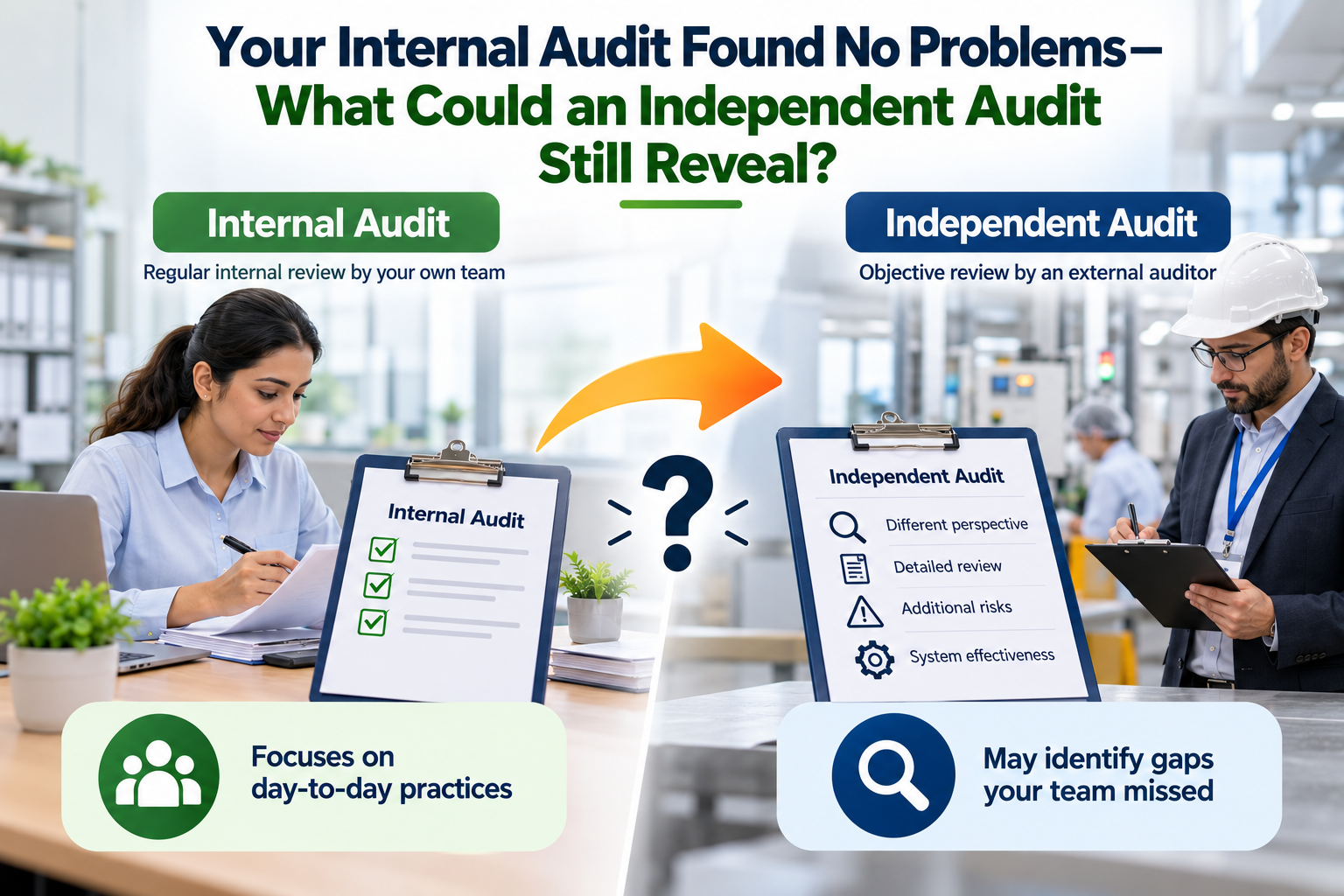
Your Internal Audit Found No Problems—What Could an Independent Audit Still Reveal?
A clean internal audit report feels reassuring. Records appear complete and employees seem confident. Yet a report without findings does not necessarily prove that every process works as intended. Audits examine selected evidence within a defined scope, and even a careful review can miss weaknesses that have become part of everyday routines.
A Third party audit brings a fresh perspective to those routines. Independent auditors can question familiar assumptions, compare documented procedures with actual practices, and examine whether controls remain effective when circumstances change. Their findings can help organisations improve rather than simply confirm what they already believe.
Familiarity Can Hide Everyday Shortcuts
Internal auditors often know the people, systems, and history behind each process. That knowledge helps them understand operations quickly, but it may also make longstanding shortcuts appear acceptable. A missing approval or delayed inspection might seem harmless because employees have always handled it that way.
An independent auditor is less likely to accept an explanation based solely on tradition. They may ask why a step is skipped, what the documented requirement says, and which records demonstrate consistent compliance. These questions can expose overlooked gaps.
This does not mean internal auditors lack competence. It means an outside viewpoint can complement their knowledge and challenge assumptions before small exceptions become serious problems.
Written Procedures May Differ From Reality
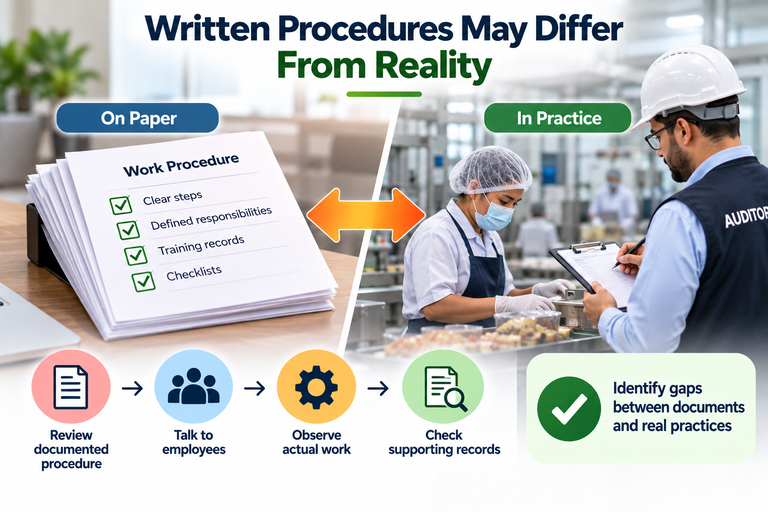
A process can look excellent on paper while functioning differently on the shop floor or in the office. Checklists may be signed after work is completed, training attendance may be recorded without checking understanding, and outdated instructions may remain in circulation.
During a Third party audit, auditors can follow a transaction from beginning to end. They might compare a procedure with employee explanations, observe how a task is performed, and inspect the evidence generated at each stage. Differences between these sources can reveal where documented controls are not operating consistently.
The goal is not punishment. It is to establish whether the organisation can rely on its records and whether practical conditions support compliance.
Risk Priorities May Have Changed
An internal audit schedule may be repeated year after year even as the organisation changes. New suppliers, equipment, customer expectations, staffing patterns, or regulatory requirements can introduce risks that older audit plans do not adequately address.
An independent reviewer may examine whether the audit programme gives sufficient attention to activities with the greatest potential impact. For example, document storage might receive frequent checks while changes to production instructions receive little scrutiny. If employees use different versions of an instruction, the resulting inconsistency could affect quality.
Strong audit compliance requires more than completing scheduled reviews. It requires recognising emerging risks and adjusting the depth and frequency of checks accordingly.
Employees May Describe the Ideal Process
Employees sometimes explain how work should happen rather than how it actually happens. They may worry that admitting delays, workarounds, or recurring difficulties will reflect badly on their team. Supervisors can also unintentionally influence responses by remaining nearby during interviews.
Independent auditors can ask open questions and compare answers with records and direct observations. When employees describe a practical obstacle, the auditor can investigate whether the procedure is realistic and whether management has provided sufficient resources.
An outside assessment cannot guarantee complete openness. However, neutral questioning and evidence-based follow-up may uncover issues that ordinary conversations fail to reveal.
Closed Findings May Still Be Recurring
A previous nonconformity may be marked closed because someone corrected the immediate error. But correcting a form, replacing a label, or repeating a training session does not always remove the underlying cause.
Suppose a department repeatedly submits incomplete records. Staff may be reminded to fill every field, yet the problem continues because the form is confusing or responsibilities are unclear. An independent auditor may review earlier audit findings, corrective actions, and later records to determine whether the response was effective.
This distinction matters. Lasting improvement depends on identifying why a problem occurred, assigning responsibility for a suitable solution, and verifying that the same weakness does not return.
Performance Numbers Can Conceal Problems
Management dashboards may show that targets are being met, but the figures do not always tell the complete story. A department could achieve its output target while rework increases. Customer complaints might decline because reporting becomes harder, not because service improves.
An independent auditor may ask how performance indicators are set, where the data comes from, and how the results are checked for accuracy. They can also examine whether management investigates unusual trends and uses the information to make decisions.
A reliable quality management system should measure outcomes that matter, not merely produce attractive reports. Indicators become useful when they help people identify weaknesses and act before those weaknesses affect customers.
External Suppliers Can Create Hidden Exposure
Organisations frequently depend on suppliers and contractors for materials, maintenance, transport, or specialist activities. Internal reviews may focus on work performed directly by employees while giving less attention to these external relationships.
An independent assessment may examine supplier approval criteria, incoming checks, performance monitoring, and responses to repeated delivery or quality problems. A supplier might remain approved even after conditions change or recurring complaints indicate that existing controls are inadequate.
Reviewing external processes helps establish whether responsibilities are clear and whether the organisation has enough evidence to trust outsourced activities. Supplier oversight should reflect risk, not paperwork alone.
Compliance Is Not the Same as Effectiveness
Following a procedure consistently is important, but the procedure itself may be outdated or ineffective. A complaint-handling process, for instance, could satisfy documentation requirements while taking too long to resolve customer concerns.
A Third party audit can examine whether processes meet applicable requirements and achieve their intended results. Auditors may review interactions between departments, how decisions are communicated, and whether improvement actions lead to measurable changes.
Not every inefficiency is a formal nonconformity. Findings should be connected to the agreed criteria and supported by evidence. Even so, observations about effectiveness can give management valuable direction for further investigation.
Preparing for an Independent Review
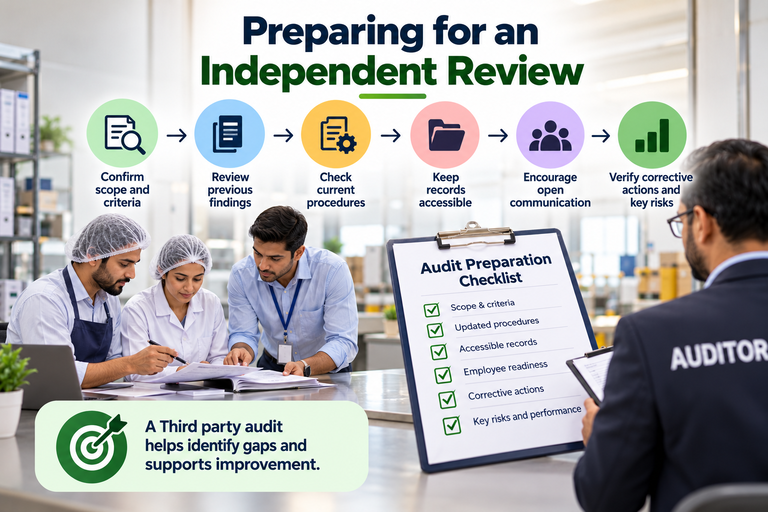
Preparation should focus on accurate information rather than creating a flawless appearance. Confirm the audit scope and criteria, review previous problems, and ensure procedures reflect current work. Make records accessible and encourage employees to explain processes openly, including difficulties they encounter.
Management should also examine whether corrective actions have worked, whether significant risks receive appropriate attention, and whether performance measures support meaningful decisions. If gaps are discovered, record them honestly and assign responsibility for addressing them.
An effective Third party audit is a structured opportunity to test the organisation’s understanding of its own operations. It should support learning, accountability, and practical improvements, not a last-minute exercise in arranging documents.
Conclusion
A clean internal review is encouraging, but it cannot establish that every weakness has been found. Familiar routines, incomplete evidence, changing risks, ineffective corrective actions, and misleading indicators can leave important questions unanswered.
A Third party audit offers independent scrutiny that can strengthen internal reviews and reveal where controls need attention. When organisations treat findings as useful evidence rather than personal criticism, they can improve their quality management system, reduce recurring problems, and make more confident decisions. The strongest audit outcome is not necessarily an empty findings list; it is a clearer understanding of what works, what does not, and what should improve next.