
Why Can Poor Documentation Make ISO 9001 Certification More Expensive?
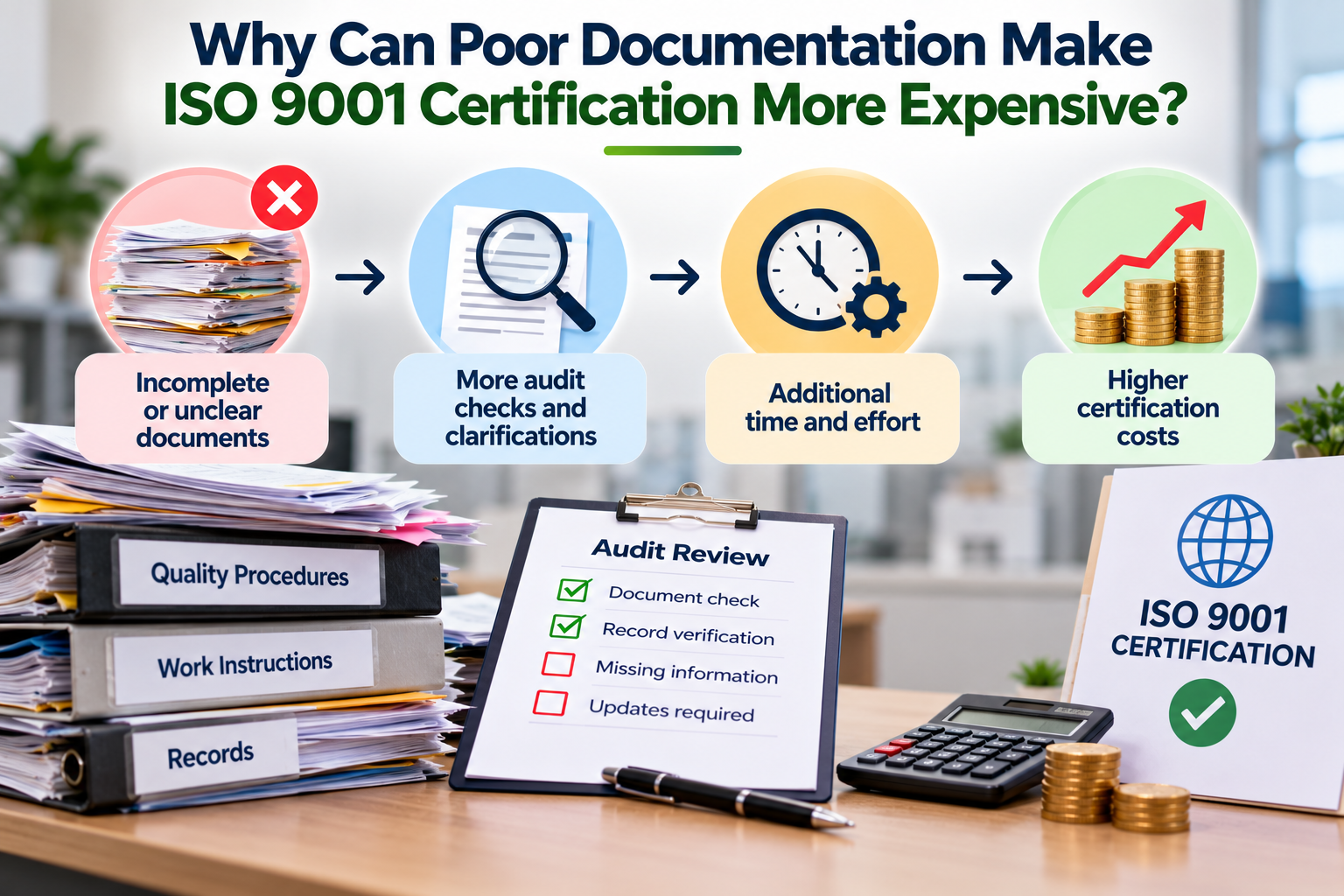
Many organisations assume that certification expenses depend mainly on business size, employee numbers, and audit duration. However, the condition of internal documentation can also influence the time and resources needed to achieve certification. Missing records, outdated procedures, and unclear responsibilities may turn a straightforward assessment into a lengthy improvement exercise.
When researching iso 9001 cost in india, businesses should consider the work required before an external audit, not simply the assessment itself. Well-maintained records help demonstrate that processes operate consistently. Poor documentation causes confusion, extra paperwork, and delays, making the certification process more difficult and time-consuming.
Why Documentation Matters During Certification
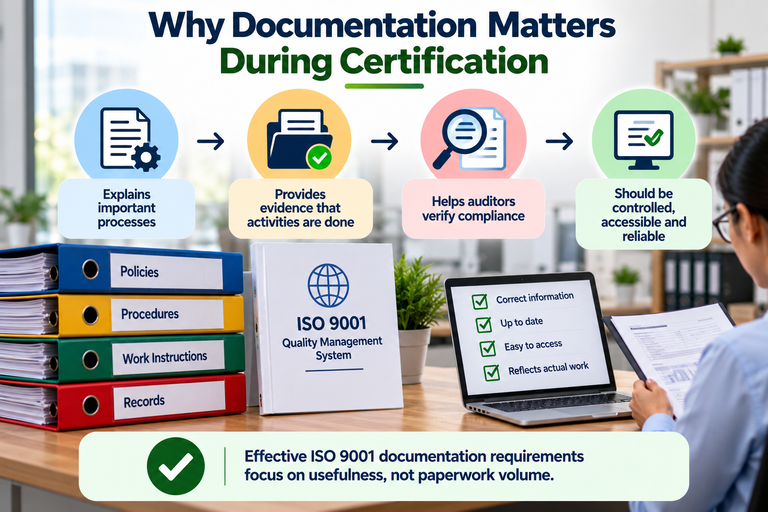
ISO 9001 helps organizations set up and maintain an effective quality management system. Documented information supports this system by explaining important activities and providing evidence that required processes have been carried out.
Auditors do not expect every organisation to maintain identical documents. The appropriate extent depends on business activities, complexity, and applicable requirements. Nevertheless, information that is required must be controlled, accessible, and reliable.
Effective ISO 9001 documentation requirements are therefore about usefulness rather than paperwork volume. A simple, accurate record that demonstrates a process is functioning can be more valuable than an elaborate manual nobody follows. Problems arise when essential evidence cannot be found or does not reflect actual working practices.
Missing Records Create Additional Work
Imagine a business that regularly inspects finished products but does not retain consistent inspection results. Employees may perform checks correctly, yet auditors cannot easily verify what happened, when it happened, or who authorised the outcome.
Management may then need to investigate missing evidence, review its recordkeeping methods, train employees, and establish a dependable process for future activities. This consumes time that could otherwise support routine operations.
Missing evidence cannot always be recreated retrospectively. Records should reflect genuine activities, not be manufactured to satisfy an audit. Organisations may need to demonstrate effective controls through new, authentic operating evidence before progressing.
These practical difficulties help explain why iso 9001 cost in india can be influenced by documentation readiness, even when the organisation believes its daily operations are satisfactory.
Outdated Procedures Lead to Confusion
A documented procedure becomes a liability when it describes a process that employees no longer follow. Perhaps production equipment has changed, approval responsibilities have shifted, or customer requirements have been updated without corresponding revisions.
During an audit, differences between written instructions and actual activities may raise questions about process control. Employees can also become confused when several versions of a procedure circulate simultaneously.
Correcting these weaknesses requires more than changing a date on a document. Process owners must confirm current practices, review the applicable requirements, approve accurate instructions, and communicate changes to relevant staff.
Consistent document control in ISO 9001 reduces this avoidable work by making approved information available where it is needed and preventing unintended use of obsolete versions.
Unclear Responsibilities Slow Audit Preparation
Documentation issues are not just about missing forms. Organisations may also struggle because nobody knows who owns a particular procedure, updates a register, approves a change, or maintains evidence of completed work.
When responsibilities are unclear, employees spend valuable time searching for answers. Different departments may produce conflicting records or assume another team has completed an essential activity.
A practical solution is to assign document ownership, approval authority, and review responsibilities. Employees should know what information they need to keep and where to find it.
Clear accountability supports quality management system certification because auditors can trace activities and supporting evidence without repeated explanations. It also makes the system easier to manage after certification.
Repeated Audit Findings Increase Effort
Poor documentation may contribute to nonconformities when required information is absent, uncontrolled, or inconsistent with actual practice. Addressing these findings involves identifying causes, implementing corrective actions, and verifying that the changes are effective.
For example, a missing training record might reflect a wider problem with employee competence tracking. Simply completing a form will not resolve the issue if responsibilities and verification methods remain unclear.
Depending on the significance of findings and the certification process, additional evidence or follow-up assessment may be necessary. Such activities can extend timelines and increase the resources devoted to achieving certification.
Businesses evaluating iso 9001 cost in india should therefore treat corrective action readiness as part of their preparation rather than an unexpected task after the audit.
Poor Organisation Wastes Employee Time
Even when records exist, inefficient storage can make them difficult to retrieve. Information may be scattered across personal computers, email attachments, paper folders, and shared drives with inconsistent naming conventions.
Employees then spend hours locating evidence, checking versions, or requesting copies from colleagues. Auditors may need additional explanations because documents lack clear identification or context.
A straightforward filing structure can prevent much of this frustration. Consistent names, appropriate access permissions, retention rules, and simple retrieval methods make information easier to manage.
Good document control in ISO 9001 does not necessarily require sophisticated software. The priority is a dependable approach that fits the organisation and protects records against loss, unauthorised changes, and confusion.
Excessive Paperwork Can Also Increase Costs
Some businesses respond to certification concerns by creating large quantities of unnecessary documentation. They develop complicated manuals, duplicate forms, and lengthy approval chains that add little practical value.
This approach can increase administrative workload while making essential information harder to identify. Employees may complete records mechanically without understanding their purpose, and managers may struggle to maintain consistency.
The goal of ISO 9001 documentation requirements is not to produce the greatest number of documents. Organisations should maintain and retain information appropriate to their processes and the standard’s requirements.
Streamlined documentation supports clearer communication, easier training, and more efficient internal reviews. Every document should have a meaningful purpose, a responsible owner, and a suitable method of control.
How to Reduce Documentation-Related Expenses
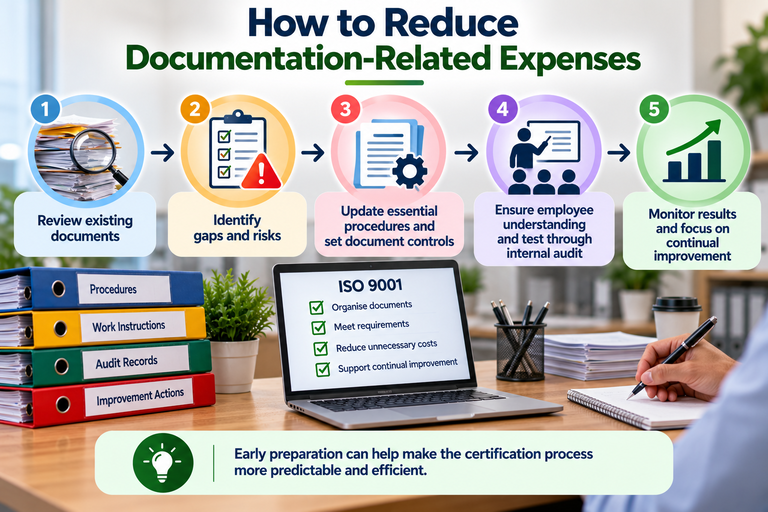
Start by comparing existing records with applicable requirements and actual business activities. Identify missing evidence, obsolete instructions, duplicated forms, and processes where responsibilities are uncertain.
Next, prioritise gaps according to their operational and compliance risks. Update essential procedures, establish document controls, and ensure employees understand how to record activities accurately. Conduct an internal audit to test whether improvements work in practice.
Management should also review recurring errors, customer feedback, performance results, and corrective actions. These records demonstrate whether the system supports continual improvement rather than existing only for an external assessment.
When considering iso 9001 cost in india, early preparation can reduce avoidable disruption. It cannot guarantee a particular audit outcome or eliminate legitimate certification activities, but it can make the process more predictable and efficient.
Conclusion
Poor documentation can make certification more demanding because missing evidence, outdated instructions, unclear ownership, and repeated findings create extra work. The consequences extend beyond the audit itself, affecting productivity, training, communication, and everyday decision-making.
Organisations can manage these challenges by maintaining accurate records, controlling document revisions, and verifying that written procedures match real operations. Effective documentation should help employees perform their work consistently, not burden them with unnecessary paperwork.
Ultimately, understanding iso 9001 cost in india means recognising the importance of preparation and management system maturity. A well-planned approach to quality management system certification helps keep records clear, avoid unnecessary delays, and improve business operations over time.