An FSSAI Inspector Finds a Hygiene Issue—What Should a Food Business Do Next?
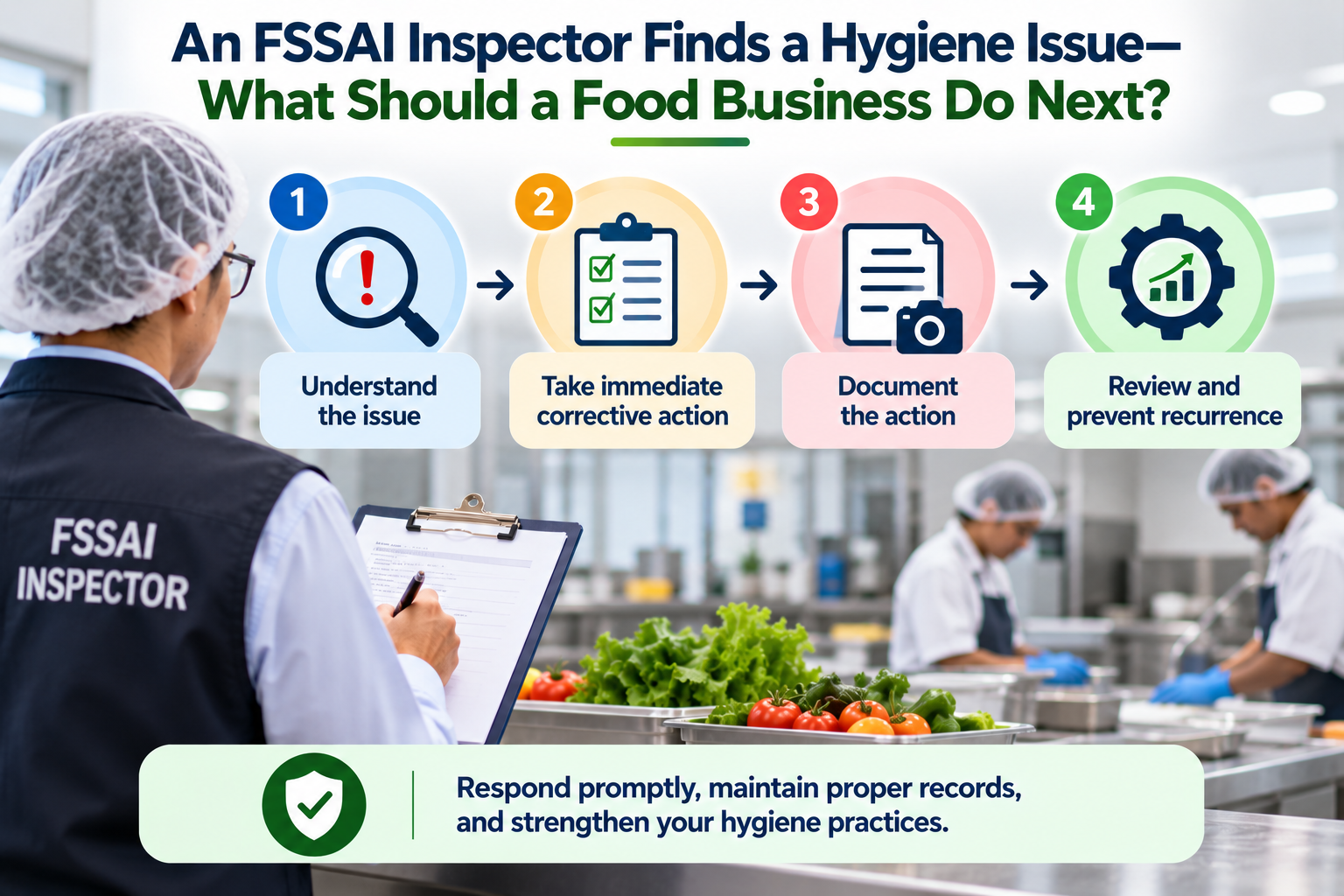
An unexpected hygiene finding can unsettle a food business owner. Perhaps an inspector notices residue beneath equipment, improper ingredient storage, or inadequate handwashing facilities. The immediate reaction may be to explain the problem or promise that it will never happen again. However, an effective response requires more than reassurance.
An FSSAI inspection examines whether food handling practices and premises meet applicable safety requirements. When a problem is identified, businesses should understand the finding, control any immediate risk, document their response, and prevent recurrence. A measured approach protects consumers while demonstrating that management takes hygiene responsibilities seriously.
Understand Exactly What the Inspector Found
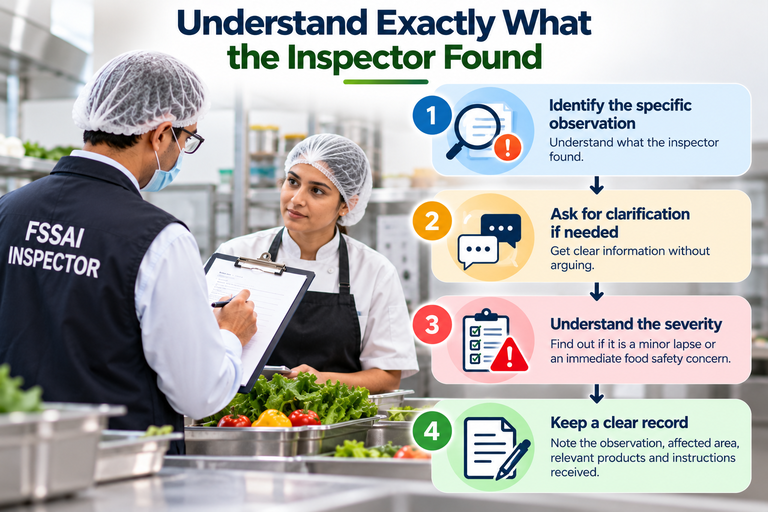
Start by listening carefully and identifying the specific observation. Was the concern related to sanitation, pest activity, temperature control, personal hygiene, or inadequate records? Ask for clarification when necessary, without turning the discussion into an argument.
An inspector may identify a minor procedural lapse or a condition that presents an immediate food safety concern. The appropriate response depends on the facts, the risk, and any formal directions issued by the authority.
Keep a clear record of the observation, affected area, relevant products, and instructions received. This becomes the starting point for meaningful food safety corrective actions rather than hurried changes based on assumptions.
Control Immediate Risks Before Anything Else
If the issue could affect food safety, act promptly to prevent further exposure. Depending on the circumstances, this may involve stopping an affected activity, segregating potentially unsafe products, restricting access to equipment, or arranging appropriate cleaning.
For example, if raw ingredients are stored above ready-to-eat food, separate them immediately and assess whether contamination may already have occurred. If refrigeration temperatures are unsuitable, evaluate the affected food using available records and appropriate safety criteria.
Do not assume that wiping a surface or moving a container automatically resolves every risk. Some situations require product assessment, disposal, testing, or other measures directed by competent personnel or authorities.
During an FSSAI inspection, prompt containment demonstrates responsibility, but it does not replace investigation or formal compliance obligations.
Review the Inspection Report Carefully
After the visit, examine the recorded findings and any written communication. Confirm which requirements are involved, what corrective measures are expected, and whether the authority has specified a deadline.
An observation during a visit is not necessarily the same as a formal improvement notice. Under the applicable legal framework, a Designated Officer may issue an improvement notice identifying failures, required measures, and the period allowed for compliance.
Management should distinguish recommendations from legally binding directions and respond through the appropriate process. Keep copies of inspection records, notices, correspondence, and evidence of actions taken.
Clear records support FSSAI compliance requirements and help prevent misunderstandings when the business is reviewed again.
Investigate Why the Problem Happened
Fixing the visible problem is necessary, but identifying its cause is equally important. A dirty surface may reflect an unsuitable cleaning method, inadequate equipment access, insufficient supervision, or unrealistic scheduling.
Speak with employees involved in the activity and review relevant records. Compare written procedures with actual working practices. Ask whether tools, training, time, and staffing were adequate for the task.
Avoid blaming an individual before understanding the circumstances. A repeated hygiene lapse often indicates a weakness in the wider system rather than a single careless action.
Effective food safety corrective actions address these underlying conditions. Otherwise, the same finding may reappear during the next inspection, despite an apparently successful cleanup.
Create a Practical Corrective Action Plan
A useful action plan explains what must change, who is responsible, when the work should be completed, and how success will be checked. Prioritise actions according to the seriousness of the risk and any official deadlines.
For instance, a damaged food-contact surface may require repair or replacement, while inconsistent handwashing practices may call for improved facilities, clearer instructions, and observed competency checks.
Assign responsibilities to people who have the authority and resources to complete the work. Keep progress records and escalate delays that could compromise safety or compliance.
A structured plan turns an FSSAI inspection finding into manageable tasks instead of allowing the issue to disappear among routine operational pressures.
Strengthen Staff Hygiene and Training
Employees influence hygiene standards during preparation, storage, and service. Even well-designed procedures can fail when workers do not understand them or cannot apply them consistently.
Review whether employees know when to wash their hands, how to prevent cross-contamination, and what to do when they notice unsafe conditions. Demonstrations and workplace observation may reveal gaps that attendance records alone cannot show.
Refresh training where needed, particularly after changes in equipment, staffing, ingredients, or procedures. Supervisors should reinforce correct practices during normal operations, not only before inspections.
Consistent food hygiene standards depend on practical knowledge, suitable facilities, and a workplace culture where employees report problems early.
Verify That Improvements Actually Work
Completing an action does not prove that it solved the problem. After introducing changes, review the affected activity and collect evidence that controls are functioning as intended.
Verification might include direct observation, equipment checks, temperature records, cleaning inspections, or appropriate hygiene testing. Choose methods that match the identified risk rather than relying on the same checklist for every problem.
If the issue returns, investigate again instead of repeatedly applying the original solution. A corrective action may have addressed only part of the cause.
Maintaining evidence of effectiveness supports FSSAI compliance requirements and provides management with greater confidence that improvements will last beyond the inspection visit.
Respond Properly to Official Notices
When a formal notice is issued, read it promptly and follow the specified requirements and timeline. Assign someone to coordinate the response, maintain evidence, and communicate with the relevant authority.
An improvement notice under Section 32 specifies a reasonable compliance period of at least fourteen days. That statutory minimum should not be mistaken for permission to delay immediate controls where food may be unsafe.
If a required action cannot be completed within the specified period, seek appropriate guidance from the authority rather than ignoring the deadline. Serious or unresolved noncompliance can lead to further regulatory action.
An FSSAI inspection should therefore trigger both practical improvements and careful attention to official communications.
Build Readiness Into Daily Operations
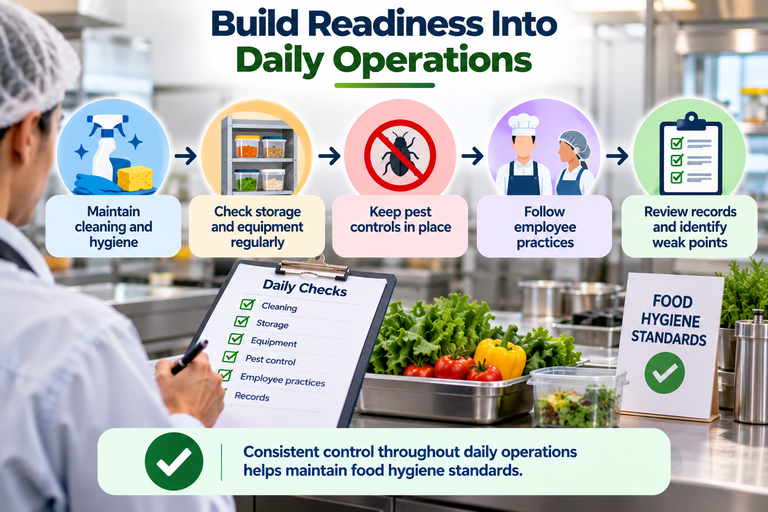
The strongest response is to make inspection readiness part of everyday management. Review cleaning effectiveness, storage conditions, maintenance needs, pest controls, employee practices, and records regularly.
Use internal checks to identify weak points before they become recurring problems. Encourage employees to report damaged equipment, missing supplies, or procedures that are difficult to follow.
Management should review trends in complaints, inspection observations, and corrective actions. These patterns can reveal weaknesses otherwise overlooked.
Maintaining food hygiene standards is an ongoing responsibility. A clean facility on inspection day matters, but consistent control during ordinary working hours matters more.
Conclusion
A hygiene finding does not automatically define the quality of an entire food business. What matters next is how responsibly the organisation controls risk, investigates causes, follows official directions, and verifies improvements.
An FSSAI inspection can provide valuable insight into weaknesses that routine activities have overlooked. By documenting observations, implementing food safety corrective actions, and maintaining FSSAI compliance requirements, businesses can reduce repeated failures and strengthen consumer protection.
Lasting improvement comes from everyday habits, clear accountability, and effective monitoring. Treating findings as opportunities for prevention helps build safer operations and dependable food hygiene standards.