
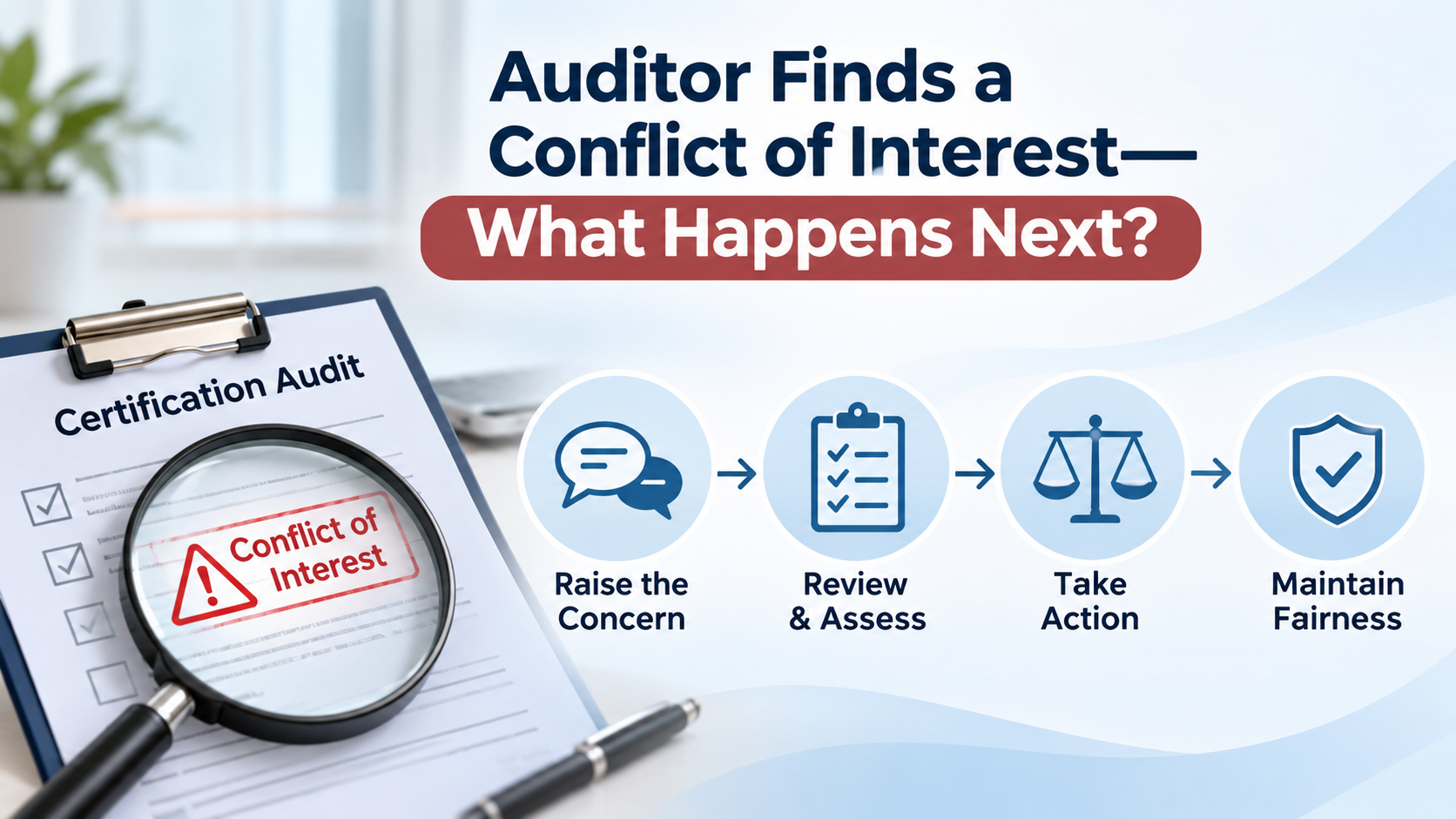
Your Certification Auditor Identifies a Conflict of Interest—What Happens Next?
When a certification auditor identifies a conflict of interest, the certification body must evaluate the impartiality risk and take appropriate action before allowing affected activities to continue. Organisations seeking third party ISO certification India should understand that auditor reassignment, independent review or additional verification may become necessary to protect certification credibility.
What Is a Conflict of Interest in an ISO Audit?
A conflict of interest arises when personal, professional or financial relationships could compromise an auditor’s ability to assess an organisation objectively.
Certification audits require impartial judgement based on documented evidence rather than personal preferences or previous business relationships.
For example, an auditor who previously helped develop a company’s management system may face a conflict when assessing the effectiveness of that same system.
Under ISO/IEC 17021-1:2015, certification bodies must identify, evaluate, address, monitor and document risks associated with impartiality.
The purpose of independent ISO certification is to ensure that certification decisions remain credible and free from inappropriate influence.
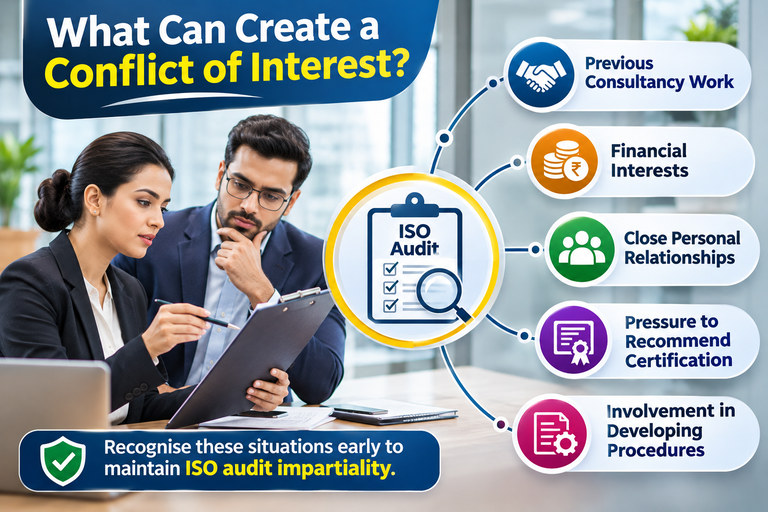
What Can Create a Conflict of Interest?
Conflicts can arise from relationships, previous assignments or external pressures that threaten an auditor’s objectivity.
Common situations include:
- Previous management system consultancy for the organisation.
- Financial interests in the business being audited.
- Close personal relationships with senior employees.
- Professional pressure to recommend certification.
- Previous involvement in developing procedures being assessed.
Not every professional connection automatically creates an unacceptable conflict. The certification body must examine the circumstances and determine whether the risk can be addressed effectively.
Maintaining ISO audit impartiality requires recognising these situations before they influence audit findings.
What Happens After an Auditor Reports a Conflict?
The certification body reviews the disclosure, evaluates the associated risks and determines whether the auditor can remain involved.
Is the Conflict Documented?
Yes, the circumstances must be recorded as part of the impartiality risk management process. Documentation helps establish what happened, which activities may be affected and what safeguards are necessary.
Is the Auditor Replaced?
Auditor replacement may become necessary when the identified conflict prevents objective assessment. Another competent auditor can be appointed to examine the relevant processes without the same conflicting relationship.
The objective of third party ISO certification India is to maintain reliable assessment rather than complete an audit regardless of unresolved concerns.
Will the Entire Audit Need to Be Repeated?
Not necessarily. The extent of additional auditing depends on when the conflict was discovered, which activities were affected and whether existing evidence remains reliable.
If the conflict is identified before auditing begins, changing the assigned auditor may be sufficient.
However, when concerns emerge after evidence has been collected, the certification body may need to arrange further verification or repeat affected assessments.
An independent reviewer should determine whether previous findings remain adequately supported.
The organisation should cooperate with these arrangements instead of treating additional verification as unnecessary administrative work.
What If the Auditor Previously Worked as Your Consultant?
Previous consultancy creates a risk because an auditor could end up evaluating their own work.
Clause 5.2.10 of ISO/IEC 17021-1:2015 identifies a minimum two-year separation following consultancy as a recognised measure for addressing this threat.
Businesses should disclose previous consultancy relationships before audit arrangements are finalised. Even when sufficient time has passed, other impartiality risks may still require evaluation.
Protecting independent ISO certification means ensuring that auditors assess management systems without defending decisions they previously helped make.
Can a Conflict Delay Your ISO Certificate?
Yes, an unresolved conflict can delay certification until appropriate safeguards have been implemented.
Businesses working towards tender deadlines, supplier approvals or contractual commitments may find such delays inconvenient. However, issuing certification based on potentially compromised findings creates greater concerns.
Certification decisions must remain supported by reliable evidence. Under ISO/IEC 17021-1, personnel making certification decisions must be different from those conducting the audit.
Organisations exploring third party ISO certification India should accommodate necessary impartiality reviews within their planning rather than pressuring auditors to complete assessments prematurely.
How Would This Situation Work in a Real Business?
Consider a manufacturing business in Pune preparing for its ISO 9001 certification audit.
During the opening meeting, the assigned auditor recognises that they helped develop the manufacturer’s quality management procedures eighteen months earlier.
The auditor reports this relationship to the certification body. After examining the circumstances, the certification body determines that another suitably qualified auditor should conduct the assessment.
The revised audit arrangements may affect the original schedule, but the business continues cooperating and provides access to the required documentation.
This example demonstrates how certification audit integrity can be protected through timely disclosure, appropriate reassignment and transparent communication.
What Should Your Business Do Next?
Your business should cooperate with the impartiality investigation and provide accurate information about relevant relationships.
Practical actions include:
- Disclosing previous professional relationships.
- Preserving relevant communications and audit records.
- Requesting clarification about revised audit arrangements.
- Avoiding attempts to influence auditor selection improperly.
- Cooperating with additional evidence verification.
Businesses should also maintain normal management system activities while the matter is being addressed.
A conflict involving an auditor does not automatically mean that the organisation’s management system fails to meet the applicable standard.
Can You Report a Conflict Yourself?
Yes, organisations can raise concerns when they discover circumstances that could compromise auditor independence.
Communicate your concerns through the certification body’s established channels and provide factual information supporting the disclosure.
Businesses should distinguish genuine impartiality concerns from disagreements about legitimate audit findings. Reporting a conflict should never become a method of avoiding nonconformities.
Maintaining ISO audit impartiality requires responsible communication from both the organisation and the certification body.
Indian businesses can explore the available ISO certification services when reviewing independent assessment arrangements.
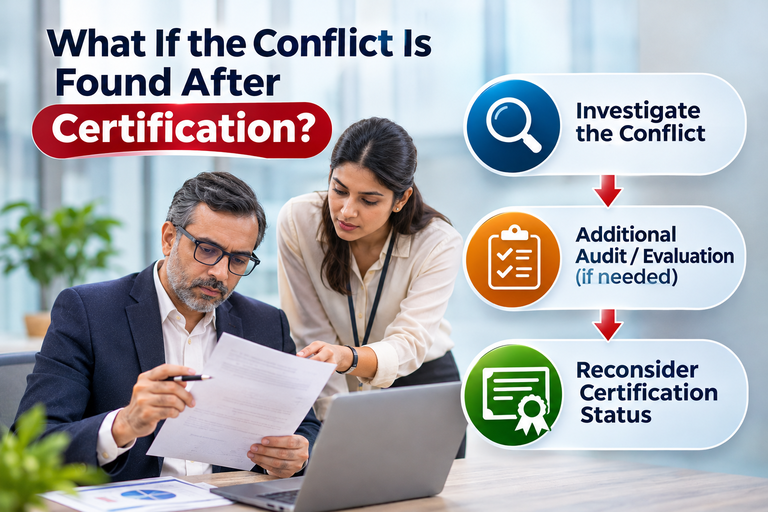
What If the Conflict Is Found After Certification?
The certification body should investigate whether the conflict affected the original assessment or certification decision.
Depending on the findings, additional auditing, independent evaluation or reconsideration of certification status may become necessary.
Discovery of a conflict does not automatically invalidate every certificate. The appropriate response depends on the seriousness of the impartiality threat and the reliability of supporting evidence.
Protecting certification audit integrity remains important throughout the certification cycle, including surveillance and recertification assessments.
Conclusion
Identifying a conflict of interest during certification demonstrates why effective impartiality safeguards matter. Rather than overlooking professional relationships or commercial pressures, certification bodies must evaluate risks and implement appropriate measures.
Organisations pursuing third party ISO certification India should encourage transparent communication, disclose relevant relationships and cooperate with independent verification whenever necessary.
Ultimately, protecting certification audit integrity requires objective evidence, competent auditors and decisions that remain unaffected by inappropriate influence. Addressing conflicts responsibly helps preserve confidence in certification and ensures that assessment outcomes reflect the actual condition of an organisation’s management system.
Frequently Asked Questions
1. Does a Conflict of Interest Automatically Cancel an ISO Audit?
No. During third party ISO certification India, the certification body evaluates the conflict and determines whether reassignment, further verification or other appropriate safeguards are necessary.
2. Can a Business Request a Different Certification Auditor?
Yes, businesses can raise justified objections concerning auditor impartiality. However, maintaining independent ISO certification requires the certification body to retain control over appropriate auditor selection.
3. Can an Auditor Ignore a Minor Conflict of Interest?
Auditors must disclose known situations that could create conflicts. Protecting ISO audit impartiality requires appropriate evaluation rather than allowing individuals to dismiss potential concerns without review.
4. Does an Auditor’s Conflict Count as a Business Nonconformity?
Not automatically. A conflict primarily concerns certification audit integrity and impartiality. Whether the business has violated any applicable management system requirements must be established separately through objective evidence.
5. Can Certification Continue if the Conflict Remains Unresolved?
Certification must not proceed when an unacceptable impartiality threat remains. Businesses pursuing third party ISO certification India should understand that reliable assessment takes priority over completing certification within an expected timeframe.