
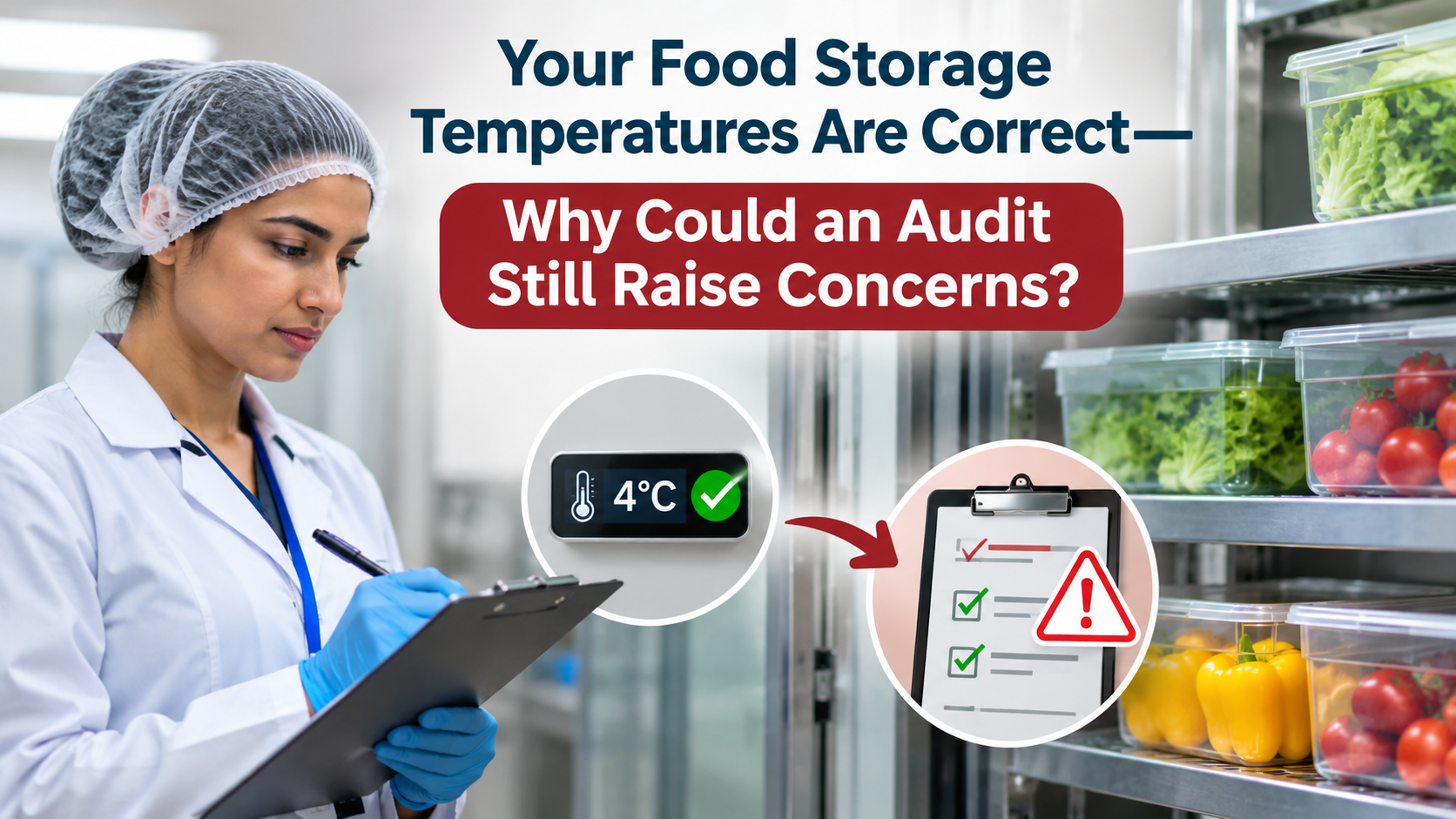
Your Food Storage Temperatures Are Correct—Why Could an Audit Still Raise Concerns?
Correct food storage temperatures do not automatically guarantee food safety. A food hygiene audit also examines cross-contamination risks, storage arrangements, temperature monitoring practices, equipment hygiene and stock rotation. Even when refrigerators and freezers maintain appropriate temperatures, weaknesses in everyday food handling can create conditions that compromise food safety.
Why Is Temperature Control Alone Not Enough?
Temperature control slows microbial growth, but it does not eliminate every food safety hazard. Contamination can occur during receiving, handling, preparation and storage, even when refrigeration equipment functions correctly.
For example, storing uncovered cooked food beneath raw chicken creates a contamination risk regardless of the refrigerator temperature.
Effective food storage hygiene requires businesses to protect food throughout its storage period rather than concentrating exclusively on temperature readings.
Under FSSAI Schedule 4 requirements, businesses must maintain appropriate storage conditions and protect food against contamination.
Can Poor Storage Arrangements Cause Audit Findings?
Yes, inappropriate storage arrangements can result in audit findings because they increase the possibility of contamination.
Are Raw and Cooked Foods Stored Separately?
Raw and cooked foods require appropriate segregation to prevent harmful microorganisms from transferring between products.
Auditors may examine shelf arrangements, container covers and employee handling practices.
Even a refrigerator operating within acceptable temperature limits can fail to provide adequate protection if incompatible food products are stored together.
Are Allergens Stored Safely?
Ingredients containing allergens should be identified and stored appropriately to minimise unintended allergen transfer.
During a food safety inspection, auditors may examine whether employees understand allergen segregation and whether storage containers carry appropriate identification.

Are Your Temperature Records Reliable?
Temperature records are reliable only when they accurately represent actual storage conditions.
An employee might record the refrigerator temperature every morning without checking whether the measuring device functions correctly. Such records may appear satisfactory despite underlying monitoring weaknesses.
Auditors may examine thermometer accuracy, calibration or verification records, monitoring frequency and employee responsibilities.
A food hygiene audit evaluates whether temperature monitoring provides meaningful evidence rather than simply confirming that employees complete daily checklists.
Businesses should investigate unusual readings and retain appropriate records of actions taken whenever temperatures exceed established limits.
Can Overloaded Refrigerators Create Problems?
Yes, overcrowded refrigerators can restrict air circulation and create uneven cooling conditions.
Although the equipment display may indicate an acceptable temperature, individual food products might experience different storage conditions.
Consider a refrigerator filled with large containers immediately before a busy service period. Restricted airflow and frequent door opening may affect temperature distribution.
Maintaining effective cold storage management requires suitable loading practices, adequate storage capacity and equipment maintenance.
Employees should understand how storage arrangements influence cooling performance instead of assuming that every shelf maintains identical conditions.
Does Stock Rotation Matter in a Hygiene Audit?
Yes, stock rotation helps businesses prevent expired ingredients and unnecessarily prolonged storage.
FSSAI food storage requirements recognise two important stock rotation methods:
- FIFO: First In, First Out.
- FEFO: First Expire, First Out.
Businesses should select the appropriate method according to product characteristics and shelf life requirements.
For example, newly delivered ingredients may have an earlier expiry date than existing stock. Following FEFO helps employees identify which products require earlier use.
Poor stock rotation can become a significant concern during a food hygiene audit, particularly when storage labels are missing or expiry dates are difficult to identify.
Can Dirty Storage Equipment Affect Audit Results?
Yes, dirty refrigerators, damaged shelves and contaminated containers can affect audit results even when temperature readings remain acceptable.
Auditors may identify food residue, liquid accumulation, damaged door seals or mould around equipment surfaces.
These conditions can indicate weaknesses in cleaning practices and preventive maintenance.
Effective food storage hygiene involves checking areas that employees may overlook during routine cleaning, including drainage points, shelf corners and door seals.
Cleaning records should reflect actual practices rather than simply demonstrate that scheduled activities have been marked as complete.
What Happens During a Power Failure?
A power failure can interrupt controlled storage conditions and potentially compromise food safety.
Businesses should establish procedures explaining how employees must respond when refrigeration equipment stops operating.
Important considerations include identifying affected products, assessing exposure duration, recording temperature changes and determining whether food remains suitable for use.
Restoring electricity does not automatically make affected food safe.
During a food safety inspection, auditors may request evidence showing how previous equipment failures were managed and whether employees understand their responsibilities.
What Would This Look Like in a Real Business?
Consider a restaurant in Chandigarh that maintains its refrigerator temperature at 4°C throughout normal operations.
During an audit, the manager presents complete temperature monitoring records. However, the auditor discovers uncovered prepared vegetables beneath raw poultry, several containers without preparation dates and accumulated liquid underneath storage shelves.
Although the recorded temperature meets the intended requirement, the storage practices present contamination and traceability concerns.
The restaurant must assess affected food, correct storage arrangements, improve identification practices and investigate cleaning failures.
This example demonstrates why cold storage management involves more than maintaining an acceptable temperature on a digital display.
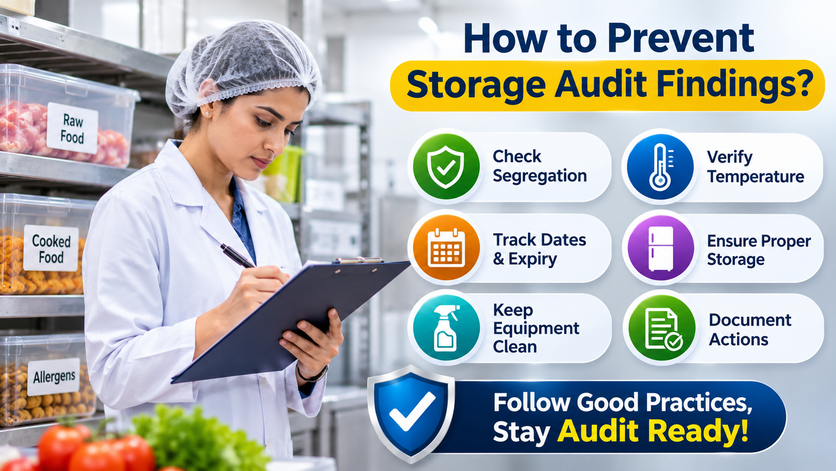
How Can Businesses Prevent Storage Related Audit Findings?
Businesses can prevent recurring findings by reviewing actual storage practices regularly rather than preparing only before scheduled assessments.
Practical measures include:
- Checking food segregation during every shift.
- Verifying temperature measuring instruments.
- Reviewing preparation dates and expiry information.
- Maintaining suitable refrigerator loading arrangements.
- Inspecting equipment cleanliness and physical condition.
- Documenting corrective actions following storage failures.
Managers should also observe employee practices during busy periods when established procedures may be overlooked.
Indian food businesses can explore food hygiene assessment services to understand how independent assessments can identify overlooked storage risks.
Conclusion
Correct storage temperatures represent only one component of effective food safety management. Cross-contamination, poor stock rotation, inadequate cleaning and unreliable monitoring can create significant concerns despite satisfactory temperature readings.
A food hygiene audit examines whether storage controls remain effective throughout everyday operations. Businesses should prioritise employee awareness, accurate documentation, equipment maintenance and consistent verification of storage practices.
Ultimately, maintaining food storage hygiene requires a comprehensive approach that protects food from contamination and deterioration at every stage. Regular assessments and timely corrective actions help businesses identify hidden weaknesses before they develop into serious food safety concerns.
Frequently Asked Questions
1. Can a Food Hygiene Audit Fail Despite Correct Storage Temperatures?
Yes. A food hygiene audit can identify deficiencies involving contamination, stock rotation, equipment cleanliness and food handling practices despite satisfactory temperature readings.
2. What Temperature Should Refrigerated Food Be Stored At?
The appropriate temperature depends on food characteristics and applicable requirements. FSSAI catering hygiene assessment criteria generally specify cold food storage at 5°C or below, with certain products requiring stricter limits. Effective cold storage management must consider these differences.
3. Why Do Auditors Check Refrigerator Cleaning Records?
Cleaning records help establish whether equipment receives regular attention. However, a food safety inspection also examines actual cleanliness to verify that documented activities are effective.
4. Can Expired Ingredients Affect Food Hygiene Audit Results?
Yes. Expired ingredients may indicate inadequate stock rotation and monitoring practices. Maintaining food storage hygiene requires regular expiry checks and appropriate segregation of unsuitable products.
5. Are Digital Temperature Records Enough for an Audit?
No. Digital records provide useful monitoring evidence, but a food hygiene audit also evaluates instrument reliability, corrective actions and actual food storage practices.
6. How Often Should Food Storage Areas Be Inspected?
Inspection frequency should reflect operational risks, food characteristics and applicable requirements. Regular internal checks support effective cold storage management and help identify emerging problems before external assessments.