
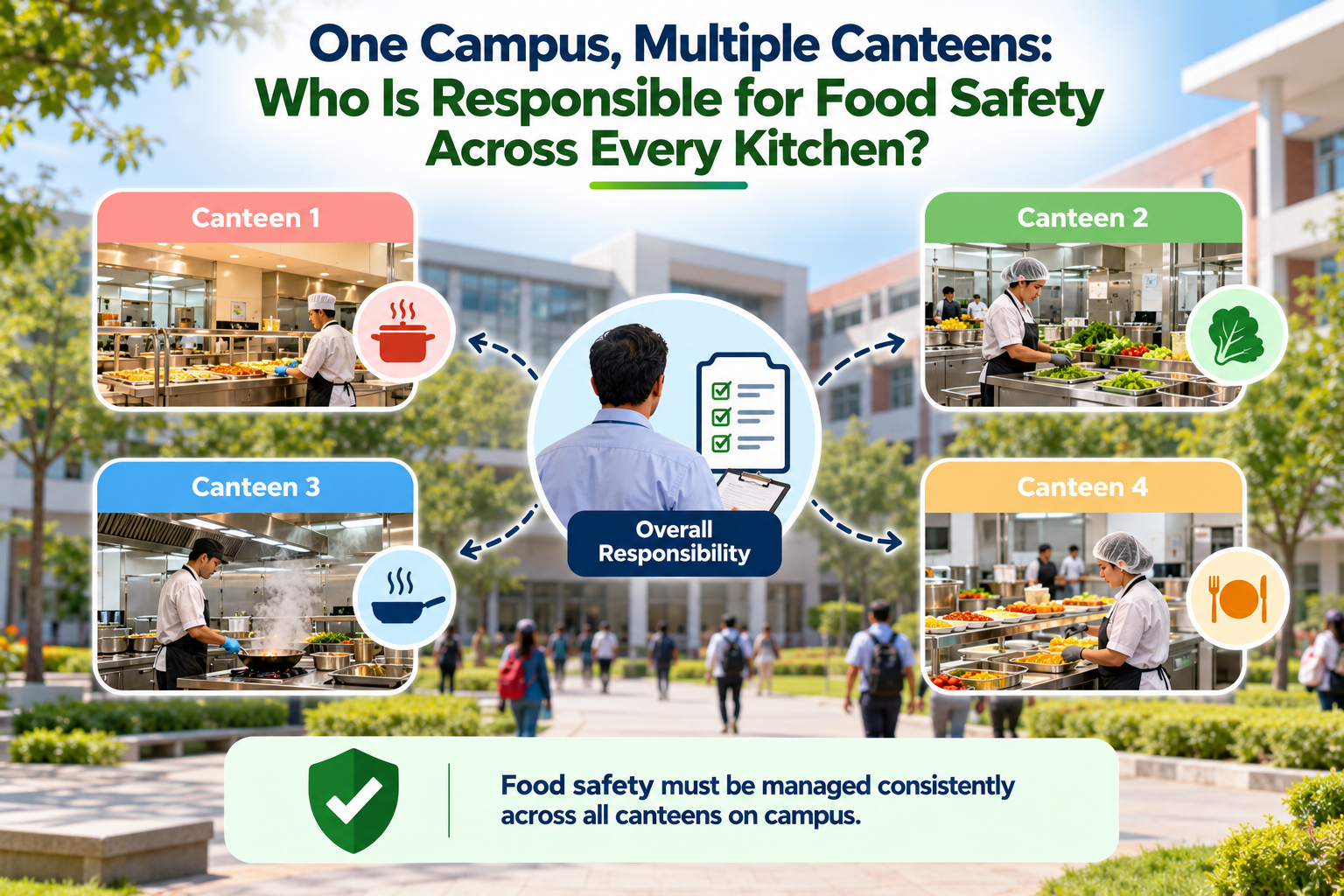
One Campus, Multiple Canteens: Who Is Responsible for Food Safety Across Every Kitchen?
A large campus may have a main dining hall, a staff cafeteria, snack counters, and kitchens operated by different contractors. Students, employees, and visitors see convenient food choices. Behind the scenes, however, each outlet may follow different purchasing, cleaning, storage, and supervision practices. When a hygiene problem occurs, who is responsible for correcting it?
The Eat right campus approach encourages institutions to view healthy, safe, and sustainable food as a shared responsibility. Individual operators must manage their own activities, while campus leadership needs a coordinated system for oversight. Without clear roles, one poorly managed kitchen can undermine confidence in food served across the entire premises.
One Campus Does Not Mean One Food Operator
Multiple kitchens may operate under separate contracts, management teams, and working schedules. Each food business operator is responsible for meeting the legal requirements applicable to its activities, including relevant registration or licensing obligations. A campus administration cannot simply assume that appointing a contractor transfers every oversight concern away from the institution.
The practical answer begins with a written responsibility map. Identify who purchases ingredients, approves suppliers, monitors temperatures, supervises staff, manages waste, and responds to complaints. Campus management should also establish who coordinates issues that affect more than one outlet. This distinction prevents important tasks from falling between teams. It also helps managers respond when a kitchen closes temporarily, a new vendor arrives, or responsibility for a shared facility changes.
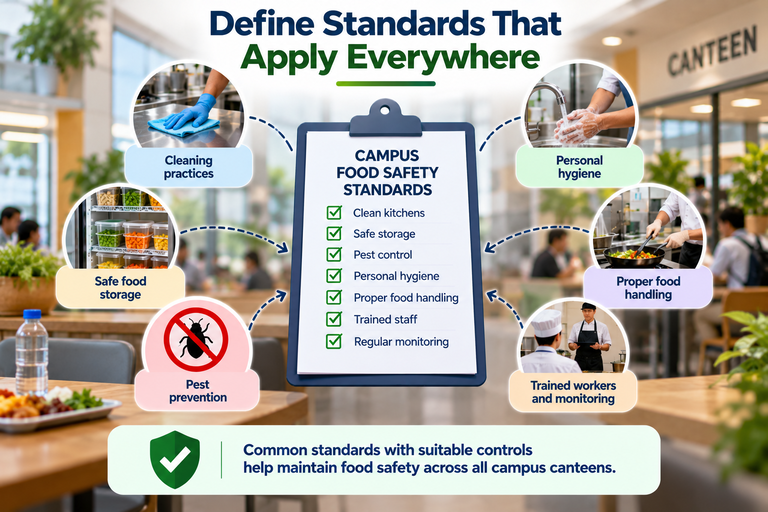
Define Standards That Apply Everywhere
Different menus do not justify inconsistent basic hygiene. Every kitchen needs appropriate cleaning practices, safe food storage, pest prevention, personal hygiene arrangements, and procedures for handling unsafe food. These requirements should reflect the nature and risks of each operation rather than rely on identical paperwork.
Shared campus food safety standards can set minimum expectations for contractors while allowing site-specific controls. For example, a bakery counter and a kitchen preparing cooked meals may require different monitoring activities. Both still need clear responsibilities, trained workers, and evidence that essential controls are followed. Consistency means applying suitable safeguards across all outlets, not pretending that every outlet has the same risks.
Clarify Who Checks Contractor Performance
Contracts should explain what each operator must deliver and how the campus will verify performance. Requirements may cover hygiene inspections, employee training, complaint reporting, corrective actions, and access to relevant records. Without these arrangements, campus administrators may learn about problems only after consumers complain.
Effective canteen hygiene management includes routine communication between contractors and designated campus representatives. Meetings can review recurring concerns, equipment faults, staffing changes, and improvements. Written responsibilities matter especially when facilities are shared, such as water supplies, waste collection points, or storage areas. A contractor may control its kitchen, but shared infrastructure often requires coordination beyond that kitchen’s walls.
Follow Ingredients From Delivery to Service
Food safety begins before cooking. Ingredients can arrive at unsuitable temperatures, lack proper identification, or be stored beside incompatible products. Separate outlets may use different suppliers and receiving methods, making weaknesses harder to detect without a common oversight process.
Each kitchen should check deliveries against relevant acceptance criteria, maintain appropriate storage conditions, and use stock rotation practices. Where necessary, records should support traceability and the investigation of complaints. Campus leadership can review whether these systems are working without taking over every operational decision. The goal is to confirm that food remains controlled from receipt through preparation and service. Clear labelling and separation of ingredients can also support safer handling of allergens and reduce avoidable mistakes during busy meal periods.
Make Training More Than an Attendance Sheet
Workers move between shifts, new employees join frequently, and temporary staff may receive rushed instructions. A training register alone cannot prove that someone knows how to prevent cross-contamination or respond to a refrigeration failure.
Under an Eat right campus programme, food handlers should receive practical guidance relevant to their duties. Supervisors can observe handwashing, utensil separation, allergen communication, and cleaning methods during normal service. Refresher sessions should respond to actual mistakes and process changes. Campus coordinators can encourage common expectations, while each operator remains responsible for ensuring that its team works safely.
Address Shared Spaces and Hidden Gaps
Some risks appear between kitchens rather than inside them. Waste may accumulate near delivery entrances, pests may move through common corridors, and cleaning equipment may be stored in shared rooms. If everyone assumes another team owns these spaces, problems persist.
A campus-wide inspection plan should include loading areas, drainage, waste points, drinking water facilities, and other relevant common locations. Assign each issue to an accountable person and specify how completion will be verified. Shared campus food safety standards are most useful when they include these boundaries, where responsibility can otherwise become unclear.
Use Audits to Find Patterns, Not Just Faults
Checking one canteen at a time may miss trends affecting the whole campus. Repeated temperature deviations, delayed repairs, or similar complaints across outlets could indicate a wider weakness in infrastructure or supervision.
A coordinated food safety audit programme can combine outlet-level reviews with campus-wide analysis. Auditors should compare records with actual practices, speak with workers, and examine whether previous corrective actions were effective. Findings need not automatically imply that every kitchen has failed. Instead, they help leaders distinguish isolated mistakes from systemic risks and direct resources where improvements matter most.
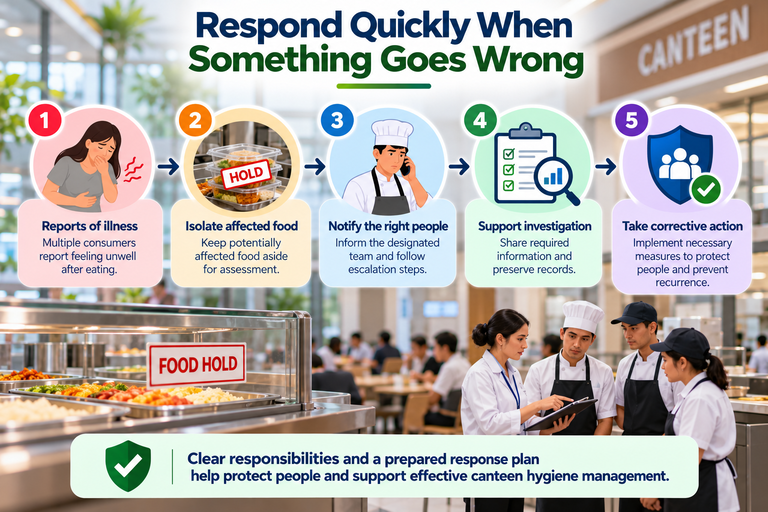
Respond Quickly When Something Goes Wrong
Suppose several consumers report illness after eating at a particular counter. The immediate priority is protecting people and following applicable reporting and investigation requirements, not debating which contract contains the relevant clause. Potentially affected food may need to be isolated while competent personnel assess the situation.
Every operator should know whom to notify, what information to preserve, and how to cooperate with the campus response team. Contact details and escalation steps should be available before an incident occurs. Good canteen hygiene management makes response responsibilities clear, allowing action to begin promptly while the cause is investigated fairly.
Measure Improvement Across All Outlets
Campus leaders should look beyond completed checklists. Useful indicators may include recurring hygiene findings, complaint trends, training effectiveness, maintenance delays, and whether corrective actions remain effective. Comparing outlets requires care because menus, service volumes, and risks differ.
An Eat right campus initiative can bring these observations into regular management reviews. The purpose is not to rank kitchens for appearances, but to identify where support, better facilities, or stronger controls are needed. Recognising good practices also helps teams learn from one another and sustain improvements. Regular feedback from diners can highlight concerns that formal inspections may not capture.
Conclusion
When one campus hosts multiple canteens, food safety responsibility is shared but never vague. Individual food operators must control their own processes and meet applicable obligations. Campus management should coordinate oversight, clarify responsibilities for common facilities, and ensure concerns are escalated and resolved.
The Eat right campus approach works best when agreements, training, inspections, and corrective actions reinforce one another. Consistent campus food safety standards, practical canteen hygiene management, and a risk-based food safety audit programme help turn separate kitchens into a coordinated food environment. Ultimately, the measure of success is not whether every checklist looks complete. It is whether people can access food that is prepared and served safely across the campus, every day.