
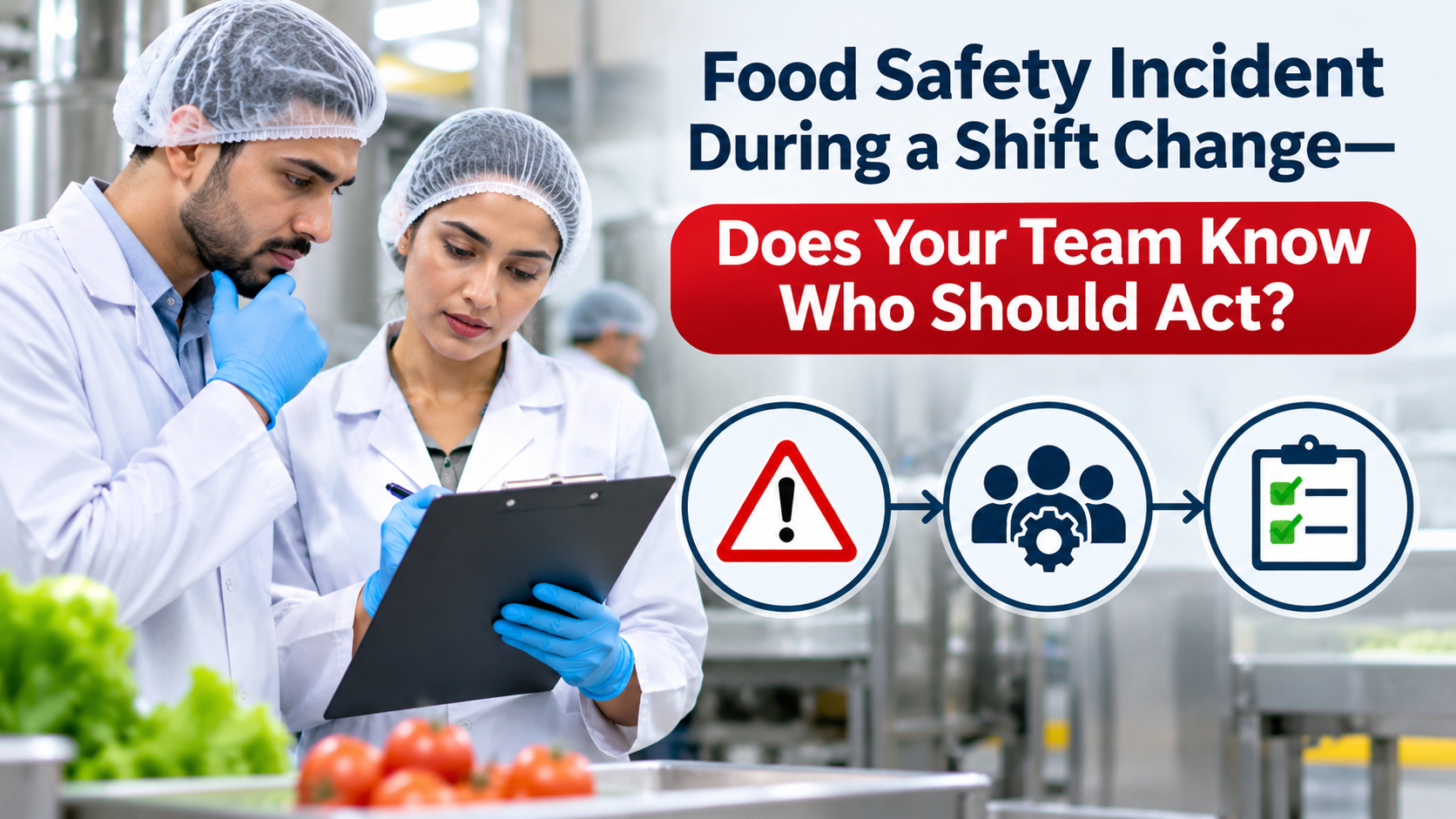
A Food Safety Incident Happens During a Shift Change—Does Your Team Know Who Should Act?
When a food safety incident occurs during a shift change, the employee discovering it should immediately initiate the designated reporting and containment procedures. Effective haccp training india helps businesses establish clear responsibilities, ensuring that hazard control, incident communication and corrective actions continue without interruption when employees change shifts.
Why Are Shift Changes Risky for Food Safety?
Shift changes create opportunities for communication gaps because one team finishes its responsibilities while another begins working.
During this transition, employees may overlook incomplete monitoring activities, unresolved equipment problems or products awaiting safety checks.
For example, an outgoing employee might notice a refrigeration problem but assume the incoming supervisor already knows about it. Meanwhile, the incoming team may continue using affected ingredients without understanding the situation.
Effective food safety training helps employees recognise that food safety responsibilities must continue regardless of working schedules.
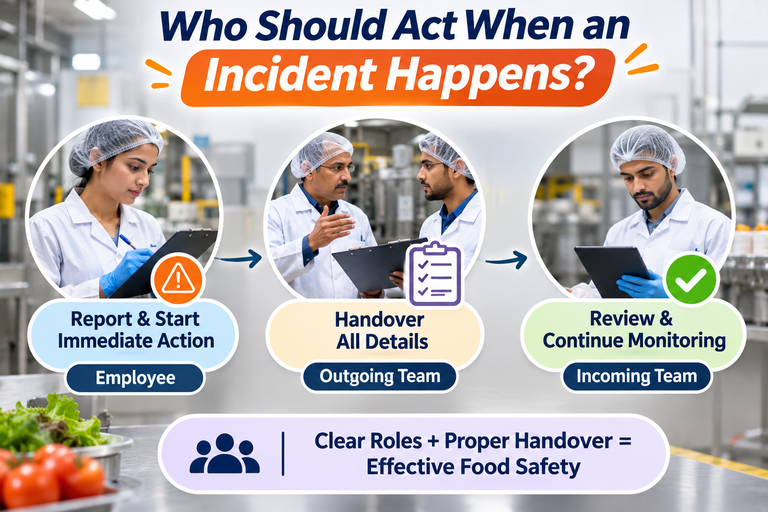
Who Should Act When an Incident Happens?
The employee discovering the incident should initiate the immediate response according to established procedures rather than waiting for another team.
However, responsibilities should be clearly divided between operational employees, supervisors and authorised food safety personnel.
What Should the Outgoing Team Do?
The outgoing team should communicate unresolved incidents, identify affected products and explain any immediate containment measures already implemented.
Employees should not leave without ensuring that responsibility has been transferred appropriately.
What Should the Incoming Team Do?
The incoming team should acknowledge the incident, review available information and continue monitoring the situation.
Effective shift handover procedures should clearly identify who assumes responsibility for outstanding food safety concerns.
What Should Employees Do First?
Employees should prioritise immediate hazard containment and notify the designated responsible person.
Depending on the incident, appropriate initial actions may include:
- Stopping the affected production activity.
- Identifying and isolating potentially unsafe food.
- Recording relevant observations and measurements.
- Informing the responsible supervisor.
- Preventing unauthorized product release.
Employees should understand which actions they are authorised to perform independently.
The Codex General Principles of Food Hygiene, CXC 1-1969, emphasizes planned corrective actions when critical control point deviations occur, including restoring process control and appropriately handling affected products.
Practical haccp training india should help employees understand these responsibilities before an actual incident occurs.
What Information Should Be Shared During Handover?
A proper handover should communicate enough information for the incoming team to continue managing an incident without unnecessary delays.
Essential information includes the incident discovery time, affected batch numbers, monitoring results, equipment condition, containment measures and pending decisions.
For example, informing the incoming team that a cooling problem occurred is insufficient if nobody explains which products were affected.
Documented shift handover procedures provide a reliable reference when verbal instructions are incomplete or misunderstood.
The incoming supervisor should confirm that the information has been received and understood.
What If the Next Supervisor Is Unavailable?
Businesses should establish alternative reporting arrangements when the designated supervisor cannot be contacted.
A clear escalation procedure helps employees identify another authorised person who can coordinate the response and make necessary decisions.
Waiting for a supervisor to arrive should not become a reason to continue an unsafe operation.
Effective food safety incident management requires backup responsibilities, accessible contact information and clear decision-making authority.
Employees working night shifts, weekends and public holidays should receive the same level of procedural guidance as regular daytime teams.
Can Production Restart Before the Incident Is Closed?
Production should restart only after authorised personnel confirm that the affected process is adequately controlled.
However, restoring normal operating conditions does not automatically establish that previously affected food is safe.
For example, correcting a cooking temperature deviation does not justify releasing products manufactured while the process was outside its validated critical limits.
The affected products require appropriate evaluation and disposition decisions.
Through food safety training, employees should understand the distinction between restoring equipment performance and authorising product release.
What Would This Look Like in a Real Business?
Consider a ready-to-eat food manufacturing facility in Punjab operating across three daily shifts.
Shortly before the afternoon shift ends, an employee discovers that a cooking process has failed to achieve its established critical temperature limit.
The employee stops the affected operation, identifies potentially unsafe batches and informs the supervisor.
During handover, the outgoing team explains the deviation, recorded measurements and product isolation arrangements.
The incoming supervisor acknowledges responsibility and coordinates further investigation with authorised food safety personnel.
Production resumes only after appropriate process checks and approval. Affected batches remain isolated until their suitability and subsequent disposition have been determined.
This hypothetical example demonstrates how effective haccp training india can prepare employees to maintain food safety controls during operational transitions.
How Can Businesses Improve Shift Handover?
Businesses can improve handover by introducing standardised communication practices and clearly assigning responsibilities.
A practical handover record should identify unresolved incidents, pending monitoring activities, isolated products and outstanding corrective actions.
Managers should allocate sufficient time for employees to exchange information instead of expecting shift changes to happen immediately.
Regular review of shift handover procedures can reveal whether employees consistently communicate important information.
Conducting simulated incidents during training sessions can also help businesses evaluate whether employees understand their responsibilities under pressure.
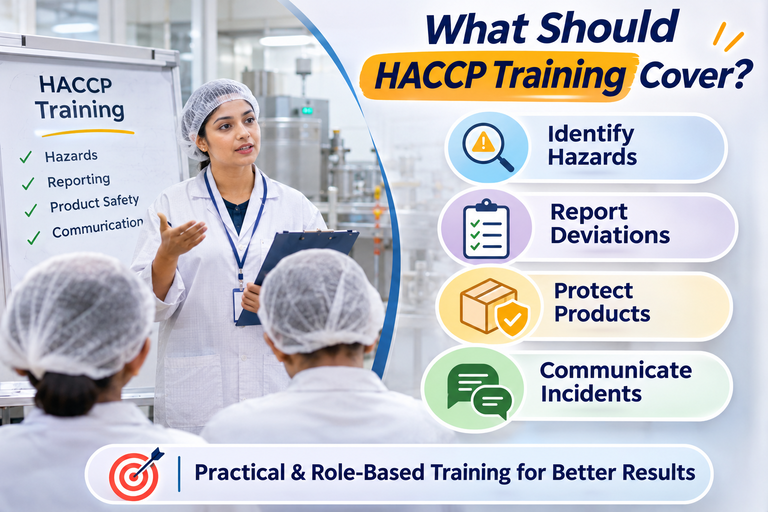
What Should HACCP Training Cover?
Training should explain how employees recognise hazards, report deviations, protect affected products and communicate unresolved incidents.
Instead of concentrating exclusively on theoretical HACCP principles, training should address situations employees encounter during daily operations.
Indian food manufacturers, catering businesses, commercial kitchens and processing facilities should also consider applicable FSSAI hygiene requirements when developing operational procedures.
Businesses seeking haccp training india can explore food safety training services to strengthen employee awareness and operational preparedness.
Training effectiveness should be evaluated through practical demonstrations, observations and scenario-based exercises rather than attendance records alone.
Conclusion
Food safety responsibilities should never become unclear simply because employees are changing shifts. Effective incident reporting, immediate containment, documented communication and clearly assigned responsibilities help businesses maintain operational control.
Investing in haccp training india can help employees understand how to respond when unexpected incidents occur. Businesses should also establish reliable shift handover procedures, alternative reporting arrangements and appropriate product release controls.
Ultimately, successful food safety management depends on employees knowing what action to take, whom to inform and when responsibility transfers. A well-managed shift transition helps prevent unresolved incidents from becoming serious food safety failures.
Frequently Asked Questions
1. Who Is Responsible for Food Safety During Shift Changes?
Both teams have responsibilities during the transition. Effective shift handover procedures should identify who reports incidents, transfers information and assumes responsibility for outstanding actions.
2. Should Employees Wait for a Supervisor Before Acting?
Employees should initiate authorised containment and reporting measures immediately. Appropriate food safety training helps workers understand their authority and recognise when additional approval is necessary.
3. Can Poor Shift Communication Cause HACCP Failures?
Yes. Incomplete communication can result in missed monitoring activities, uncontrolled hazards and inappropriate product release. Effective food safety incident management helps prevent these operational gaps.
4. Should Every Food Safety Incident Be Documented?
Relevant incidents and corrective actions should be recorded according to established procedures and applicable requirements. Through haccp training india, employees can understand which information must be documented for effective verification.
5. Can Training Help Prevent Shift Handover Mistakes?
Yes. Practical food safety training can improve employee awareness, clarify responsibilities and strengthen communication. Regular refresher sessions and simulated incidents help assess whether established procedures work effectively.
6. Who Can Authorise the Release of Affected Food?
Only designated personnel with appropriate competence and authority should approve product release following necessary safety evaluations. Effective food safety incident management requires documented decisions supported by appropriate evidence.