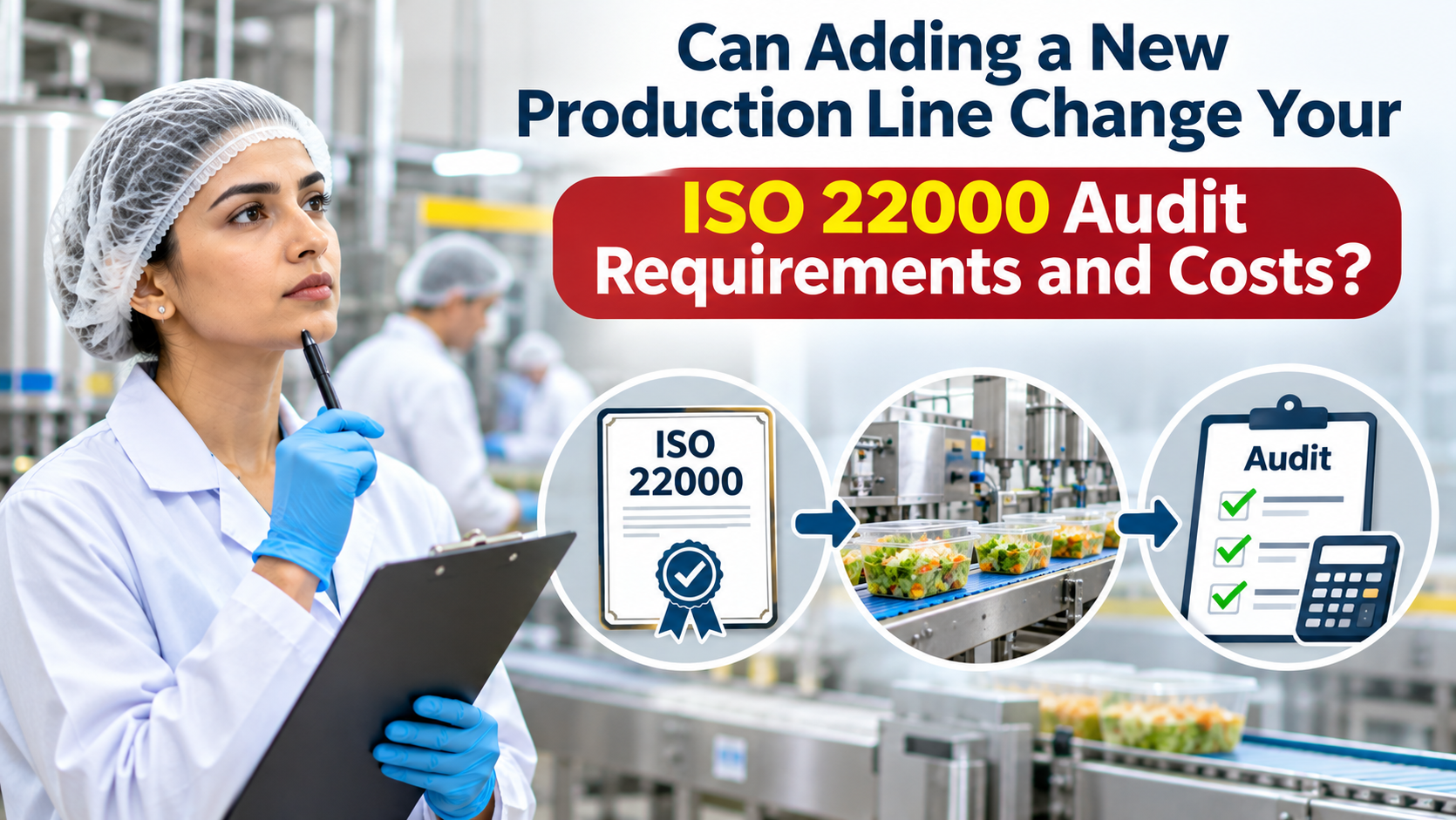
Can Adding a New Production Line Change Your ISO 22000 Audit Requirements and Costs?
Yes, adding a new production line can change ISO 22000 audit requirements if it introduces new food safety hazards, processes, equipment or operational activities. These changes may require additional assessment, revised documentation and certification scope adjustments. Consequently, the iso 22000 certification cost india may also change depending on the assessment required.
Why Does a New Production Line Affect ISO 22000?
A new production line can introduce food safety risks that were not considered during the original certification assessment.
Even when a business manufactures similar products, changes in machinery, processing conditions and material movement can create different hazards.
Clause 6.3 of ISO 22000:2018 requires organisations to plan and communicate changes affecting their food safety management systems.
Businesses must evaluate potential consequences, resource availability and operational responsibilities before implementing changes.
Effective ISO 22000 certification requires food safety controls to reflect actual manufacturing conditions rather than outdated production arrangements.
Will Your Existing Certificate Cover the New Line?
Not necessarily. Coverage depends on the existing certification scope and the nature of the additional production activities.
What If You Manufacture the Same Product?
When a new line produces the same product using similar processing methods, a formal scope extension may not be necessary. However, the equipment and associated hazards must still be evaluated.
What If You Introduce a Different Product?
Manufacturing a different product may introduce unfamiliar ingredients, allergens, processing requirements and storage conditions.
The certification body may need to evaluate whether the existing ISO 22000 audit requirements adequately cover these activities.
Businesses should obtain confirmation before representing new production activities as certified.

Do You Need to Update Your HACCP Plan?
Yes, businesses should review their HACCP plan whenever production changes could affect food safety hazards or control measures.
Clause 8.6 of ISO 22000:2018 addresses updating information associated with prerequisite programmes and hazard control plans.
Relevant updates may include:
- Production flow diagrams and processing descriptions.
- Raw material and finished product specifications.
- Biological, chemical and physical hazard assessments.
- Critical control points and monitoring arrangements.
- Cleaning and allergen management procedures.
Maintaining an effective food safety management system requires these documents to reflect actual operations. Simply duplicating the previous production line’s HACCP plan may overlook important differences.
Can a New Production Line Increase Audit Time?
Yes, additional production activities may require more audit time when they increase assessment complexity.
Auditors may need to observe new equipment, examine monitoring records, interview additional employees and evaluate revised hazard controls.
ISO 22003-1:2022 establishes requirements for determining audit duration based on relevant operational characteristics.
Consequently, the iso 22000 certification cost india may increase when additional assessment time becomes necessary.
However, installing another machine does not automatically mean that audit duration will increase. The decision depends on the circumstances and applicable assessment methodology.
Will You Need a Separate Audit?
A separate audit may be necessary when significant production changes require assessment before the next scheduled surveillance visit.
In other circumstances, the certification body may combine the additional assessment with an upcoming scheduled audit.
The decision depends on production readiness, certification scope, operational complexity and the significance of newly introduced hazards.
Businesses should discuss revised ISO 22000 audit requirements before finalising commercial commitments involving products manufactured on the new line.
Early communication also allows sufficient time to prepare operational evidence and address identified weaknesses before assessment.
What Factors Could Increase Certification Costs?
Additional certification expenses generally arise from the assessment work required rather than the production line’s installation alone.
Factors influencing the iso 22000 certification cost india may include:
- Additional audit duration and preparation.
- Increased employee numbers or operational shifts.
- Introduction of unfamiliar food processing activities.
- Requirements for additional technical expertise.
- Certification scope extension assessments.
Businesses should also distinguish external certification expenses from internal implementation expenditure, including employee training, equipment validation and documentation updates.
Understanding this distinction helps management prepare a more realistic expansion budget without overlooking food safety responsibilities.
What Would This Look Like in a Real Business?
Consider a food manufacturing facility in Punjab producing packaged biscuits under an existing ISO 22000 certificate.
The business introduces a cream filled biscuit production line requiring additional ingredients, mixing equipment and filling machinery.
The food safety team identifies new allergen concerns, cleaning requirements and potential contamination risks associated with the filling process.
Before starting commercial production, management reviews the hazard analysis, validates relevant control measures and trains employees.
The certification body subsequently determines whether additional assessment and scope modification are necessary.
This hypothetical scenario demonstrates how production expansion can influence ISO 22000 certification, even when the business continues operating from the same manufacturing facility.
What Should You Check Before Starting Production?
Businesses should evaluate food safety readiness before introducing products manufactured using the new equipment.
Management should confirm that employees understand their responsibilities, monitoring instruments function correctly and cleaning procedures are appropriate for the modified operation.
Trial production records can help demonstrate whether established controls perform as intended.
An internal audit covering the new production activities can identify overlooked weaknesses before external assessment.
Indian food manufacturers should also examine whether production changes require modifications to applicable FSSAI licensing information.
A properly updated food safety management system supports safer operational expansion and more reliable assessment evidence.
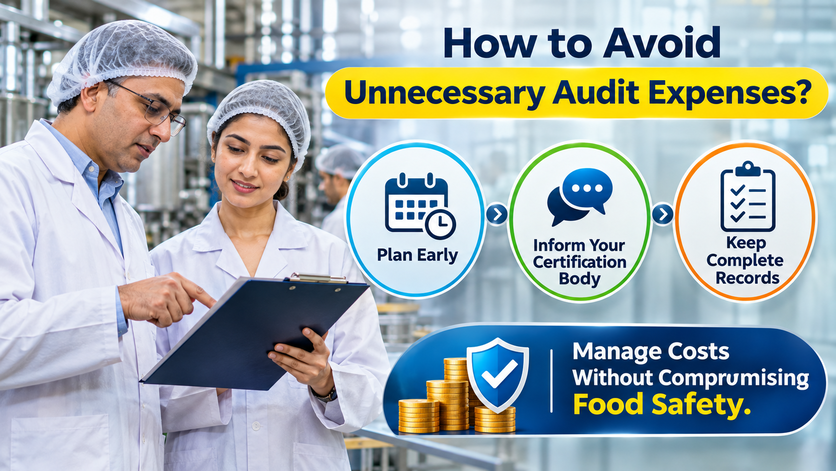
How Can You Avoid Unnecessary Audit Expenses?
Businesses can reduce avoidable expenses by involving their food safety teams during production planning rather than after equipment installation.
Communicate proposed changes to the certification body early, share accurate operational details and maintain complete implementation records.
Where appropriate, discuss combining additional assessments with scheduled surveillance activities.
Businesses researching iso 22000 certification cost india can explore food safety certification services to understand suitable assessment arrangements.
However, reducing expenditure should never involve excluding relevant production activities or compromising essential food safety controls.
Conclusion
Adding a production line represents more than an investment in manufacturing capacity. It can introduce food safety hazards, operational responsibilities and assessment requirements that existing certification arrangements may not adequately address.
Businesses evaluating the iso 22000 certification cost india should consider how production changes influence hazard controls, documentation, certification scope and audit duration.
Maintaining an updated food safety management system, communicating changes promptly and preparing reliable operational evidence can help prevent unnecessary assessment difficulties. Careful planning ensures that manufacturing expansion remains aligned with food safety requirements without compromising certification integrity.
Frequently Asked Questions
1. Does Every New Production Line Require ISO Recertification?
No. Existing ISO 22000 certification may remain applicable when the additional activities fall within the approved scope. Significant changes may require further assessment or certification scope extension.
2. Can Adding Machinery Increase ISO 22000 Certification Costs?
Yes, the iso 22000 certification cost india may increase if new machinery introduces operational complexity, additional hazards or assessment activities requiring more audit time.
3. Should HACCP Documents Be Updated Before Production Begins?
Yes. The food safety management system should reflect new processes, relevant hazards and appropriate controls before commercial production begins. Necessary control measures should also be validated.
4. Can a Scope Extension Be Combined With a Surveillance Audit?
Yes, depending on the circumstances and certification body approval. Combining assessments may be possible when revised ISO 22000 audit requirements can be addressed effectively during the scheduled visit.
5. Does Increasing Production Capacity Always Increase Audit Costs?
No. Increased capacity alone does not automatically increase the iso 22000 certification cost india. Assessment duration depends on relevant operational changes, complexity and applicable audit criteria.