
What Is the Purpose of ISO 45001 Certification? Complete Guide
Workplace safety has become one of the most important priorities for organizations across every industry. Businesses today are expected to provide safe working environments, reduce occupational risks, and protect employees from workplace injuries and health hazards. This growing focus on employee well-being has increased the importance of iso 45001 Certification for modern organizations.
ISO 45001 is an internationally recognized standard designed for occupational health and safety management systems. It helps businesses identify workplace risks, improve employee safety, reduce accidents, and maintain compliance with safety regulations. Organizations implementing iso 45001 Certification can create safer work environments while improving operational efficiency and business reputation.
As industries become more complex and regulations continue to evolve, workplace safety management is no longer optional. Companies that prioritize occupational health and safety are more likely to achieve long-term operational success and employee trust.
What Is ISO 45001?
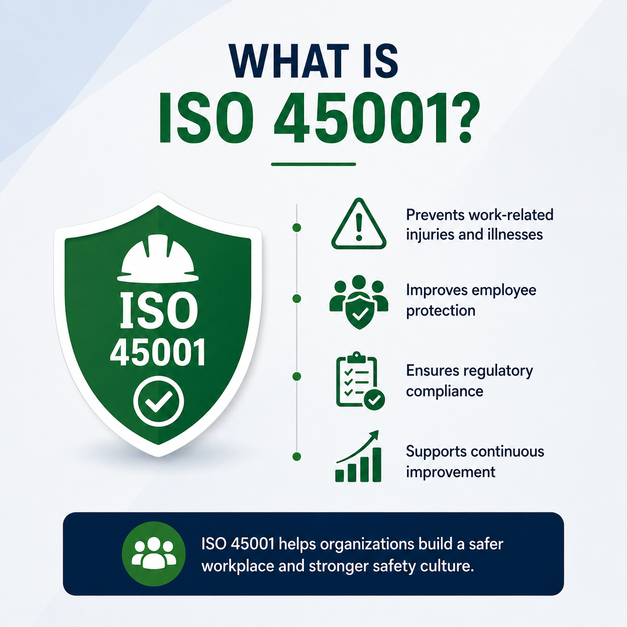
ISO 45001 is an international standard for occupational health and safety management systems. It was developed to help organizations prevent work-related injuries, illnesses, and unsafe working conditions.
The standard provides a structured framework for:
- Identifying workplace hazards
- Reducing safety risks
- Improving employee protection
- Enhancing workplace safety culture
- Ensuring regulatory compliance
- Supporting continuous improvement
Unlike traditional safety approaches that react after incidents occur, ISO 45001 focuses on proactive risk prevention and continuous monitoring.
Organizations across manufacturing, construction, healthcare, logistics, IT, and service sectors use iso 45001 Certification to strengthen workplace safety systems and improve employee confidence.
Purpose of ISO 45001 Certification
The main purpose of ISO 45001 is to help businesses create safe and healthy workplaces for employees, contractors, visitors, and stakeholders.
Improve Workplace Safety
One of the primary objectives of ISO 45001 is reducing workplace accidents and injuries. Businesses can identify unsafe conditions early and implement preventive actions before incidents occur.
Reduce Occupational Risks
The standard helps organizations recognize hazards such as:
- Unsafe machinery
- Chemical exposure
- Electrical risks
- Slips and falls
- Fire hazards
- Ergonomic issues
A strong occupational health and safety management system supports better risk identification and hazard control throughout daily operations.
Increase Employee Confidence
Employees feel more secure when organizations actively prioritize workplace safety. Safe work environments improve employee morale, productivity, and overall job satisfaction.
Ensure Regulatory Compliance
ISO 45001 helps organizations align their safety practices with legal and regulatory requirements. Compliance reduces the chances of penalties, legal disputes, and operational disruptions.
Improve Business Reputation
Businesses with strong workplace safety systems are often viewed as more reliable and responsible by customers, employees, investors, and business partners.
Why Workplace Safety Matters More Today
Modern workplaces are becoming more complex due to technological advancements, automation, remote operations, and changing industry regulations. As businesses expand operations, workplace hazards may also increase.
Several factors have made safety management more important today:
- Increased industrial operations
- Stricter government regulations
- Higher employee expectations
- Greater public awareness
- Complex work environments
- Increased contractor involvement
Organizations that ignore workplace safety risks may face financial losses, operational downtime, reduced employee morale, and reputational damage.
This is why many businesses are investing in workplace safety certification services to improve safety standards and strengthen operational reliability.
Key Elements of ISO 45001
ISO 45001 focuses on several important workplace safety principles that help organizations build safer operational systems.
Leadership and Employee Participation
Top management plays a major role in maintaining workplace safety. Leaders are expected to support safety initiatives and encourage employee involvement in hazard reporting and safety improvements.
Employee participation improves awareness and helps organizations identify risks more effectively.
Hazard Identification and Risk Assessment
Organizations must identify possible workplace hazards and evaluate their potential impact.
Risk assessments may involve:
- Workplace inspections
- Equipment evaluations
- Employee safety observations
- Incident analysis
- Emergency preparedness reviews
Early hazard identification helps businesses reduce accidents and improve safety performance.
Safety Objectives and Planning
ISO 45001 encourages organizations to establish clear occupational health and safety goals.
Examples include:
- Reducing workplace incidents
- Improving emergency response systems
- Increasing employee safety training
- Strengthening equipment maintenance procedures
Safety planning helps organizations maintain continuous improvement in workplace protection.
Performance Monitoring
Organizations implementing iso 45001 Certification are expected to regularly monitor safety performance.
Monitoring activities may include:
- Safety inspections
- Internal audits
- Incident reporting
- Employee feedback
- Compliance evaluations
Continuous monitoring helps organizations identify weaknesses and improve safety systems effectively.
Benefits of ISO 45001 Certification
Implementing ISO 45001 provides several important operational and business advantages.
Reduced Workplace Accidents
A structured safety management system helps reduce injuries, incidents, and operational hazards.
Improved Employee Productivity
Employees often perform better in safe and supportive work environments.
Better Legal Compliance
Organizations can maintain stronger compliance with workplace safety laws and industry regulations.
Lower Operational Costs
Reducing workplace incidents may lower costs related to compensation claims, legal issues, medical expenses, and downtime.
Enhanced Business Reputation
Businesses with strong safety systems often gain higher trust from clients, employees, and stakeholders.
A reliable occupational risk management certification system can also improve competitive advantage in industries where workplace safety is a major concern.
Industries That Benefit From ISO 45001
Almost every industry can benefit from workplace safety management systems.
Industries commonly implementing ISO 45001 include:
- Manufacturing
- Construction
- Oil and gas
- Healthcare
- Warehousing and logistics
- Transportation
- Food processing
- IT and data centers
High-risk industries especially benefit from structured occupational safety systems because they face greater workplace hazards.
Importance of Employee Training
Employee awareness and training are essential parts of ISO 45001 implementation.
Training programs may include:
- Emergency response procedures
- Fire safety training
- Equipment handling
- Hazard reporting
- First aid awareness
- Workplace hygiene practices
Proper training helps employees recognize risks and follow safe working procedures consistently.
Organizations that invest in regular safety training often experience fewer accidents and better compliance performance.
The Role of Internal Audits
Internal audits help organizations evaluate whether workplace safety systems are functioning effectively.
Audits generally assess:
- Safety documentation
- Hazard controls
- Employee awareness
- Incident management
- Regulatory compliance
- Corrective actions
Regular audits support continuous improvement and help businesses maintain operational safety standards.
Technology and Workplace Safety
Technology is transforming occupational health and safety management in modern workplaces.
Many businesses now use:
- Digital safety monitoring systems
- Smart sensors
- Automated incident reporting tools
- Cloud-based audit records
- AI-based risk analysis systems
These technologies improve operational visibility and help organizations respond to risks more quickly.
Technology also supports better documentation and compliance management.
Common Challenges During Implementation
Although ISO 45001 offers significant benefits, organizations may face some implementation challenges.
Common challenges include:
- Employee resistance to change
- Lack of safety awareness
- Documentation management
- Training requirements
- Budget limitations
- Operational disruptions during transition
However, organizations that approach implementation strategically often achieve stronger long-term results.
How ISO 45001 Supports Continuous Improvement
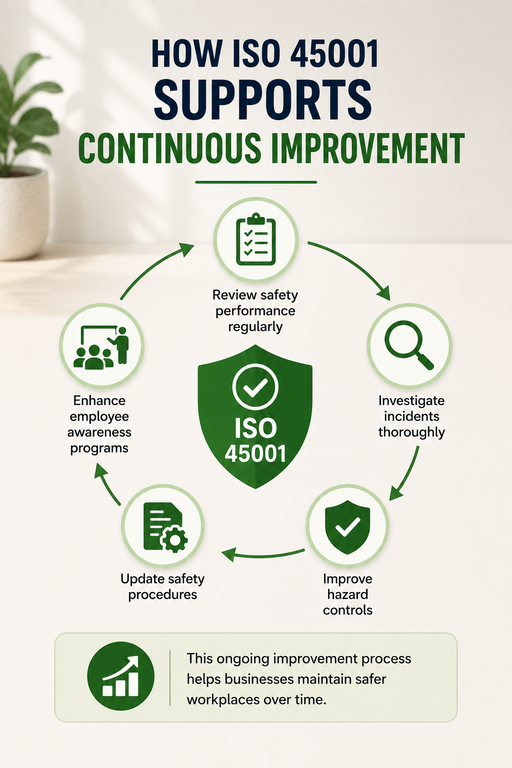
Continuous improvement is a major focus of ISO 45001.
Organizations are encouraged to:
- Review safety performance regularly
- Investigate incidents thoroughly
- Improve hazard controls
- Update safety procedures
- Enhance employee awareness programs
This ongoing improvement process helps businesses maintain safer workplaces over time.
Conclusion
The purpose of iso 45001 Certification is to help organizations create safer, healthier, and more efficient workplaces through structured occupational health and safety management systems. By identifying workplace hazards, improving employee awareness, reducing operational risks, and maintaining regulatory compliance, businesses can protect both employees and long-term operational performance.
A strong occupational health and safety management system supports better workplace culture, improved productivity, and stronger business reputation. Organizations implementing iso 45001 Certification are better prepared to manage workplace challenges, reduce incidents, and maintain continuous improvement in safety performance.
As workplace safety expectations continue to grow, businesses that prioritize occupational health and safety will remain more competitive, reliable, and trusted in modern industries.