ISO 9001 vs ISO 20000: Key Differences Explained
Modern businesses rely heavily on international standards to improve operational efficiency, customer satisfaction, and service quality. Among the most recognized standards, ISO 9001 and ISO 20000 play important roles in helping organizations establish structured management systems. Although both standards focus on improving organizational performance, they serve different purposes and apply to different operational areas.
Businesses exploring iso 20001 Certification often compare it with ISO 9001 to understand which standard best fits their business requirements. While ISO 9001 focuses on quality management systems across all industries, ISO 20000 is specifically designed for IT service management and service delivery processes.
Understanding the key differences between these two standards can help organizations choose the right certification path for long-term operational success.
What Is ISO 9001?
ISO 9001 is an internationally recognized quality management standard designed to help organizations improve product quality, customer satisfaction, and process efficiency.
The standard focuses on:
- Customer satisfaction
- Continuous improvement
- Risk-based thinking
- Process management
- Leadership involvement
- Operational consistency
ISO 9001 can be applied to almost every industry, including manufacturing, healthcare, education, logistics, construction, retail, and service sectors.
The primary objective of ISO 9001 is to create a structured quality management system that improves business performance and customer trust.
What Is ISO 20000?
ISO 20000 is an international standard focused specifically on IT service management systems. It helps organizations improve the quality, consistency, and reliability of IT services.
Businesses seeking iso 20001 Certification generally aim to improve:
- IT service delivery
- Incident management
- Service continuity
- Problem management
- Service performance monitoring
- Customer support processes
ISO 20000 is commonly used by IT companies, managed service providers, cloud service providers, software organizations, and businesses that depend heavily on IT operations.
The standard ensures that IT services are delivered efficiently while meeting customer and business expectations.
Main Difference Between ISO 9001 and ISO 20000
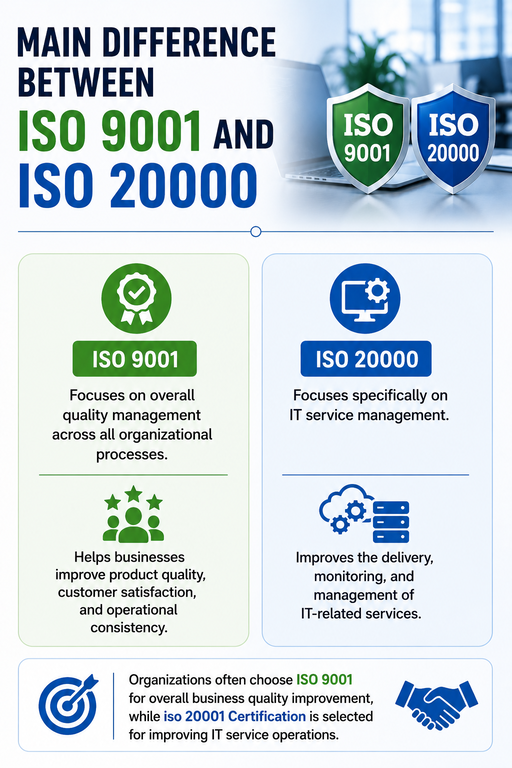
The biggest difference between ISO 9001 and ISO 20000 lies in their primary focus.
ISO 9001
ISO 9001 focuses on overall quality management across all organizational processes. It helps businesses improve product quality, customer satisfaction, and operational consistency.
ISO 20000
ISO 20000 focuses specifically on IT service management. It improves the delivery, monitoring, and management of IT-related services.
Organizations often choose ISO 9001 for overall business quality improvement, while iso 20001 Certification is selected for improving IT service operations.
Industry Applicability
Another major difference is the industries where these standards are commonly applied.
ISO 9001 Applications
ISO 9001 is suitable for:
- Manufacturing companies
- Healthcare organizations
- Educational institutions
- Construction businesses
- Logistics companies
- Retail operations
- Food industries
ISO 20000 Applications
ISO 20000 is mainly suitable for:
- IT service providers
- Software companies
- Cloud computing businesses
- Data centers
- Technical support providers
- Managed IT service companies
Organizations that rely heavily on technology infrastructure often prefer IT service management certification to improve operational reliability and customer service quality.
Focus Areas of ISO 9001
ISO 9001 emphasizes several important quality management principles.
Customer Satisfaction
The standard helps organizations improve customer experience by maintaining consistent quality standards.
Process Improvement
ISO 9001 encourages businesses to identify inefficiencies and continuously improve operational processes.
Risk Management
Businesses are expected to identify potential operational risks and implement preventive actions.
Leadership Involvement
Management participation plays a major role in maintaining quality management systems effectively.
The overall objective is to improve business performance across all operational areas.
Focus Areas of ISO 20000
ISO 20000 focuses more specifically on IT service delivery and management.
Incident Management
The standard helps organizations respond effectively to IT-related issues and disruptions.
Service Continuity
ISO 20000 supports uninterrupted service delivery and operational stability.
Change Management
Businesses can manage software updates, system changes, and infrastructure modifications more efficiently.
Service Performance Monitoring
Organizations monitor service quality and customer satisfaction through structured performance systems.
Businesses pursuing iso 20001 Certification often aim to strengthen customer confidence and improve IT operational efficiency.
Documentation Requirements
Both standards require proper documentation, but the focus differs significantly.
ISO 9001 Documentation
Documentation usually includes:
- Quality policies
- Process procedures
- Risk assessments
- Internal audit reports
- Corrective action records
ISO 20000 Documentation
Documentation mainly focuses on:
- IT service procedures
- Incident records
- Service level agreements
- System monitoring reports
- Service continuity plans
ISO 20000 generally requires more technical documentation related to IT service management processes.
Customer Expectations and Service Delivery
Modern customers expect businesses to provide both high-quality products and reliable services.
ISO 9001 Benefits
ISO 9001 improves:
- Product consistency
- Customer satisfaction
- Operational efficiency
- Quality control systems
ISO 20000 Benefits
ISO 20000 improves:
- IT support services
- Service availability
- Technical issue resolution
- Customer communication
Organizations offering digital services often implement service management system certification to improve service reliability and maintain competitive advantage.
Internal Audits and Compliance
Both standards require regular internal audits to verify compliance and operational effectiveness.
ISO 9001 Audits
Audits focus on:
- Product quality
- Process consistency
- Customer feedback
- Operational improvements
ISO 20000 Audits
Audits mainly evaluate:
- IT service performance
- Incident handling
- Service continuity
- Infrastructure reliability
Internal audits help organizations identify weaknesses and improve system performance continuously.
Employee Roles and Training
Employee involvement is important in both standards, but the responsibilities differ.
ISO 9001 Employee Roles
Employees focus on:
- Product quality
- Process efficiency
- Customer service
- Operational consistency
ISO 20000 Employee Roles
Employees focus on:
- Technical support
- IT incident management
- System maintenance
- Service monitoring
Training programs are essential for maintaining compliance and operational effectiveness under both standards.
Which Certification Is Better?
There is no single answer because both standards serve different business objectives.
Choose ISO 9001 If:
- Your organization focuses on product quality
- You want overall process improvement
- You operate in manufacturing or service industries
- Customer satisfaction is your main priority
Choose ISO 20000 If:
- Your business delivers IT services
- You manage technical support operations
- You want better IT service control
- You aim to improve service reliability
Many organizations implement both standards together to improve overall quality and service management.
Benefits of Implementing Both Standards
Organizations implementing both ISO 9001 and iso 20001 Certification may experience several advantages.
Improved Operational Efficiency
Integrated systems help businesses improve consistency and reduce operational issues.
Better Customer Confidence
Customers trust organizations with structured quality and service management systems.
Stronger Risk Management
Businesses can identify operational and service-related risks more effectively.
Improved Business Reputation
International certifications strengthen market credibility and customer trust.
Better Competitive Advantage
Certified businesses often gain stronger opportunities in global markets.
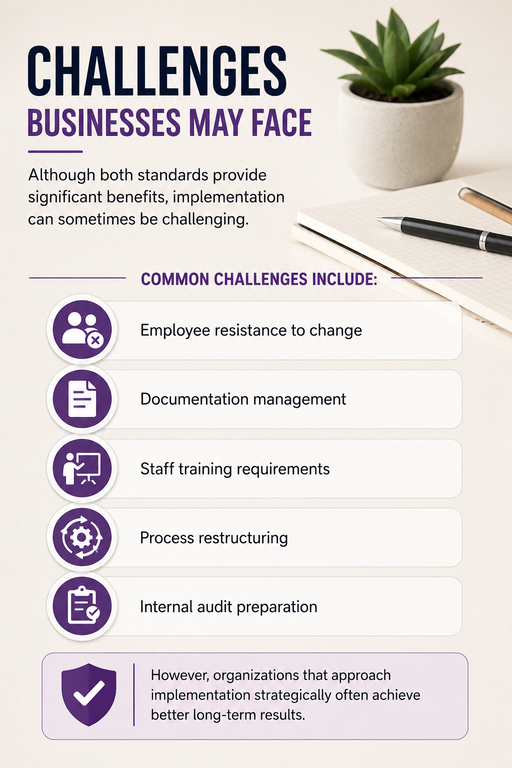
Challenges Businesses May Face
Although both standards provide significant benefits, implementation can sometimes be challenging.
Common challenges include:
- Employee resistance to change
- Documentation management
- Staff training requirements
- Process restructuring
- Internal audit preparation
However, organizations that approach implementation strategically often achieve better long-term results.
Conclusion
ISO 9001 and ISO 20000 are internationally recognized standards that help businesses improve operational performance, customer satisfaction, and process management. While ISO 9001 focuses on overall quality management across different industries, ISO 20000 is specially designed for IT service management and technical service delivery. Businesses pursuing iso 20001 Certification often aim to improve IT support systems, service reliability, incident management, and customer experience. A proper iso 20001 Certification process also helps organizations strengthen operational consistency and improve service monitoring practices.Organizations choosing between these standards should carefully evaluate their business goals, operational structure, and customer expectations. Companies focused on product quality and process improvement may benefit more from ISO 9001, while technology-driven businesses may prefer iso 20001 Certification for better IT service management. Understanding these differences helps organizations improve compliance, operational efficiency, customer trust, and long-term business growth in competitive markets