What Are the 4 C’s of Food Hygiene and Why Are They Important?
Food hygiene has become one of the most critical priorities for restaurants, catering services, cloud kitchens, food manufacturers, and retail food businesses. In today’s competitive food industry, maintaining cleanliness and safe food handling practices is essential for protecting customer health and maintaining business reputation. A proper food hygiene audit helps businesses identify hygiene risks, improve food safety procedures, and maintain compliance with modern food safety standards.
One of the most effective ways to maintain food safety is by following the 4 C’s of food hygiene. These four principles — Cleaning, Cooking, Cross-Contamination Prevention, and Chilling — form the foundation of safe food handling practices. They help reduce the risk of foodborne illnesses, improve operational consistency, and support long-term customer trust.
As customer expectations continue to rise in 2026, businesses that follow proper food hygiene practices are more likely to maintain customer confidence and avoid operational risks.
Understanding the 4 C’s of Food Hygiene
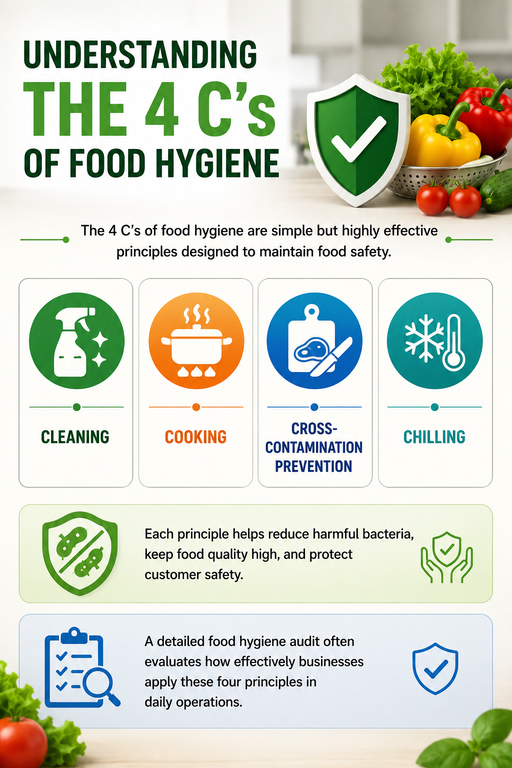
The 4 C’s of food hygiene are simple but highly effective principles designed to maintain food safety standards across all stages of food handling and preparation.
The four C’s include:
- Cleaning
- Cooking
- Cross-Contamination Prevention
- Chilling
Each principle helps reduce harmful bacteria, keep food quality high, and protect customer safety.
A detailed food hygiene audit often evaluates how effectively businesses apply these four principles in daily operations.
Why Food Hygiene Matters More Than Ever
Food businesses today face greater pressure to maintain hygiene standards due to stricter regulations, increased customer awareness, and the rapid growth of online food delivery services.
Poor food hygiene can lead to:
- Foodborne illnesses
- Customer complaints
- Negative online reviews
- Operational disruptions
- Regulatory penalties
- Loss of customer trust
Customers are now more conscious about how food is prepared, stored, packaged, and delivered. Businesses that fail to maintain proper hygiene standards may struggle to maintain their reputation in a highly competitive market.
This is why many businesses rely on food safety management services to improve hygiene systems and strengthen compliance processes.
Cleaning: The First C of Food Hygiene
Cleaning is one of the most important aspects of food hygiene. Harmful bacteria can spread quickly through dirty surfaces, utensils, equipment, and employee hands.
Proper cleaning includes:
- Sanitizing kitchen surfaces
- Washing utensils regularly
- Maintaining clean storage areas
- Cleaning food preparation equipment
- Following handwashing procedures
Employees should clean workstations frequently to prevent contamination risks. In busy kitchens, cleaning schedules help maintain consistency and reduce operational mistakes.
A proper food hygiene audit helps businesses verify whether cleaning procedures are being followed correctly across all operational areas.
In 2026, customers expect food businesses to maintain visible cleanliness standards at all times. Clean kitchens and hygienic work environments improve customer confidence significantly.
Cooking: The Second C of Food Hygiene
Cooking food properly is essential for destroying harmful bacteria and preventing foodborne illnesses.
Improper cooking may allow dangerous microorganisms to survive in food products, increasing health risks for customers.
Important cooking practices include:
- Maintaining correct cooking temperatures
- Using calibrated temperature equipment
- Following cooking time guidelines
- Avoiding undercooked food
- Monitoring reheating procedures
Modern kitchens increasingly use digital temperature monitoring systems to improve cooking accuracy and consistency.
Businesses that fail to maintain proper cooking standards may face customer complaints, operational disruptions, and serious food safety concerns.
A strong food safety compliance system helps organizations monitor cooking procedures and maintain safe food preparation practices consistently.
Cross-Contamination Prevention: The Third C of Food Hygiene
Cross-contamination occurs when harmful bacteria spread from one surface, food item, or object to another.
Common causes of cross-contamination include:
- Using the same cutting boards for raw and cooked foods
- Improper handwashing
- Dirty utensils
- Poor food storage practices
- Unsafe packaging procedures
Cross-contamination is one of the leading causes of foodborne illnesses in food businesses.
Preventing contamination requires:
- Keep raw and cooked foods in separate storage areas
- Color-coded kitchen equipment
- Regular employee hygiene training
- Proper cleaning procedures
- Safe food handling practices
Businesses that prioritize contamination prevention often experience better operational safety and customer satisfaction.
Regular hygiene inspections and audits help businesses identify contamination risks before they become major problems.
Chilling: The Fourth C of Food Hygiene
Proper chilling helps slow bacterial growth and maintain food freshness.
Incorrect refrigeration temperatures can quickly increase contamination risks, especially in perishable food items.
Important chilling practices include:
- Maintaining proper refrigerator temperatures
- Monitoring freezer performance
- Storing food correctly
- Rotating inventory regularly
- Avoiding overstocked refrigeration units
Modern food businesses often use automated refrigeration monitoring systems to improve accuracy and reduce manual errors.
A reliable food hygiene management system supports better temperature control, storage monitoring, and operational consistency.
Proper chilling is especially important in cloud kitchens, catering businesses, and food delivery operations where food storage and transportation play major roles.
The Role of Food Hygiene Audits
A detailed food hygiene audit helps businesses evaluate whether food safety practices are working effectively.
Audits typically assess:
- Cleaning standards
- Food storage practices
- Employee hygiene
- Cooking procedures
- Refrigeration systems
- Documentation processes
Regular audits help businesses identify weaknesses and improve operational performance before serious hygiene issues occur.
In 2026, food businesses are increasingly conducting internal hygiene inspections to maintain customer trust and meet regulatory expectations.
Why Employee Training Is Important
Employees play a major role in maintaining food hygiene standards. Even advanced food safety systems may fail if employees are not properly trained.
Important training areas include:
- Hand hygiene
- Cleaning procedures
- Safe food storage
- Temperature monitoring
- Cross-contamination prevention
Continuous employee training improves operational consistency and reduces food safety risks significantly.
Businesses that invest in staff awareness often experience better compliance and fewer hygiene-related incidents.
Technology and Modern Food Hygiene
Technology is transforming food hygiene management in modern food businesses.
Many organizations now use:
- Digital temperature monitoring systems
- Automated cleaning schedules
- Cloud-based food safety records
- Smart refrigeration systems
- Digital hygiene inspection tools
These technologies improve accuracy, simplify documentation, and strengthen operational monitoring.
Technology also helps businesses prepare more effectively for inspections and audits.
Benefits of Following the 4 C’s of Food Hygiene
Following the 4 C’s provides several operational and business benefits.
Better Customer Safety
Safe food handling reduces contamination risks and protects customer health.
Improved Customer Trust
Customers are more likely to return to businesses that maintain high hygiene standards.
Stronger Compliance
Food hygiene systems support better compliance with food safety regulations.
Reduced Operational Risks
Proper hygiene practices reduce the chances of contamination-related disruptions.
Better Business Reputation
Businesses with strong hygiene standards often receive better customer reviews and long-term loyalty.
Challenges Food Businesses May Face
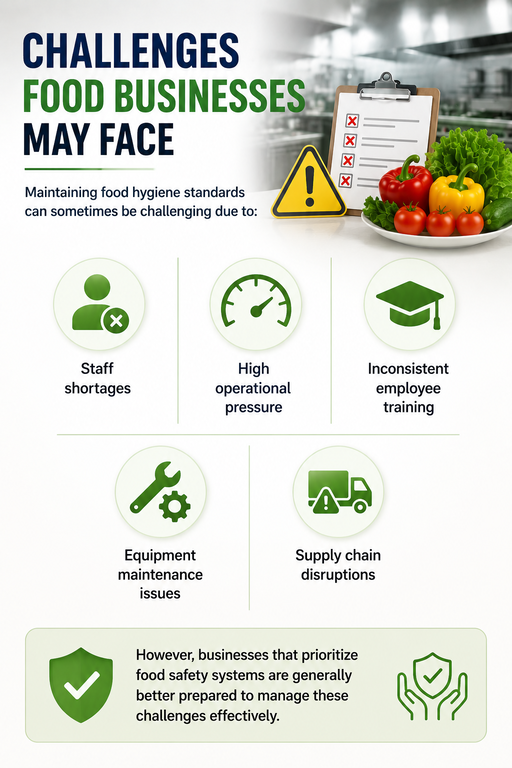
Maintaining food hygiene standards can sometimes be challenging due to:
- Staff shortages
- High operational pressure
- Inconsistent employee training
- Equipment maintenance issues
- Supply chain disruptions
However, businesses that prioritize food safety systems are generally better prepared to manage these challenges effectively.
Conclusion
The 4 C’s of food hygiene — Cleaning, Cooking, Cross-Contamination Prevention, and Chilling — remain essential for maintaining safe food operations in 2026. As customer expectations, hygiene standards, and food safety regulations continue to evolve, businesses must focus more on maintaining strong hygiene practices.
A proper food hygiene audit helps businesses identify risks, improve food safety systems, and strengthen operational consistency. By following the 4 C’s, organizations can reduce contamination risks, improve customer confidence, and support long-term business success.
In today’s competitive food industry, maintaining proper hygiene is no longer optional. Businesses that prioritize food safety, employee training, and continuous monitoring will be better prepared for future operational challenges and customer expectations.