Standards vs Frameworks: The Real Difference Between ISO 20000 and ITIL 4
As organizations become increasingly dependent on technology, delivering reliable and efficient IT services has become a business priority rather than just a technical objective. To improve service quality and operational consistency, many organizations explore internationally recognized standards and best-practice frameworks. Two names that frequently appear in these discussions are ISO 20000 and ITIL 4.
Although they are often mentioned together, they serve different purposes. Understanding their distinctions can help businesses make informed decisions about improving IT service management. At the same time, learning about iso 20000 certification requirements enables organizations to understand what is expected when working toward a recognized management system standard.
Understanding the Difference Between a Standard and a Framework
Before comparing ISO 20000 and ITIL 4, it is helpful to understand the distinction between a standard and a framework.
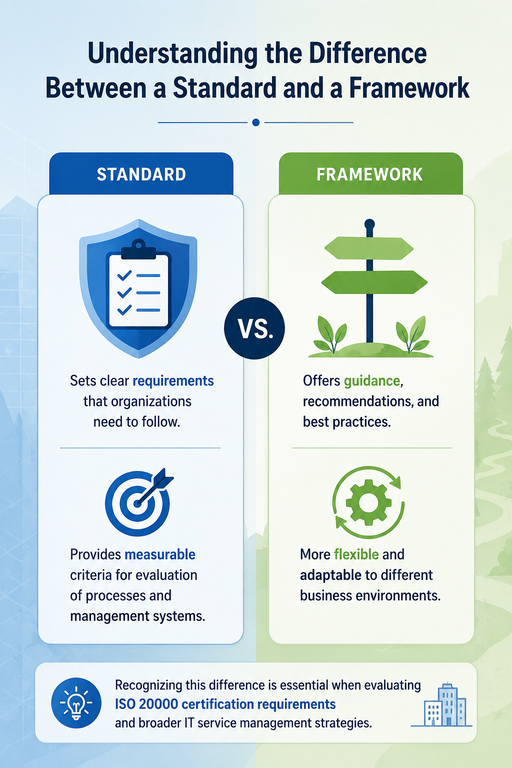
A standard sets clear requirements that organizations need to follow. It provides measurable criteria against which processes and management systems can be evaluated.
A framework, on the other hand, offers guidance, recommendations, and best practices designed to help organizations improve their operations. It is generally more flexible and adaptable to different business environments.
Recognizing this difference is essential when evaluating iso 20000 certification requirements and broader IT service management strategies.
What Is ISO 20000?
ISO 20000 is a global standard for IT service management. It helps organizations set up, run, and improve a system that ensures consistent service delivery.
Organizations pursuing compliance work toward satisfying documented requirements related to planning, governance, monitoring, risk management, and continual improvement.
Understanding iso 20000 certification requirements helps businesses prepare effective management systems capable of supporting reliable service outcomes.
What Is ITIL 4?
ITIL 4 is a best-practice framework that provides guidance for designing, delivering, managing, and improving IT-enabled services. Rather than prescribing mandatory requirements, it offers flexible recommendations that organizations can adapt according to their needs.
ITIL encourages value creation, collaboration, continual improvement, and customer-focused service delivery while acknowledging modern technologies and evolving business practices.
Unlike ISO 20000, ITIL itself is not a certifiable organizational management standard.
Standards Provide Measurable Requirements
One of the primary differences between ISO 20000 and ITIL 4 is that ISO 20000 establishes auditable requirements.
Organizations seeking alignment with iso 20000 certification requirements must demonstrate that documented management processes satisfy defined expectations. Evidence, records, reviews, and continual monitoring typically play important roles within these management systems.
This structured approach supports consistency and accountability across IT service operations.
Frameworks Offer Practical Guidance
ITIL 4 emphasizes practical recommendations rather than mandatory compliance criteria.
Organizations can adopt selected practices based on their operational priorities, industry requirements, or organizational maturity. This flexibility allows businesses to tailor implementation without necessarily pursuing formal organizational certification.
Many organizations use ITIL guidance while simultaneously working toward broader service management objectives.
Different Objectives, Shared Goals
Although ISO 20000 and ITIL differ in structure, they often support similar business outcomes.
Both encourage:
- Better service quality
- Improved customer satisfaction
- Process consistency
- Continual improvement
- Risk awareness
- Effective governance
- Operational efficiency
For this reason, organizations frequently combine concepts from both approaches to strengthen their IT service management capabilities.
Documentation Requirements
Documentation plays a more explicit role within standards than frameworks.
Organizations addressing iso 20000 certification requirements generally establish documented policies, procedures, responsibilities, performance measures, and records demonstrating effective management system operation.
ITIL encourages documentation where useful but allows greater flexibility regarding implementation methods.
This distinction highlights why standards typically involve more formal evidence of compliance.
Governance and Accountability
ISO 20000 places significant emphasis on governance structures, leadership responsibilities, resource management, and management review processes.
Organizations pursuing alignment with iso 20000 certification requirements must demonstrate clear accountability and effective oversight of service management activities.
ITIL also recognizes leadership importance but approaches governance primarily through recommended practices rather than mandatory organizational requirements.
Continual Improvement as a Core Principle
Both ISO 20000 and ITIL recognize continual improvement as essential for long-term success.
Regular evaluation of performance, customer feedback, operational risks, and service effectiveness enables organizations to identify opportunities for enhancement and adapt to changing business environments.
Businesses integrating continual improvement into daily operations often achieve greater resilience and efficiency.
Customer Value Remains Central
Delivering value to customers is a shared objective across both approaches.
Reliable services, timely responses, transparent communication, and consistent quality contribute to stronger stakeholder confidence and long-term relationships.
Organizations implementing structured IT service management standards often find that customer-focused thinking naturally supports operational excellence.
Flexibility vs Formal Compliance
Another significant difference involves implementation flexibility.
ITIL allows organizations to select practices based on operational priorities without requiring complete adoption of every recommendation.
ISO 20000, by contrast, establishes defined management system requirements that organizations must satisfy to demonstrate conformity. This creates greater consistency while requiring more structured governance and documentation.
Understanding this balance helps businesses determine which approach aligns best with their objectives.
Supporting Digital Transformation
Modern organizations continue investing in cloud technologies, automation, artificial intelligence, and digital service delivery.
Well-structured service management supports these initiatives by providing consistent processes, risk management practices, and governance mechanisms capable of adapting to technological change.
Businesses exploring iso 20000 certification requirements often recognize that strong management systems facilitate smoother digital transformation while reducing operational uncertainty.
Risk Management and Service Reliability
Technology-related disruptions can significantly affect customers and business operations.
Both ISO 20000 and ITIL encourage organizations to identify potential risks, evaluate impacts, and establish preventive measures that support service continuity and resilience.
Proactive planning reduces reactive problem-solving while strengthening long-term operational stability.
Employee Engagement and Process Consistency
Successful service management depends not only on documented procedures but also on employee understanding and participation.
Clear responsibilities, effective communication, ongoing training, and collaborative problem-solving contribute to consistent service delivery across teams.
Organizations emphasizing structured management practices often create stronger cultures of accountability and continuous learning.
Choosing the Right Approach
The decision between ISO 20000 and ITIL is not necessarily an either-or choice.
Businesses seeking formal management system conformity may prioritize understanding iso 20000 certification requirements, while organizations focused on operational guidance may adopt ITIL practices.
In many cases, combining both approaches delivers complementary benefits by pairing structured governance with flexible best practices.
The most suitable strategy depends on organizational objectives, industry expectations, customer needs, and long-term planning priorities.
Building Future-Ready IT Services
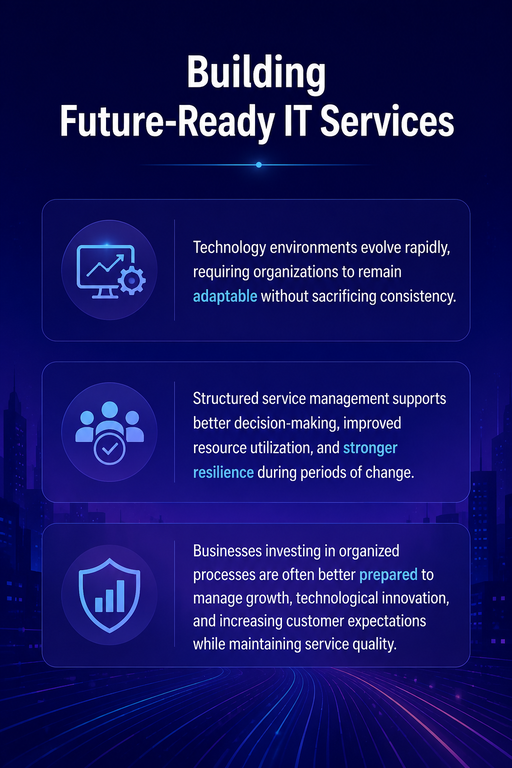
Technology environments evolve rapidly, requiring organizations to remain adaptable without sacrificing consistency.
Structured service management supports better decision-making, improved resource utilization, and stronger resilience during periods of change.
Businesses investing in organized processes are often better prepared to manage growth, technological innovation, and increasing customer expectations while maintaining service quality.
Conclusion
Understanding the distinction between standards and frameworks is essential for organizations seeking stronger IT service management capabilities. ISO 20000 establishes measurable requirements that support governance, accountability, documentation, and continual improvement, while ITIL 4 offers flexible guidance and best practices designed to enhance service delivery and operational effectiveness.
Rather than competing approaches, they can complement one another by combining structured management principles with practical implementation strategies. Businesses that understand iso 20000 certification requirements gain valuable insight into building reliable, customer-focused service management systems capable of adapting to evolving technological and business challenges.
As digital transformation continues across industries, organizations that embrace structured governance, continual improvement, and customer-centered thinking will be better positioned for sustainable success. Learning and implementing iso 20000 certification requirements can provide a solid foundation for delivering consistent, high-quality IT services while supporting long-term organizational growth and resilience.