
What Are the Key Benefits of Achieving Workplace Safety Certification?
Workplace safety is more than just a legal requirement. It has become a critical factor in improving employee well-being, operational efficiency, and business sustainability. Organizations across industries are recognizing that a safe working environment helps reduce accidents, improve productivity, and strengthen customer confidence. One of the most effective ways to demonstrate a commitment to occupational health and safety is by achieving iso 45001 Certification.
The internationally recognized standard provides a structured framework that helps organizations identify workplace hazards, manage risks, and continually improve safety performance. Whether a business operates in manufacturing, construction, healthcare, logistics, food production, or information technology, workplace safety remains a top priority.
In this article, we will explore the major advantages of obtaining iso 45001 Certification, explain why workplace safety certification matters, and discuss how organizations can benefit from implementing an effective occupational health and safety management system.
Understanding Workplace Safety Certification
Workplace safety certification is a formal recognition that an organization has implemented a management system designed to protect employees, contractors, visitors, and other stakeholders from workplace hazards. The most widely accepted global standard for occupational health and safety management is iso 45001 Certification.
Rather than focusing only on responding to accidents, the standard emphasizes preventing incidents before they happen. It encourages organizations to identify risks, establish safety controls, monitor performance, and continuously improve workplace conditions.
A well-implemented safety management system supports compliance with legal requirements while promoting a culture where safety becomes everyone’s responsibility.
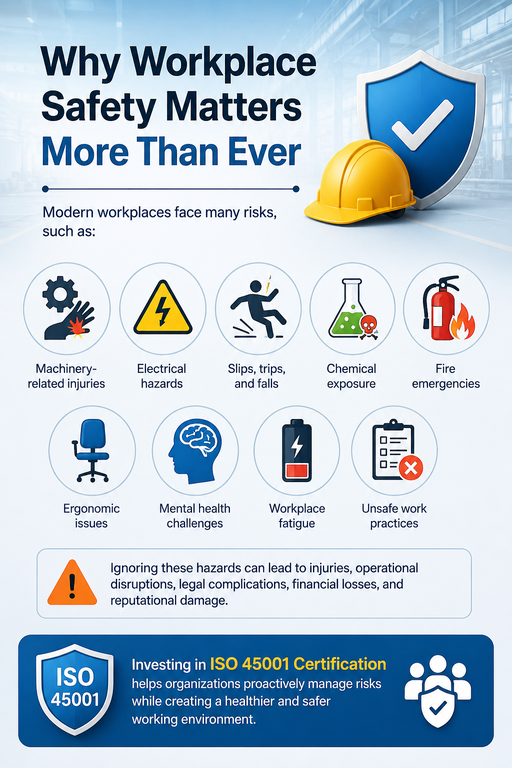
Why Workplace Safety Matters More Than Ever
Modern workplaces face numerous risks depending on their industry. These risks may include:
- Machinery-related injuries
- Electrical hazards
- Slips, trips, and falls
- Chemical exposure
- Fire emergencies
- Ergonomic issues
- Mental health challenges
- Workplace fatigue
- Unsafe work practices
Ignoring these hazards can lead to injuries, operational disruptions, legal complications, financial losses, and reputational damage. Investing in iso 45001 Certification helps organizations proactively manage these challenges while creating a healthier working environment.
Key Benefits of Achieving Workplace Safety Certification
1. Reduces Workplace Accidents
One of the biggest advantages of iso 45001 Certification is its ability to significantly reduce workplace incidents.
Organizations establish processes for:
- Hazard identification
- Risk assessment
- Preventive action planning
- Incident investigation
- Continuous monitoring
By addressing potential dangers before accidents occur, businesses experience fewer injuries and safer daily operations.
2. Protects Employee Health and Well-Being
Employees perform better when they feel safe at work.
A certified occupational health and safety management system encourages organizations to:
- Improve workplace conditions
- Provide appropriate safety equipment
- Reduce exposure to harmful substances
- Promote employee wellness
- Support mental health initiatives
Healthy employees are generally more engaged, motivated, and productive.
3. Strengthens Legal and Regulatory Compliance
Every country has workplace safety regulations that organizations must follow.Keeping up with changing laws can be difficult.
Implementing iso 45001 Certification helps businesses develop systematic processes for identifying applicable legal requirements and ensuring compliance.
This reduces the likelihood of:
- Regulatory penalties
- Legal disputes
- Compliance violations
- Government inspections resulting in corrective actions
Following the rules also builds trust with regulators and business partners.
4. Improves Risk Management
Effective risk management is one of the strongest features of occupational health and safety management system implementation.
Instead of reacting to problems after they occur, organizations proactively identify:
- Unsafe equipment
- Hazardous work processes
- Human errors
- Environmental risks
- Operational weaknesses
Regular assessments allow businesses to minimize disruptions while improving workplace safety.
5. Builds a Strong Safety Culture
Safety cannot depend solely on management decisions.
Organizations with iso 45001 Certification encourage participation from employees at every level.
Workers become more involved by:
- Reporting hazards
- Suggesting improvements
- Following safe work practices
- Participating in safety training
- Supporting continuous improvement
A positive safety culture reduces complacency and promotes shared responsibility.
6. Increases Employee Confidence
Employees appreciate organizations that prioritize their health and safety.
When workers see clear safety procedures, proper training, and management commitment, they develop greater trust in the organization.
Higher employee confidence often results in:
- Better morale
- Increased job satisfaction
- Lower absenteeism
- Reduced employee turnover
Satisfied employees contribute to long-term organizational success.
7. Enhances Business Reputation
Customers, investors, suppliers, and stakeholders increasingly prefer organizations with strong safety standards.
Achieving iso 45001 Certification demonstrates that an organization values responsible business practices.
This improves credibility by showing commitment to:
- Employee welfare
- Risk management
- Continuous improvement
- International best practices
- Operational excellence
A strong reputation often creates new business opportunities.
8. Improves Operational Efficiency
Workplace accidents often interrupt normal operations.
Equipment damage, investigations, employee absences, and production delays can significantly impact efficiency.
Organizations implementing iso 45001 Certification often experience smoother operations because:
- Risks are managed earlier.
- Processes become more standardized.
- Employees follow documented procedures.
- Safety responsibilities become clearly defined.
Operational consistency contributes to better overall performance.
9. Reduces Downtime
Unexpected workplace incidents can halt production or service delivery.
Proper implementation of an occupational health and safety management system helps minimize interruptions by reducing:
- Equipment failures
- Unsafe work conditions
- Emergency shutdowns
- Employee injuries
- Accident investigations
Reduced downtime allows organizations to maintain productivity and meet customer expectations.
10. Supports Continuous Improvement
One of the core principles behind iso 45001 Certification is continual improvement.
Organizations regularly:
- Review safety objectives
- Evaluate performance
- Conduct internal audits
- Analyze incidents
- Implement corrective actions
This ongoing improvement ensures that workplace safety evolves alongside business growth and changing risks.
11. Encourages Better Employee Training
Training is an essential component of workplace safety.
Organizations achieving iso 45001 Certification establish structured training programs covering:
- Emergency preparedness
- Hazard awareness
- Safe equipment operation
- Incident reporting
- Personal protective equipment
- Workplace responsibilities
Well-trained employees make fewer mistakes and respond more effectively during emergencies.
12. Improves Emergency Preparedness
Every workplace should be prepared for unexpected events.
Certification encourages organizations to create emergency plans for situations such as:
- Fire incidents
- Chemical spills
- Natural disasters
- Medical emergencies
- Equipment failures
Regular drills and preparedness activities help employees respond calmly and efficiently.
Industries That Benefit from Workplace Safety Certification
Although workplace safety is essential everywhere, several industries gain exceptional value from iso 45001 Certification, including:
- Manufacturing
- Construction
- Oil and gas
- Food processing
- Healthcare
- Warehousing
- Transportation
- Mining
- Engineering
- Chemical industries
- Pharmaceutical production
- Educational institutions
- Hospitality
- Information technology
- Logistics
Each industry faces unique occupational risks that require systematic management.
How Organizations Can Successfully Achieve Certification
Successfully implementing iso 45001 Certification involves more than preparing documentation.
Organizations should focus on:
Leadership Commitment
Management should actively support workplace safety initiatives and allocate appropriate resources.
Employee Participation
Employees should be encouraged to identify hazards, report incidents, and contribute to safety improvements.
Risk-Based Thinking
Organizations should regularly evaluate workplace risks and establish preventive controls.
Internal Audits
Routine audits help identify opportunities for improvement before external assessments.
Corrective Actions
Organizations should investigate incidents thoroughly and implement measures that prevent recurrence.
Performance Monitoring
Tracking safety indicators helps management measure progress and identify improvement opportunities.
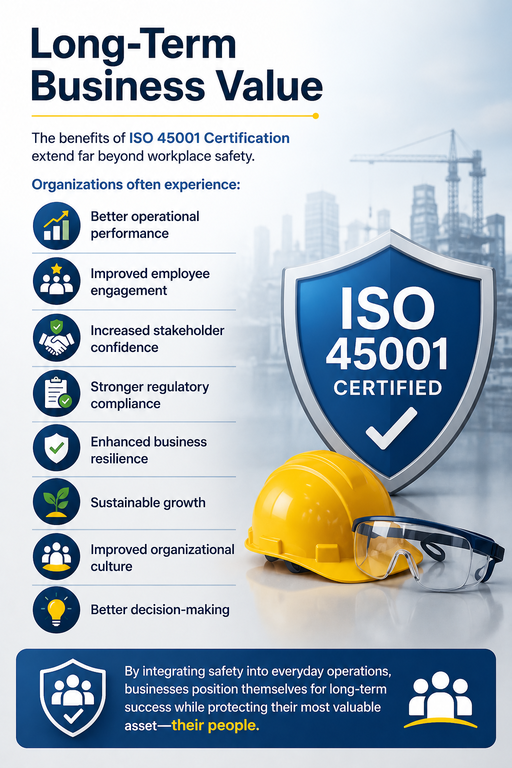
Long-Term Business Value
The benefits of iso 45001 Certification extend far beyond workplace safety.
Organizations often experience:
- Better operational performance
- Improved employee engagement
- Increased stakeholder confidence
- Stronger regulatory compliance
- Enhanced business resilience
- Sustainable growth
- Improved organizational culture
- Better decision-making
By integrating safety into everyday operations, businesses position themselves for long-term success while protecting their most valuable asset—their people.
Conclusion
Creating a safe workplace is an ongoing responsibility that benefits employees, management, customers, and the wider community. Achieving iso 45001 Certification demonstrates a genuine commitment to occupational health and safety while providing a structured framework for identifying risks, preventing accidents, and continuously improving workplace performance.
Organizations that invest in workplace safety certification often enjoy stronger compliance, improved productivity, enhanced employee morale, reduced operational disruptions, and a more positive reputation. As industries continue to evolve, maintaining high workplace safety standards is becoming an essential part of responsible and sustainable business operations.
Implementing an effective occupational health and safety management system not only protects people but also strengthens organizational resilience, helping businesses adapt to changing risks while achieving long-term operational excellence.