
FSSC 22000 vs ISO 22000: Understanding the Key Differences
Food safety has become one of the most important priorities for businesses involved in food manufacturing, processing, packaging, storage, transportation, and distribution. Consumers expect safe, high-quality products, while regulatory authorities and global buyers demand strong food safety management systems. As a result, internationally recognized food safety standards have become essential for organizations looking to build trust and maintain compliance.
Among the most widely recognized food safety standards are ISO 22000 and FSSC 22000. While both frameworks focus on food safety and share many similarities, they serve different purposes and have unique requirements. Businesses often struggle to decide which certification is more suitable for their operations.
If your organization is considering iso 22000 certification, understanding the differences between these two standards can help you make an informed decision. This guide explains the key distinctions, benefits, and factors to consider when choosing between ISO 22000 and FSSC 22000.
What Is ISO 22000?
ISO 22000 is a globally recognized standard that explains the requirements for a Food Safety Management System (FSMS). It is designed to help organizations identify, control, and reduce food safety hazards throughout the food supply chain.
The standard applies to organizations of all sizes, including:
- Food manufacturers
- Ingredient suppliers
- Packaging manufacturers
- Food transport providers
- Warehouses
- Retailers
- Catering businesses
- Equipment manufacturers supporting the food industry
The primary objective of iso 22000 certification is to ensure that food remains safe for consumers by implementing effective food safety controls, risk management practices, and continuous improvement.
What Is FSSC 22000?
FSSC 22000 (Food Safety System Certification 22000) is a certification scheme that builds upon ISO 22000 while incorporating additional requirements designed to meet the expectations of the Global Food Safety Initiative (GFSI).
It includes:
- ISO 22000 requirements
- Industry-specific Prerequisite Programs (PRPs)
- Additional FSSC requirements
- Enhanced food defense measures
- Food fraud prevention
- Equipment management
- Environmental monitoring where applicable
Because of these additional requirements, FSSC 22000 is often preferred by organizations supplying large international retailers and global food brands.
The Relationship Between ISO 22000 and FSSC 22000
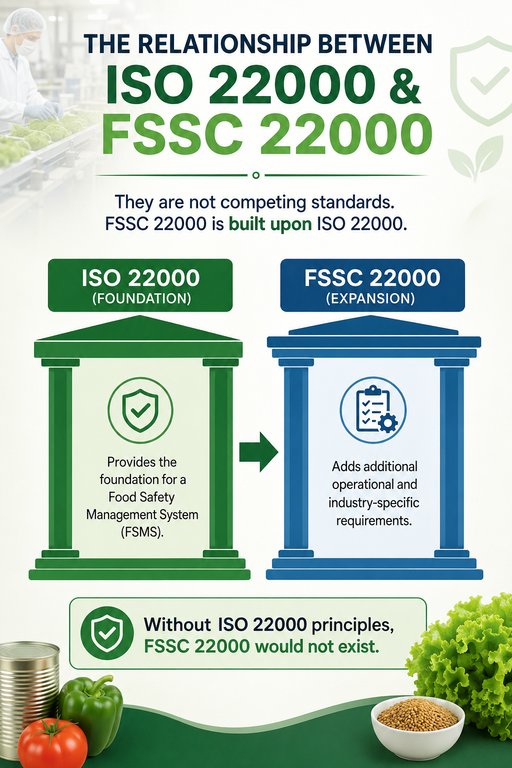
Many organizations mistakenly believe these are competing standards. In reality, FSSC 22000 is built upon ISO 22000.
Think of iso 22000 certification as the foundation. FSSC 22000 expands upon that foundation by adding more detailed operational and industry-specific requirements.
Without ISO 22000 principles, FSSC 22000 would not exist.
Key Differences Between FSSC 22000 and ISO 22000
1. Scope of Certification
One of the primary differences lies in the overall scope.
ISO 22000 focuses on establishing an effective Food Safety Management System for organizations across the food supply chain.
FSSC 22000 goes further by adding sector-specific controls and detailed operational requirements suitable for higher-risk food production environments.
Organizations serving multinational customers often require these extra controls.
2. Global Recognition
Both standards enjoy international recognition.
However, FSSC 22000 is benchmarked by the Global Food Safety Initiative (GFSI), making it particularly attractive to businesses supplying international retailers and large food manufacturers.
Meanwhile, iso 22000 certification remains widely respected and accepted across many industries and markets.
3. Additional Requirements
The most significant distinction is the inclusion of additional mandatory requirements in FSSC 22000.
These include:
- Food defense
- Food fraud prevention
- Product labeling controls
- Equipment management
- Environmental monitoring
- Allergen management
- Supplier performance evaluation
ISO 22000 focuses primarily on food safety management principles without prescribing these additional sector-specific controls.
4. Prerequisite Programs (PRPs)
Both systems require prerequisite programs that support food safety.
However, FSSC 22000 mandates compliance with detailed sector-specific PRP standards, depending on the organization’s activities.
Examples include requirements for:
- Cleaning and sanitation
- Pest control
- Facility maintenance
- Waste management
- Personal hygiene
- Storage conditions
- Equipment cleaning
These requirements provide more operational guidance than standard food safety management system implementation alone.
5. Complexity
ISO 22000 is generally simpler to implement because it focuses on management system principles.
FSSC 22000 requires more comprehensive documentation, monitoring, verification activities, and operational controls.
Organizations choosing FSSC often need greater internal resources and stronger food safety maturity.
6. Customer Expectations
Many international retailers specifically request suppliers to hold FSSC 22000 certification due to its GFSI recognition.
However, many organizations successfully meet customer requirements through iso 22000 certification, especially when operating in domestic markets or supplying businesses without GFSI-specific requirements.
7. Audit Process
Both certifications require regular external audits.
However, FSSC 22000 audits generally involve:
- More detailed assessments
- Additional operational verification
- Greater documentation review
- Expanded food defense evaluation
- Food fraud risk assessment
ISO 22000 audits remain comprehensive but focus primarily on management system effectiveness.
Similarities Between ISO 22000 and FSSC 22000
Although there are important differences, both standards share several common principles.
Both require organizations to:
- Identify food safety hazards
- Conduct risk assessments
- Establish preventive controls
- Implement HACCP principles
- Monitor critical processes
- Train employees
- Improve continuously
- Maintain documented procedures
- Conduct internal audits
- Review management performance regularly
These shared elements help organizations maintain consistently safe food production.
Benefits of ISO 22000 Certification
Organizations pursuing iso 22000 certification enjoy numerous advantages.
Improves Food Safety
A structured Food Safety Management System reduces contamination risks while improving food quality and consumer protection.
Enhances Customer Confidence
Certification demonstrates a commitment to internationally recognized food safety practices, strengthening customer trust.
Supports Regulatory Compliance
Organizations establish systematic processes for identifying and complying with applicable food safety regulations.
Encourages Continuous Improvement
Regular internal audits and management reviews help organizations identify opportunities for ongoing improvement.
Improves Operational Efficiency
Clearly defined procedures reduce process variation, improve consistency, and minimize waste.
Strengthens Risk Management
The standard promotes proactive identification and control of food safety hazards before problems occur.
Benefits of FSSC 22000
Organizations requiring advanced food safety controls may benefit from FSSC 22000 through:
- Greater acceptance among multinational retailers
- Enhanced food fraud prevention
- Stronger food defense measures
- More detailed operational controls
- Better supplier management
- Increased global market opportunities
These benefits make it especially suitable for large-scale food manufacturers and exporters.
Which Certification Should Your Organization Choose?
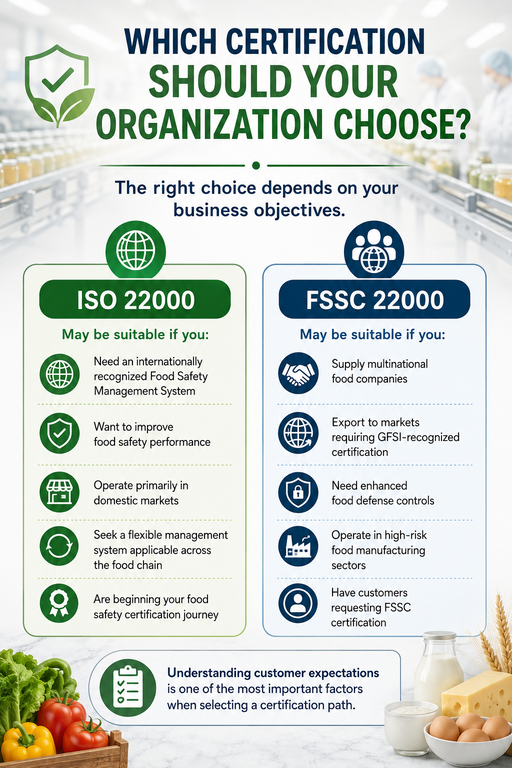
The right choice depends on your business objectives.
ISO 22000 may be suitable if you:
- Need an internationally recognized Food Safety Management System
- Want to improve food safety performance
- Operate primarily in domestic markets
- Seek a flexible management system applicable across the food chain
- Are beginning your food safety certification journey
FSSC 22000 may be suitable if you:
- Supply multinational food companies
- Export to markets requiring GFSI-recognized certification
- Need enhanced food defense controls
- Operate in high-risk food manufacturing sectors
- Have customers requesting FSSC certification
Understanding customer expectations is one of the most important factors when selecting a certification path.
Steps to Achieve ISO 22000 Certification
Organizations pursuing iso 22000 certification typically follow these stages:
Understand the Standard
Study the requirements and determine how they apply to your operations.
Conduct a Gap Analysis
Evaluate existing food safety practices and identify areas requiring improvement.
Develop the Food Safety Management System
Create documented procedures, establish hazard controls, and implement operational processes.
Employee Training
Ensure staff understand food safety responsibilities and management system requirements.
Internal Audit
Review system performance before external assessment.
Management Review
Leadership evaluates effectiveness and approves improvements.
Certification Audit
An independent assessment verifies conformity with ISO 22000 requirements.
Continuous Improvement
Maintain and improve the management system through ongoing monitoring and regular audits.
Conclusion
Both ISO 22000 and FSSC 22000 play an important role in strengthening food safety across the global supply chain. While they share many common principles, they differ in complexity, additional requirements, industry expectations, and global recognition. For many organizations, iso 22000 certification provides a strong foundation for managing food safety risks, improving operational efficiency, and building customer confidence.
Businesses with more demanding international supply chain requirements may choose FSSC 22000 because of its additional controls and GFSI recognition. Ultimately, selecting the right certification depends on your organization’s size, market, customer expectations, and long-term business goals