
QA vs QC in ISO 9001: Understanding the Key Differences
Quality is one of the most important factors influencing customer satisfaction and business success. Organizations that consistently deliver reliable products and services gain a competitive advantage, build customer trust, and improve operational efficiency. To achieve these goals, businesses often implement a Quality Management System (QMS) based on iso 9001 certification, the world’s most recognized quality management standard.
When discussing quality management, two terms frequently appear: Quality Assurance (QA) and Quality Control (QC). Although these concepts are closely related, they are not the same. Many organizations mistakenly use them interchangeably, which can create confusion during quality planning, audits, and daily operations.
Understanding the difference between QA and QC is essential for organizations seeking iso 9001 certification, as both play distinct yet complementary roles in achieving consistent quality and continual improvement. This article explains the key differences, their importance within ISO 9001, and how businesses can effectively implement both approaches.
What Is ISO 9001?
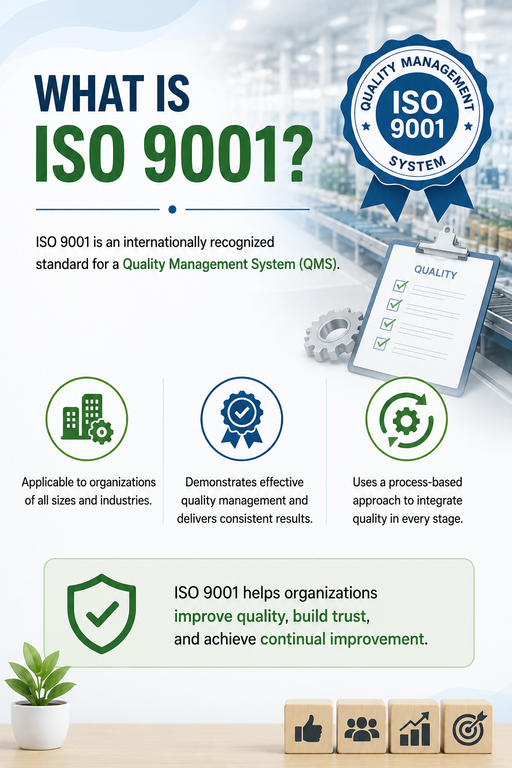
ISO 9001 is an internationally recognized standard that specifies the requirements for a Quality Management System (QMS). It helps organizations establish structured processes to consistently meet customer requirements while enhancing customer satisfaction through continual improvement.
The standard is applicable to organizations of all sizes and industries, including manufacturing, healthcare, education, logistics, construction, IT, retail, and professional services. Achieving iso 9001 certification demonstrates that an organization has implemented an effective system for managing quality, improving efficiency, and delivering consistent results.
Rather than focusing solely on product inspection, ISO 9001 emphasizes a process-based approach that integrates quality into every stage of an organization’s operations.
Understanding Quality Assurance (QA)
Quality Assurance is the process of preventing problems by making sure everything is done correctly from the beginning. It involves creating systems, procedures, and processes that ensure products or services consistently meet defined quality standards.
Instead of identifying problems after production, QA aims to eliminate the root causes that may lead to defects.
Typical Quality Assurance activities include:
- Developing quality policies
- Creating documented procedures
- Employee training
- Process standardization
- Risk assessment
- Internal audits
- Supplier evaluation
- Management reviews
- Continuous improvement initiatives
Within iso 9001 certification, Quality Assurance supports the establishment of effective processes that reduce variability and improve overall organizational performance.
Understanding Quality Control (QC)
Quality Control is a reactive process that focuses on identifying defects after a product or service has been produced. QC involves inspection, testing, verification, and measurement to determine whether quality requirements have been met.
The primary objective of QC is to detect nonconforming products before they reach customers.
Common Quality Control activities include:
- Product inspection
- Sample testing
- Dimensional measurements
- Performance testing
- Final product verification
- Defect identification
- Corrective action reporting
While QC identifies problems, it does not necessarily prevent them from occurring in the future. This is where QA becomes essential.
QA vs QC: The Key Differences
Although both contribute to quality management, QA and QC differ in several important ways.
1. Primary Objective
Quality Assurance focuses on preventing defects by improving processes.
Quality Control focuses on detecting defects in finished products or completed services.
2. Approach
QA is proactive because it seeks to prevent problems before they happen.
QC is reactive because it identifies issues after production or service delivery.
3. Process Focus
Quality Assurance emphasizes improving the entire production or service process.
Quality Control concentrates on evaluating the final output.
4. Responsibility
QA involves participation from management, process owners, and employees across the organization.
QC is generally performed by inspectors, technicians, or quality control personnel responsible for testing and inspection.
5. Activities
QA includes planning, documentation, training, audits, and process improvement.
QC includes inspections, measurements, testing, verification, and acceptance or rejection of products.
6. Timing
Quality Assurance begins before production starts and continues throughout the process.
Quality Control usually occurs during production or after products are completed.
Why Both QA and QC Matter in ISO 9001
One common misconception is that organizations only need Quality Control to maintain quality. However, relying solely on inspections is neither efficient nor cost-effective.
iso 9001 certification promotes a balanced approach where both QA and QC work together.
Quality Assurance reduces the likelihood of defects by improving systems.
Quality Control verifies that products meet customer requirements before delivery.
Together, they create a comprehensive quality management strategy that minimizes waste, reduces customer complaints, and supports continual improvement.
How ISO 9001 Integrates QA and QC
ISO 9001 does not specifically require separate QA and QC departments. Instead, it establishes requirements that naturally incorporate both functions.
Process-Based Thinking
Organizations identify key business processes, define responsibilities, establish controls, and monitor performance.
This supports Quality Assurance by preventing process failures.
Risk-Based Thinking
Risk assessment is a major requirement of quality management system implementation.
Organizations identify potential risks before they affect product quality and establish preventive controls.
Performance Evaluation
Regular monitoring, measurement, analysis, and evaluation help organizations assess both process effectiveness and product quality.
Internal Audits
Internal audits verify whether processes are functioning effectively and complying with documented procedures.
These audits are primarily part of Quality Assurance.
Product Verification
Inspection and testing activities confirm that products satisfy customer specifications.
These activities represent Quality Control.
Benefits of Strong Quality Assurance
Organizations that prioritize QA often experience long-term operational improvements.
Some major benefits include:
Reduced Defects
Well-designed processes minimize errors before production begins.
Improved Consistency
Standardized procedures produce consistent products and services.
Better Customer Satisfaction
Reliable quality increases customer confidence and repeat business.
Lower Operational Costs
Preventing defects is generally less expensive than correcting them later.
Greater Employee Awareness
Training programs improve employee understanding of quality requirements.
Enhanced Compliance
Documented systems support regulatory and customer compliance.
Benefits of Effective Quality Control
Although prevention is essential, Quality Control remains equally valuable.
QC provides several important advantages:
- Identifies defective products before shipment
- Protects customer satisfaction
- Reduces warranty claims
- Supports product reliability
- Provides valuable feedback for process improvement
- Verifies compliance with quality specifications
Inspection data often reveals recurring issues that can be addressed through stronger Quality Assurance processes.
Common Mistakes Organizations Make
Businesses pursuing iso 9001 certification sometimes misunderstand the relationship between QA and QC.
Common mistakes include:
Depending Only on Final Inspection
Inspecting finished products alone cannot eliminate recurring process problems.
Poor Documentation
Incomplete procedures make consistent quality difficult to achieve.
Inadequate Employee Training
Employees who do not understand quality requirements are more likely to make errors.
Ignoring Root Cause Analysis
Simply correcting defects without investigating their causes leads to repeated failures.
Lack of Continuous Improvement
Quality management should keep improving through regular review and updates.
Best Practices for Balancing QA and QC
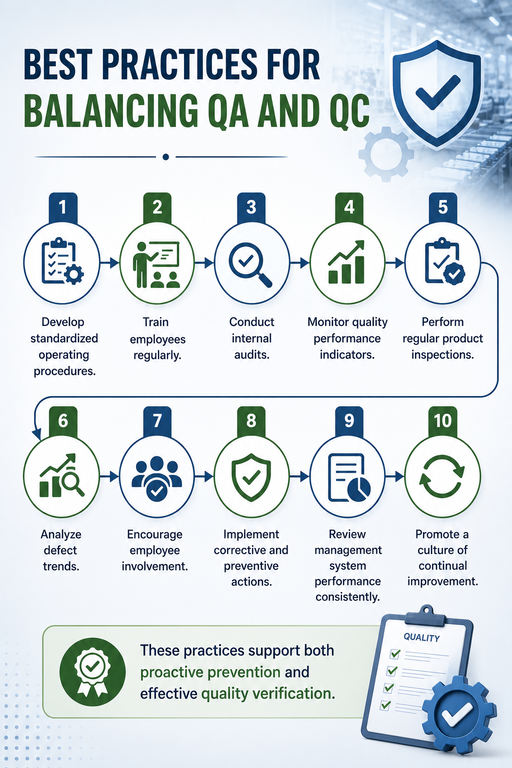
Organizations can strengthen their Quality Management System by adopting the following practices:
- Develop standardized operating procedures.
- Train employees regularly.
- Conduct internal audits.
- Monitor quality performance indicators.
- Perform regular product inspections.
- Analyze defect trends.
- Encourage employee involvement.
- Implement corrective and preventive actions.
- Review management system performance consistently.
- Promote a culture of continual improvement.
These practices support both proactive prevention and effective quality verification.
The Role of Leadership in Quality Management
Successful implementation of iso 9001 certification requires strong leadership commitment.
Management should:
- Establish quality objectives
- Allocate necessary resources
- Promote employee engagement
- Encourage risk-based thinking
- Monitor organizational performance
- Support continual improvement initiatives
Leadership involvement ensures that quality becomes part of the organization’s culture rather than simply a compliance requirement.
Conclusion
Quality Assurance and Quality Control are two essential components of an effective Quality Management System, but they serve different purposes. Quality Assurance focuses on preventing defects by improving processes, while Quality Control identifies defects through inspection and testing. Together, they help organizations deliver consistent, reliable products and services that meet customer expectations.
Implementing both approaches effectively is a key part of achieving iso 9001 certification. Organizations that combine proactive process management with thorough product verification can improve operational efficiency, reduce costs, strengthen customer confidence, and support long-term business growth.
As quality expectations continue to evolve across industries, businesses that integrate QA and QC into their quality management system will be better positioned to maintain compliance, enhance performance, and achieve sustainable success.