
What Is the Idea Behind ISO Certification and How It Improves Business Credibility
In today’s competitive global marketplace, businesses are expected to deliver consistent quality, maintain transparency, and meet international standards. Customers, partners, and stakeholders want assurance that an organization operates with reliability, safety, and efficiency. This is where ISO Certification plays a critical role. It is not merely a formal recognition but a structured framework that helps organizations build trust, credibility, and long-term sustainability.
Understanding the idea behind ISO Certification and how it strengthens business credibility can help organizations make informed decisions about quality, compliance, and growth.
Understanding the Core Idea Behind ISO Certification
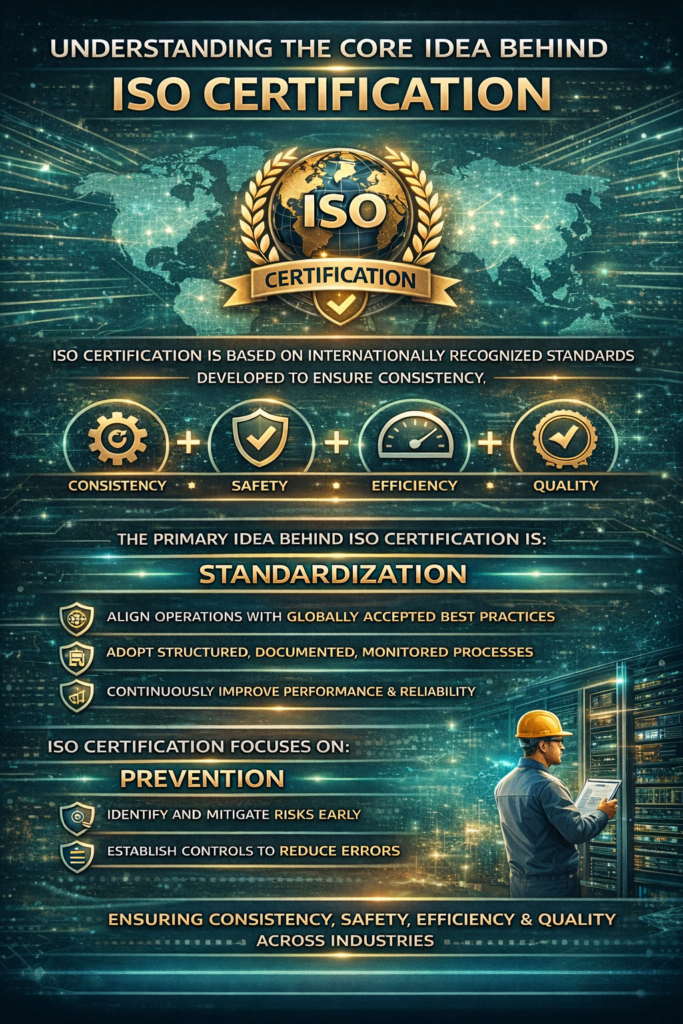
ISO Certification is based on internationally recognized standards developed to ensure consistency, safety, efficiency, and quality across industries. These standards provide clear guidelines that organizations can follow to improve their internal processes and external performance.
The primary idea behind ISO Certification is standardization. It helps organizations align their operations with globally accepted best practices. Instead of relying on informal systems, businesses adopt structured processes that are documented, monitored, and continuously improved.
ISO Certification focuses on prevention rather than correction. By identifying risks early and establishing controls, organizations reduce errors, inefficiencies, and customer complaints. This proactive approach strengthens operational discipline and reliability.
Why Standardization Matters in Modern Business
Standardization ensures that products and services meet consistent quality expectations regardless of location, team, or scale of operations. ISO Certification helps eliminate variability that often leads to defects, delays, and dissatisfaction.
Through ISO Certification, organizations create uniform procedures for planning, execution, monitoring, and improvement. This consistency enhances internal coordination and ensures that customers receive predictable and dependable outcomes.
In global markets, standardization also simplifies collaboration. When organizations follow recognized standards, partners and clients can trust their systems without extensive verification.
ISO Certification as a Foundation for Business Credibility
Business credibility is built on trust, reliability, and transparency. ISO Certification directly supports these elements by demonstrating that an organization follows structured and audited processes.
When a business holds ISO Certification, it signals a commitment to quality, compliance, and continuous improvement. This reassures customers that the organization takes its responsibilities seriously and operates with integrity.
ISO Certification also enhances credibility with vendors, investors, and regulatory bodies. It shows that the organization meets internationally accepted benchmarks rather than relying on internal claims alone.
Building Customer Trust Through ISO Certification
Customers today are more informed and cautious. They want assurance that products and services meet safety, quality, and performance expectations. ISO Certification provides that assurance through independent verification.
By following ISO standards, organizations establish clear quality objectives, monitor performance, and address issues systematically. This reduces errors and improves customer satisfaction over time.
ISO Certification also improves communication with customers. Clear documentation, defined responsibilities, and consistent service delivery build confidence and long-term loyalty.
Internal Process Improvement and Operational Efficiency
One of the most practical benefits of ISO Certification is improved internal efficiency. ISO standards encourage organizations to analyze workflows, identify gaps, and eliminate unnecessary steps.
Through ISO Certification, businesses document processes clearly, making them easier to understand, manage, and improve. Employees understand what their jobs are, what they’re responsible for, and what is expected of them.
This structured approach reduces confusion, rework, and downtime. As a result, organizations experience better productivity, lower operational costs, and improved decision-making.
Risk Management and Compliance Support
Risk management is a key element of ISO Certification. ISO standards require organizations to identify potential risks that could affect quality, safety, or performance and implement controls to manage them.
By adopting ISO Certification, businesses move from reactive problem-solving to proactive risk prevention. This reduces disruptions, legal issues, and compliance failures.
ISO Certification also supports regulatory compliance by aligning organizational processes with legal and industry requirements. This makes audits, inspections, and reporting more efficient and less stressful.
Enhancing Employee Confidence and Engagement
ISO Certification does not only benefit external stakeholders; it also strengthens internal culture. Clear procedures and defined objectives give employees confidence in their roles.
When organizations implement ISO Certification, employees receive structured guidance, training, and performance metrics. This clarity improves accountability and teamwork.
Employees working in an ISO-certified environment often feel more engaged because expectations are transparent and improvement is encouraged. A strong internal culture contributes directly to business credibility.
Competitive Advantage in the Marketplace
In crowded markets, credibility becomes a key differentiator. ISO Certification helps organizations stand out by demonstrating professionalism and commitment to excellence.
Many clients and partners prefer or require ISO Certification when selecting suppliers. It simplifies procurement decisions and increases opportunities for partnerships and contracts.
ISO Certification also supports market expansion by aligning businesses with international standards. This makes it easier to operate across regions and industries with confidence.
Continuous Improvement and Long-Term Growth
ISO Certification is not a one-time achievement. It emphasizes continuous improvement through regular reviews, audits, and performance evaluations.
Organizations with ISO Certification are encouraged to set measurable goals, analyze results, and implement improvements. This ongoing cycle ensures adaptability in changing markets.
By embedding continuous improvement into daily operations, ISO Certification supports sustainable growth rather than short-term success.
Strengthening Brand Reputation Through ISO Certification
Brand reputation is closely linked to consistency and reliability. ISO Certification reinforces both by ensuring that quality and standards are maintained over time.
Customers associate ISO Certification with professionalism, safety, and accountability. This perception strengthens brand image and builds long-term recognition.
A strong reputation supported by ISO Certification also reduces reputational risks and enhances public trust.
ISO Certification and Business Transparency
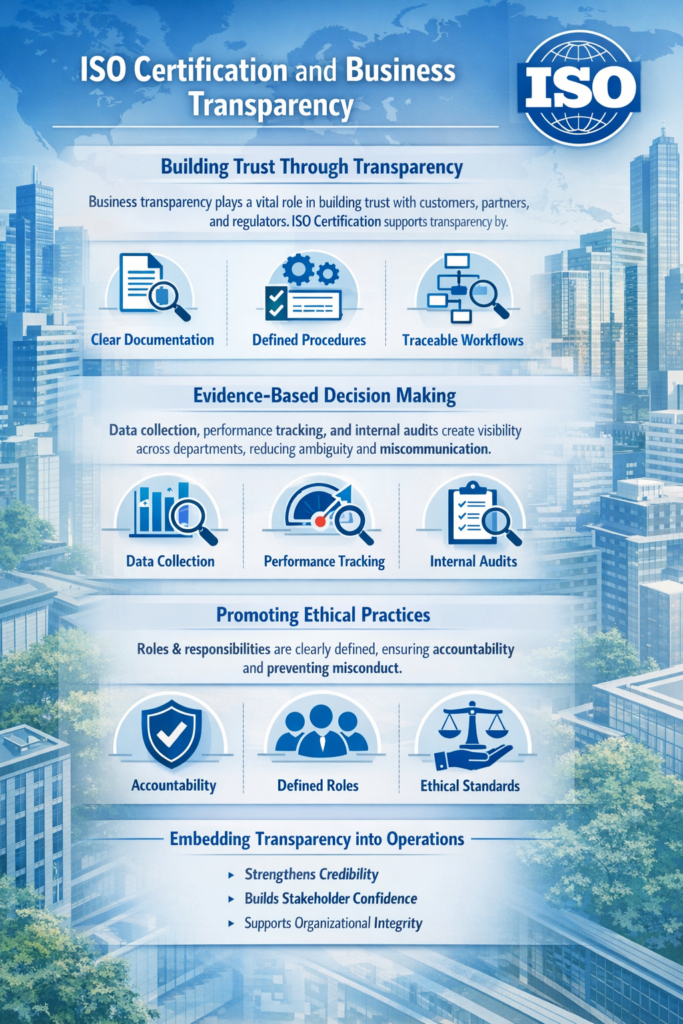
Business transparency plays a vital role in building trust with customers, partners, and regulators. ISO Certification directly supports transparency by requiring organizations to maintain clear documentation, defined procedures, and traceable workflows. Through ISO Certification, every process is recorded, monitored, and evaluated against measurable standards, ensuring that operations remain consistent and accountable.
One of the key strengths of ISO Certification is its emphasis on evidence-based decision-making. Data collection, performance tracking, and internal audits create visibility across departments, reducing ambiguity and miscommunication. This structured transparency allows stakeholders to understand how decisions are made and how quality is maintained.
In addition, ISO Certification promotes ethical business practices by encouraging responsibility at every organizational level. Roles and responsibilities are clearly defined, making it easier to identify ownership and prevent errors or misconduct. By embedding transparency into daily operations, ISO Certification strengthens credibility, improves stakeholder confidence, and supports long-term organizational integrity.
Final Thoughts: Why ISO Certification Matters for Credibility
The idea behind ISO Certification goes far beyond a formal badge or documented approval. It reflects a strong commitment to quality, consistency, and continuous improvement that modern businesses need to remain credible and competitive. By adopting globally recognized standards, ISO Certification helps organizations create structured systems that promote accountability, transparency, and long-term operational stability.
One of the biggest advantages of ISO Certification is the trust it builds among customers, partners, and stakeholders. When an organization follows ISO-aligned processes, it demonstrates that quality and compliance are not optional but embedded into daily operations. This independent validation reassures clients that services and products are delivered consistently and responsibly, strengthening overall business credibility.
Internally, ISO Certification enhances discipline and clarity by defining roles, responsibilities, and performance benchmarks. Employees work within clear frameworks, leading to better coordination, reduced errors, and improved efficiency. At the same time, ISO Certification encourages proactive risk management, helping businesses identify gaps early and address issues before they impact performance or reputation.In a competitive business environment where trust defines success, ISO Certification acts as a foundation for sustainable growth. It supports continuous improvement, strengthens brand reputation, and enables organizations to adapt confidently to market changes. Ultimately, ISO Certification is not just about meeting standards—it is about building a resilient, credible, and future-ready business that earns long-term confidence from every stakeholder.