
What Are the 7 Pillars of Quality? A Complete Guide
Quality is no longer just a competitive advantage—it is an essential requirement for every organization. Customers expect products and services that are reliable, safe, consistent, and compliant with applicable regulations. Whether a business manufactures consumer goods, industrial equipment, electronics, food products, medical devices, or construction materials, maintaining quality standards is critical for long-term success.
Many organizations offering or seeking Product certification services in india understand that product quality is about much more than passing inspections. It involves creating a systematic approach where every stage of production, from planning to delivery, contributes to meeting customer expectations. One useful framework for achieving this is the 7 Pillars of Quality.
These pillars represent the core principles that help organizations improve product performance, reduce defects, strengthen customer confidence, and achieve continual improvement. In this guide, we explore each pillar in detail and explain why they are important for businesses committed to delivering high-quality products.
What Are the 7 Pillars of Quality?
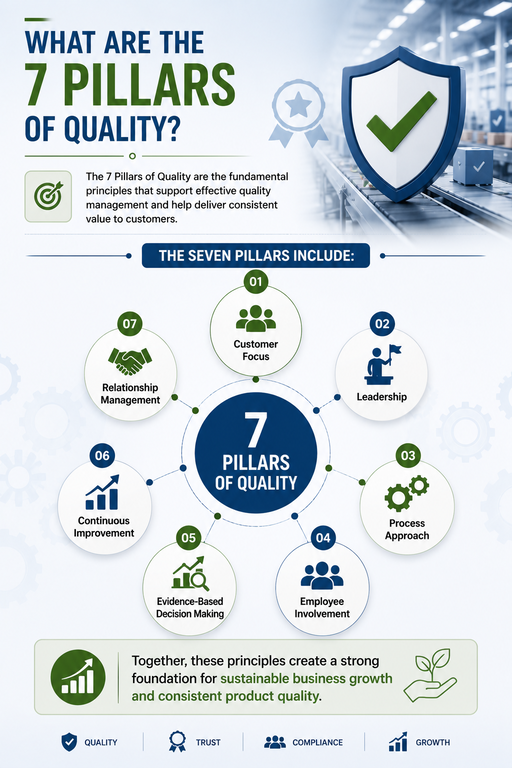
The 7 Pillars of Quality are the fundamental principles that support an effective quality management system. While different industries may interpret these concepts slightly differently, the underlying objective remains the same: to consistently produce products that meet customer, regulatory, and industry requirements.
Organizations involved in Product certification services in india often evaluate these quality principles when helping businesses demonstrate product conformity and compliance with applicable standards.
The seven pillars include:
- Customer Focus
- Leadership
- Process Approach
- Employee Involvement
- Evidence-Based Decision Making
- Continuous Improvement
- Relationship Management
Together, these principles create a strong foundation for sustainable business growth and consistent product quality.
Pillar 1: Customer Focus
Every successful quality management system begins with understanding customer needs.
Customers expect products that are safe, durable, functional, and dependable. Meeting these expectations requires organizations to actively gather customer feedback, understand market demands, and continually improve products based on changing requirements.
Customer-focused organizations typically:
- Monitor customer satisfaction
- Analyze complaints
- Improve product performance
- Enhance after-sales support
- Address customer concerns promptly
Businesses utilizing Product certification services in india often strengthen customer confidence by demonstrating compliance with recognized product standards.
Pillar 2: Leadership
Quality starts with strong leadership.
Management establishes the vision, objectives, and organizational culture needed to achieve quality goals. Leaders allocate resources, define responsibilities, encourage collaboration, and ensure quality remains a strategic priority.
Effective leadership involves:
- Setting clear quality objectives
- Supporting employee development
- Promoting accountability
- Encouraging innovation
- Monitoring organizational performance
Without management commitment, quality initiatives rarely achieve long-term success.
Pillar 3: Process Approach
High-quality products result from well-controlled processes rather than isolated inspections.
The process approach encourages organizations to view activities as interconnected systems that work together to produce consistent results.
Key process management activities include:
- Process mapping
- Standard operating procedures
- Risk identification
- Performance monitoring
- Process optimization
- Documentation control
Organizations pursuing quality management system certification frequently adopt the process approach to improve consistency while reducing errors and waste.
Pillar 4: Employee Involvement
Employees have a key role in keeping quality standards high.
Even the most effective systems cannot succeed without knowledgeable and engaged personnel.
Organizations should encourage employees to:
- Follow documented procedures
- Report quality concerns
- Suggest improvements
- Participate in training
- Take ownership of responsibilities
- Support continuous improvement initiatives
A workplace culture that values employee participation often experiences higher productivity and better product quality.
Pillar 5: Evidence-Based Decision Making
Successful quality management depends on accurate information rather than assumptions.
Organizations should collect, analyze, and evaluate relevant data before making operational decisions.
Examples of useful quality data include:
- Customer feedback
- Inspection results
- Audit findings
- Production performance
- Supplier evaluations
- Product testing
- Process measurements
Using evidence-based decisions helps businesses identify trends, solve problems more effectively, and improve overall performance.
Pillar 6: Continuous Improvement
Continuous improvement is one of the most important pillars of quality.
Rather than accepting existing performance levels, organizations should consistently seek opportunities to improve products, services, and operational processes.
Continuous improvement activities include:
- Internal audits
- Corrective actions
- Preventive actions
- Root cause analysis
- Employee suggestions
- Performance reviews
- Customer feedback analysis
Businesses providing Product certification services in india frequently encourage organizations to establish continual improvement programs that strengthen long-term compliance and customer satisfaction.
Pillar 7: Relationship Management
No organization operates independently.
Suppliers, distributors, contractors, regulators, and customers all influence product quality.
Building strong relationships with stakeholders helps organizations:
- Improve communication
- Reduce supply chain risks
- Strengthen product consistency
- Resolve issues quickly
- Support innovation
- Enhance customer satisfaction
Effective relationship management contributes to better overall business performance and stronger market competitiveness.
Why the 7 Pillars of Quality Matter
Organizations implementing these principles experience benefits that extend throughout every aspect of their operations.
Improved Product Quality
Consistent quality processes reduce defects while increasing product reliability.
Greater Customer Satisfaction
Meeting customer expectations strengthens loyalty and encourages repeat business.
Better Operational Efficiency
Standardized processes eliminate unnecessary variation and improve productivity.
Reduced Business Risks
Proactive quality management helps identify problems before they affect customers.
Stronger Regulatory Compliance
Quality systems support compliance with industry regulations and product standards.
Enhanced Business Reputation
Organizations known for quality often gain greater trust among customers, suppliers, and business partners.
How Product Certification Supports Quality
Product certification provides independent verification that products comply with applicable standards and technical requirements.
Organizations using Product certification services in india can demonstrate that their products meet established quality, safety, and performance criteria before entering the marketplace.
Product certification may involve:
- Product testing
- Technical documentation review
- Manufacturing process assessment
- Factory inspections
- Ongoing surveillance
- Compliance verification
These activities strengthen confidence among customers, regulators, and business partners.
Common Challenges in Maintaining Quality
Despite implementing quality systems, organizations may still face challenges such as:
- Inconsistent production processes
- Poor documentation
- Limited employee training
- Supplier quality issues
- Equipment failures
- Communication gaps
- Changing customer expectations
- Regulatory updates
Addressing these challenges requires ongoing monitoring and commitment to continuous improvement.
Best Practices for Strengthening Quality
Organizations can reinforce the seven pillars by adopting several practical strategies.
Develop Clear Procedures
Documented processes ensure consistency across all business activities.
Train Employees Regularly
Continuous training improves competence and supports consistent product quality.
Monitor Performance
Use measurable indicators to evaluate quality objectives and identify improvement opportunities.
Conduct Internal Audits
Regular audits help verify compliance and identify process weaknesses.
Encourage Employee Participation
Employees often provide valuable insights into operational improvements.
Review Customer Feedback
Customer input helps organizations improve products and services based on real-world experiences.
Strengthen Supplier Management
Reliable suppliers contribute significantly to consistent product quality.
Building a Culture of Quality
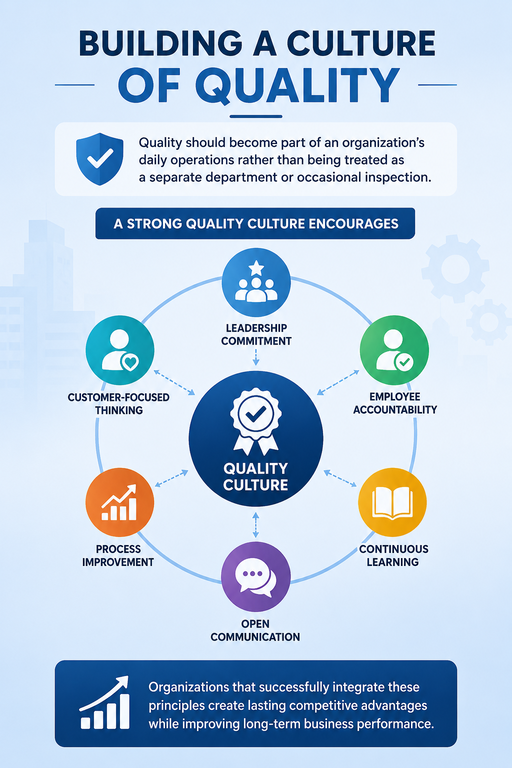
Quality should become part of an organization’s daily operations rather than being treated as a separate department or occasional inspection.
A strong quality culture encourages:
- Leadership commitment
- Employee accountability
- Continuous learning
- Open communication
- Process improvement
- Customer-focused thinking
Organizations that successfully integrate these principles create lasting competitive advantages while improving long-term business performance.
Conclusion
The 7 Pillars of Quality provide a practical framework for organizations seeking to improve product quality, operational efficiency, customer satisfaction, and regulatory compliance. By focusing on customer needs, strong leadership, effective processes, employee involvement, evidence-based decision-making, continuous improvement, and relationship management, businesses can build sustainable quality systems that support long-term growth.
Organizations utilizing Product certification services in india can further strengthen these efforts by demonstrating compliance with recognized product standards and industry requirements. Combined with an effective quality management system and a commitment to product quality assurance, these seven pillars help businesses consistently deliver reliable, safe, and high-performing products that earn customer trust and maintain competitiveness in today’s global marketplace.