
Is ISO Certification Free? Understanding the Certification Process
For businesses looking to improve quality, strengthen customer confidence, and comply with international standards, ISO certification is often an important milestone. Whether an organization operates in manufacturing, healthcare, construction, food processing, information technology, logistics, or professional services, achieving ISO certification demonstrates a commitment to effective management practices and continual improvement.
One of the most common questions organizations ask before beginning the certification journey is whether ISO certification is free. Businesses also frequently search for information related to iso certification cost india to better understand what influences the overall investment required for certification.
The simple answer is that ISO certification itself is not free. While the ISO standards can guide organizations in building effective management systems, becoming certified involves several stages that require professional assessment and ongoing maintenance. However, instead of focusing only on expenses, organizations should understand the complete certification process and the long-term value that ISO certification provides.
In this guide, we explain how the certification process works, why certification is not free, and the factors businesses should consider before pursuing ISO certification.
What Is ISO Certification?
ISO certification is proof that an organization’s management system meets the requirements of a specific ISO standard. It demonstrates that the organization has implemented documented processes designed to consistently meet customer, regulatory, and operational requirements.
Depending on business objectives, organizations may implement standards related to:
- Quality management
- Environmental management
- Occupational health and safety
- Food safety
- Information security
- Energy management
- Business continuity
Many organizations researching iso certification cost india are actually trying to understand the overall certification journey rather than simply the financial aspect.
Is ISO Certification Really Free?
The short answer is no.
ISO standards themselves provide internationally recognized frameworks for management systems, but certification requires an independent evaluation of an organization’s processes. This assessment verifies whether the implemented management system meets all applicable standard requirements.
Certification involves planning, documentation, implementation, internal audits, management reviews, and external assessments. These activities require time, resources, and professional expertise, making certification a structured investment rather than a free service.
Instead of viewing certification as an expense alone, businesses should consider the operational improvements and long-term benefits it delivers.
Why Organizations Pursue ISO Certification
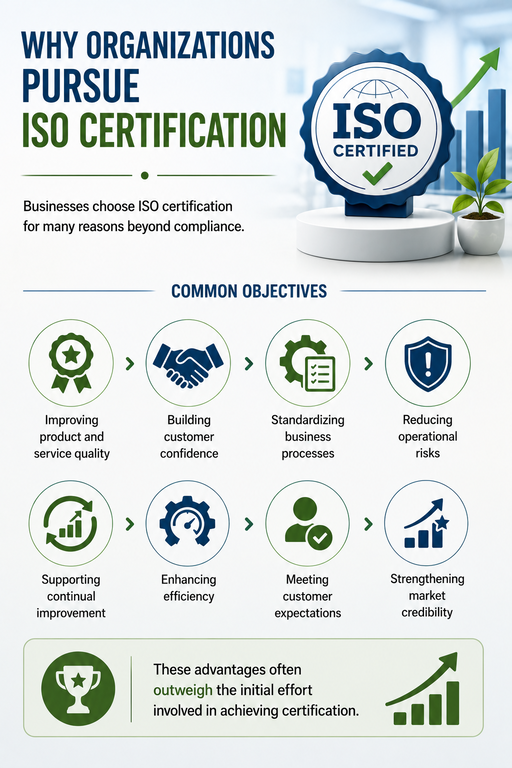
Businesses choose ISO certification for many reasons beyond regulatory compliance.
Some of the most common objectives include:
- Improving product and service quality
- Building customer confidence
- Standardizing business processes
- Reducing operational risks
- Supporting continual improvement
- Enhancing efficiency
- Meeting customer expectations
- Strengthening market credibility
These advantages often outweigh the initial effort involved in achieving certification.
Understanding the ISO Certification Process
Organizations often assume certification only involves a final audit. In reality, the process includes several important stages.
1. Selecting the Appropriate ISO Standard
The first step is identifying which ISO standard aligns with the organization’s objectives.
Examples include:
- ISO 9001 for quality management
- ISO 14001 for environmental management
- ISO 45001 for occupational health and safety
- ISO 22000 for food safety
- ISO/IEC 27001 for information security
Each standard focuses on a different area of organizational performance.
2. Gap Analysis
A gap analysis compares existing business practices with the requirements of the chosen ISO standard.
This evaluation helps identify:
- Missing procedures
- Documentation requirements
- Process improvements
- Employee training needs
- Compliance gaps
Completing a gap analysis early makes implementation more efficient.
3. Developing the Management System
Organizations create policies, objectives, procedures, records, and operational controls that comply with the chosen standard.
A well-designed ISO management system should be practical, easy to maintain, and integrated into daily operations rather than existing solely for certification purposes.
4. Employee Training
Employees play a central role in successful implementation.
Training ensures personnel understand:
- Their responsibilities
- Process requirements
- Documentation practices
- Risk management
- Continuous improvement
Employee awareness contributes significantly to effective implementation.
5. System Implementation
Once documentation is complete, the organization begins operating according to the established management system.
Implementation involves:
- Following documented procedures
- Maintaining required records
- Monitoring performance
- Addressing identified issues
This stage demonstrates whether the management system functions effectively in real-world operations.
6. Internal Audit
Internal audits evaluate whether processes comply with documented procedures and ISO requirements.
Auditors identify:
- Nonconformities
- Opportunities for improvement
- Process weaknesses
- Compliance issues
Internal audits help organizations prepare for external certification assessments.
7. Management Review
Senior management reviews system performance by evaluating:
- Audit findings
- Customer feedback
- Business objectives
- Process performance
- Improvement opportunities
Leadership involvement is essential for continual improvement.
8. Certification Audit
The final stage involves an independent audit conducted to verify conformity with the selected ISO standard.
The audit typically includes:
- Documentation review
- Employee interviews
- Process observation
- Operational verification
- Record examination
Successful completion results in certification.
Factors That Influence ISO Certification
When businesses search for iso certification cost india, they often expect a single answer. In reality, certification requirements vary based on several factors rather than a fixed approach.
Some important considerations include:
Organization Size
Larger organizations generally have more departments, employees, and operational processes requiring assessment.
Business Complexity
Organizations operating multiple facilities or managing complex production systems typically require more extensive implementation.
Industry Type
Different industries have different rules to follow and different risks to manage.
Scope of Certification
The number of products, services, locations, and business activities included within the certification scope affects implementation efforts.
Existing Management Systems
Organizations with established quality or safety systems often require fewer changes than businesses starting from scratch.
Common Misconceptions About ISO Certification
Myth 1: Certification Is Only for Large Businesses
ISO standards apply to organizations of every size, including startups and small businesses.
Myth 2: Certification Guarantees Perfect Products
Certification demonstrates that management systems consistently support quality and continual improvement, not that defects can never occur.
Myth 3: Certification Ends After the Audit
Maintaining certification requires ongoing monitoring, internal audits, management reviews, and continual improvement.
Myth 4: Documentation Alone Is Enough
Effective implementation is far more important than simply preparing documents.
Processes must be followed consistently throughout daily operations.
Benefits of ISO Certification
Organizations implementing effective management systems experience numerous long-term advantages.
Improved Operational Efficiency
Standardized processes reduce unnecessary variation and improve productivity.
Better Customer Satisfaction
Consistent quality increases customer confidence and strengthens long-term relationships.
Enhanced Risk Management
Organizations identify and manage operational risks before they become major problems.
Stronger Regulatory Compliance
Documented systems help organizations meet legal and industry-specific requirements.
Increased Employee Engagement
Clearly defined responsibilities improve accountability and collaboration.
Continuous Improvement
Regular audits and performance evaluations encourage ongoing business development.
Maintaining Certification
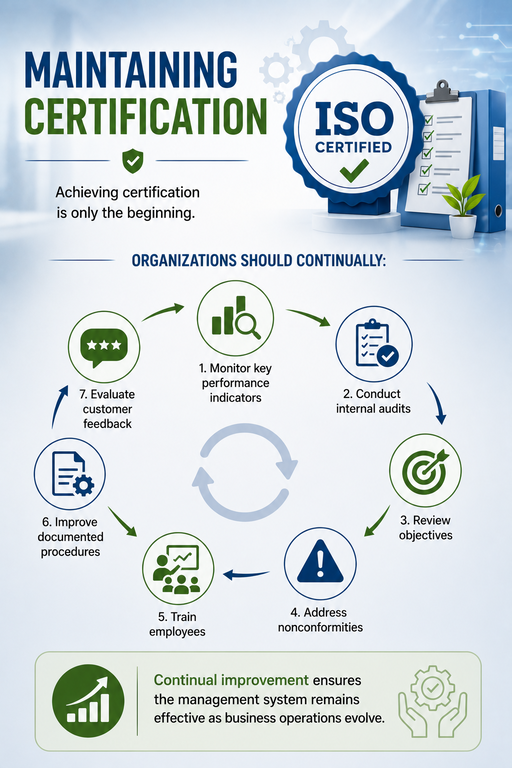
Achieving certification is only the beginning.
Organizations should continually:
- Monitor key performance indicators
- Conduct internal audits
- Review objectives
- Address nonconformities
- Train employees
- Improve documented procedures
- Evaluate customer feedback
Continual improvement ensures the management system remains effective as business operations evolve.
Why ISO Certification Is a Long-Term Investment
Although businesses frequently search for iso certification cost india, it is equally important to consider the long-term return on investment.
Certification helps organizations:
- Improve operational consistency
- Build stronger customer relationships
- Increase market credibility
- Reduce process inefficiencies
- Support business growth
- Strengthen competitive advantage
- Enhance organizational resilience
These lasting benefits often deliver far greater value than focusing solely on the certification process itself.
Conclusion
ISO certification is not a free process, but it is a valuable investment for organizations committed to improving quality, efficiency, compliance, and customer satisfaction. Rather than viewing certification as a one-time requirement, businesses should see it as an opportunity to strengthen their management systems and create a culture of continual improvement.
Organizations researching iso certification cost india should understand that the certification journey involves planning, implementation, employee involvement, internal audits, management reviews, and independent assessments. Each stage contributes to building a reliable ISO management system that supports sustainable business success.
By focusing on effective implementation rather than simply obtaining a certificate, businesses can enhance operational performance, improve customer confidence, and position themselves for long-term growth in increasingly competitive markets.