
The Structural Difference Between ISO 22000 and FSSC 22000 Explained
Food safety has become a critical priority for organizations involved in the food supply chain. Two widely recognized standards—ISO 22000 and FSSC 22000—are often discussed together, yet they are not identical. While both aim to strengthen food safety management systems, their structure, scope, and certification requirements differ in important ways.
Understanding the structural difference between ISO 22000 and FSSC 22000 helps organizations choose the right framework for compliance, credibility, and long-term food safety performance.
Understanding Food Safety Management Systems
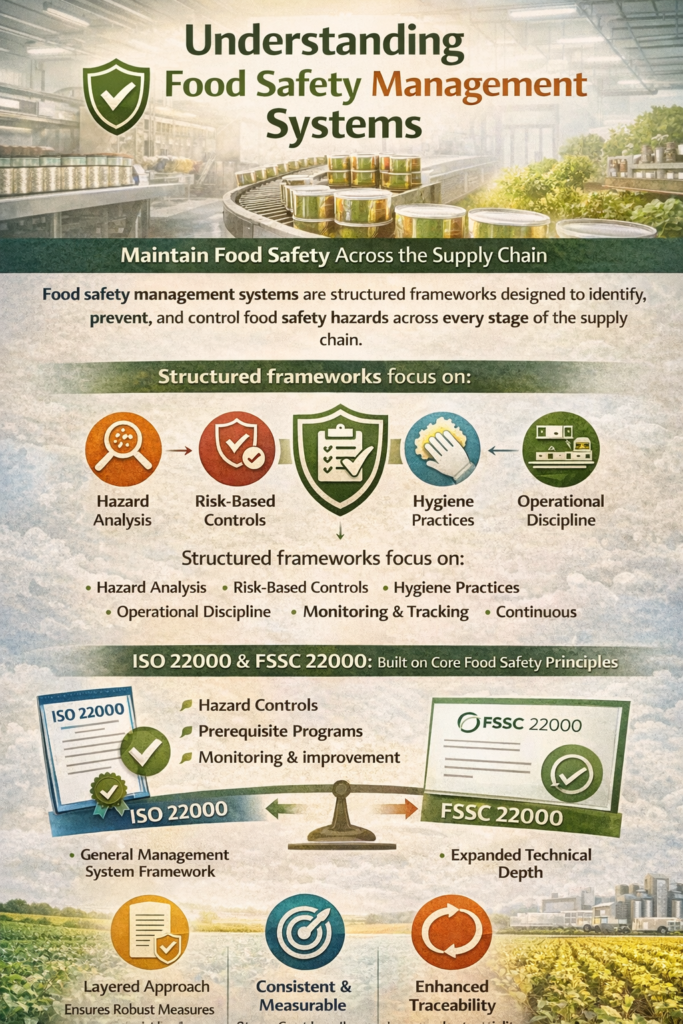
Food safety management systems are structured frameworks designed to identify, prevent, and control food safety hazards across every stage of the supply chain. These systems focus on hazard analysis, risk-based controls, hygiene practices, operational discipline, monitoring, and continuous improvement. A strong food safety management system ensures that food products remain safe from production to consumption while meeting regulatory and customer expectations.
Both ISO 22000 and FSSC 22000 are built on core food safety principles, but their structural frameworks determine how requirements are implemented, audited, and recognized globally. ISO 22000 provides a general management system structure, while FSSC 22000 expands this framework with additional technical depth. The structure of FSSC 22000 integrates ISO requirements with sector-specific prerequisite programs and supplementary controls, making food safety systems more robust and measurable. Because FSSC 22000 follows a layered approach, it strengthens consistency, traceability, and accountability across food operations, helping organizations manage risks more effectively.
What Is ISO 22000?
ISO 22000 is an international standard that sets the requirements for managing food safety. It integrates key elements such as hazard analysis, prerequisite programs, and communication across the food chain.
ISO 22000 follows the High-Level Structure (Annex SL), which aligns it with other ISO management system standards. This structure makes ISO 22000 easier to integrate with quality, environmental, or occupational health systems.
However, ISO 22000 alone does not always meet certain global food safety recognition requirements, which is where FSSC 22000 comes into focus.
What Is FSSC 22000?
FSSC 22000 is a food safety certification scheme that builds upon ISO 22000. It combines ISO 22000 requirements with additional sector-specific prerequisite programs and supplementary requirements.
FSSC 22000 is recognized by the Global Food Safety Initiative (GFSI), making it widely accepted by international retailers, manufacturers, and supply chain partners. The structure of FSSC 22000 enhances credibility by expanding beyond the core ISO 22000 framework.
Core Structural Difference Between ISO 22000 and FSSC 22000
The main structural difference lies in how requirements are layered and enforced. ISO 22000 provides a general food safety management framework, while FSSC 22000 adds mandatory technical and operational depth.
FSSC 22000 consists of three integrated components:
- ISO 22000 standard requirements
- Sector-specific prerequisite programs (PRPs)
- Additional FSSC requirements
This layered structure makes FSSC 22000 more comprehensive and audit-intensive than ISO 22000 alone.
Role of Prerequisite Programs in FSSC 22000
Prerequisite programs define the basic environmental and operational conditions required for food safety. While ISO 22000 requires PRPs, it does not specify them in detail.
FSSC 22000 mandates specific PRP standards based on the food sector, such as manufacturing, packaging, or storage. These detailed PRPs strengthen control over hygiene, facility design, equipment maintenance, and contamination prevention.
This structural addition is one of the strongest differentiators of FSSC 22000.
Additional Requirements Unique to FSSC 22000
Beyond ISO 22000 and PRPs, FSSC 22000 includes supplementary requirements that address emerging food safety risks. These include areas such as food defense, food fraud prevention, allergen management, and environmental monitoring.
These added requirements ensure that FSSC 22000 remains aligned with evolving global food safety challenges. ISO 22000 does not include these elements in the same structured way.
Audit and Certification Structure Differences
ISO 22000 certification focuses primarily on system effectiveness and compliance with standard clauses. Audits evaluate whether processes meet defined food safety objectives.
In contrast, FSSC 22000 audits assess compliance with ISO 22000, PRPs, and additional scheme requirements. This makes FSSC 22000 audits more detailed and operationally focused, with greater emphasis on implementation and risk control.
Global Recognition and Market Acceptance
One of the most significant structural advantages of FSSC 22000 is its recognition by GFSI. Many international buyers and retailers require GFSI-recognized certification as a condition for business.
ISO 22000, while globally respected, may not always fulfill these market expectations. The structure of FSSC 22000 directly addresses this gap by aligning with global food safety benchmarking requirements.
Integration with Other Management Systems
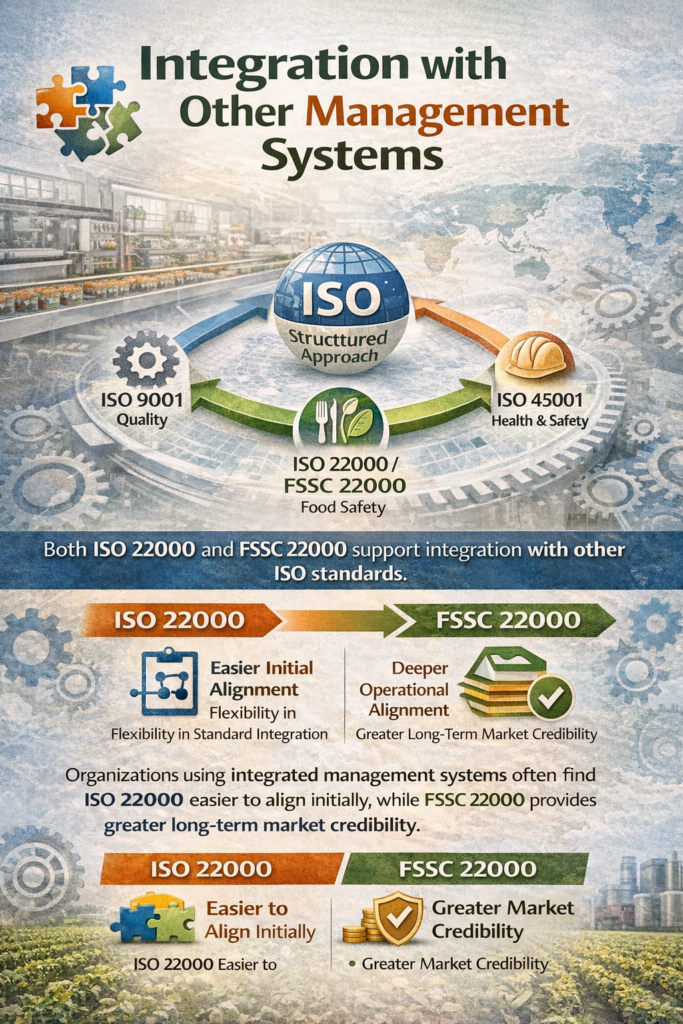
Both ISO 22000 and FSSC 22000 support integration with other ISO standards due to their structured approach. However, FSSC 22000’s additional layers require deeper operational alignment.
Organizations using integrated management systems often find ISO 22000 easier to align initially, while FSSC 22000 provides greater long-term market credibility.
Which Structure Is Right for Your Organization?
Choosing between ISO 22000 and FSSC 22000 depends largely on organizational goals, customer expectations, and supply chain demands. Organizations focused primarily on improving internal food safety practices may begin with ISO 22000, as it establishes a solid foundation for hazard control and process management.
However, organizations seeking stronger risk management, international recognition, and wider market access often choose FSSC 22000. The enhanced structure of FSSC 22000 meets globally benchmarked food safety requirements and is widely accepted by international buyers. Because FSSC 22000 includes detailed prerequisite programs and additional controls such as food defense and food fraud prevention, it provides a higher level of assurance. For businesses operating in complex or export-driven supply chains, FSSC 22000 offers greater credibility and alignment with global food safety expectations.
Final Thoughts
Understanding the structural difference between ISO 22000 and FSSC 22000 is essential for organizations aiming to strengthen food safety and meet evolving market expectations. While ISO 22000 provides a solid foundation for building a food safety management system, FSSC 22000 expands that foundation into a more comprehensive, globally recognized framework. The added structure of FSSC 22000 is designed to address not only internal food safety controls but also external credibility and supply chain trust.
One of the key strengths of FSSC 22000 lies in its structured layering. By combining ISO requirements with sector-specific prerequisite programs and additional scheme requirements, FSSC 22000 creates a deeper and more practical approach to food safety management. This layered structure ensures that risks related to hygiene, contamination, food fraud, and food defense are addressed systematically rather than informally. As a result, FSSC 22000 provides stronger operational discipline and measurable control across food operations.
Another important advantage of FSSC 22000 is its global acceptance. Many international buyers and supply chain partners prefer or require FSSC 22000 because it aligns with globally benchmarked food safety expectations. This recognition allows organizations certified to FSSC 22000 to demonstrate reliability, transparency, and commitment to high food safety standards. Compared to ISO 22000 alone, FSSC 22000 offers broader market access and enhanced confidence among stakeholders.
From a long-term perspective, FSSC 22000 supports continuous improvement by encouraging regular evaluation, monitoring, and refinement of food safety processes. The structure of FSSC 22000 ensures that food safety is not treated as a one-time activity but as an ongoing management responsibility. This approach strengthens organizational resilience and preparedness for emerging food safety risks.
In conclusion, while ISO 22000 establishes essential food safety principles, FSSC 22000 elevates those principles into a robust, auditable, and internationally trusted system. Organizations that choose FSSC 22000 benefit from stronger food safety performance, improved credibility, and sustained trust across the supply chain. By understanding and adopting the structured framework of FSSC 22000, businesses can build long-term confidence, compliance, and excellence in food safety management.