
Food Safety Management System Comparison Guide for Restaurants
In the restaurant industry, food safety is not just a regulatory obligation — it is a core element of customer trust and business sustainability. From ingredient sourcing and storage to food preparation and service, every stage of the process must meet strict hygiene and safety standards. Even a minor lapse can lead to contamination, legal penalties, and reputational damage.
To maintain high safety standards, restaurants adopt structured Food Safety Management Systems (FSMS). These systems help identify risks, implement controls, and ensure consistent compliance with hygiene requirements. A crucial component of any effective FSMS is the food hygiene audit, which evaluates practices, identifies gaps, and ensures corrective actions are implemented.
This article compares the most common food safety management systems used by restaurants, highlights their strengths, and explains how food hygiene audits support ongoing compliance and improvement.
Why Food Safety Management Systems Matter for Restaurants
Restaurants operate in dynamic environments where multiple processes occur simultaneously. Staff handle raw ingredients, cook meals, store leftovers, and serve customers under time pressure. Without structured safety procedures, risks such as cross-contamination, improper storage, and inadequate cooking temperatures can arise.
A Food Safety Management System helps restaurants:
- Maintain consistent hygiene standards
- Comply with regulatory requirements
- Prevent foodborne illnesses
- Improve operational efficiency
- Build customer confidence
Regular food hygiene audit processes ensure that these systems function effectively and remain aligned with safety guidelines.
Understanding Food Hygiene Audits
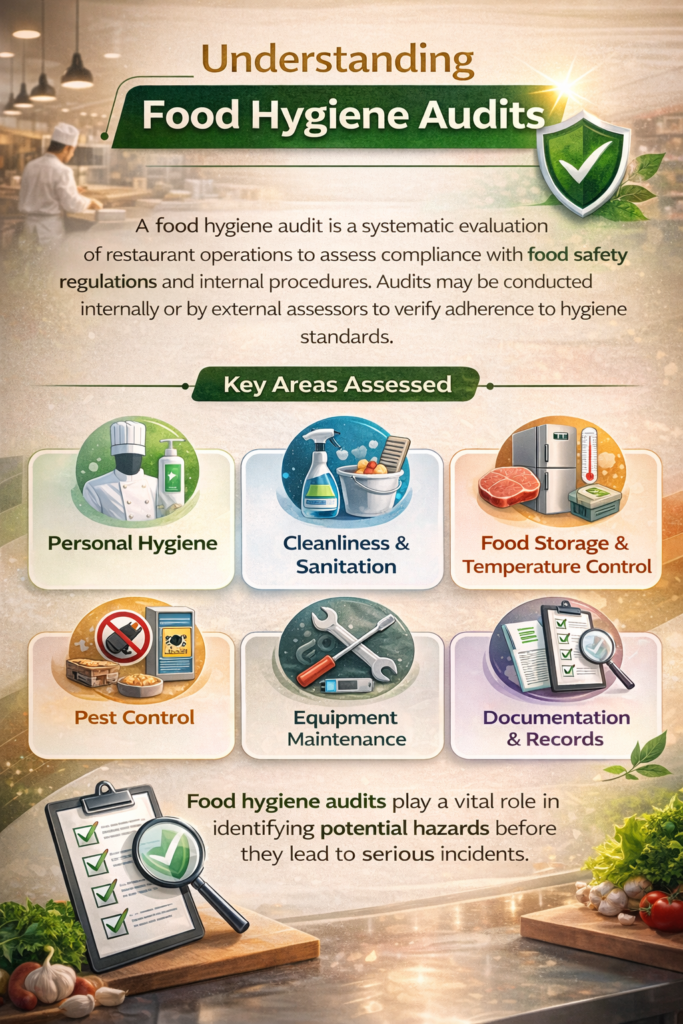
A food hygiene audit is a systematic evaluation of restaurant operations to assess compliance with food safety regulations and internal procedures. Audits may be conducted internally or by external assessors to verify adherence to hygiene standards.
Key areas assessed during a food hygiene audit include:
- Personal hygiene practices
- Kitchen cleanliness and sanitation
- Food storage and temperature control
- Pest control measures
- Equipment maintenance
- Documentation and record-keeping
Food hygiene audits play a vital role in identifying potential hazards before they lead to serious incidents.
Common Food Safety Management Systems for Restaurants
Restaurants have several FSMS options depending on their size, complexity, and regulatory environment. Here is a comparison of commonly used systems.
1. HACCP (Hazard Analysis and Critical Control Points)
HACCP is one of the most recognized food safety frameworks globally. It focuses on identifying hazards and establishing critical control points to prevent contamination.
Key Features
- Hazard identification and risk analysis
- Monitoring of critical control points
- Corrective action procedures
- Documentation and verification
Strengths
- Highly preventive approach
- Adaptable to different restaurant operations
- Strong regulatory recognition
Limitations
- Requires technical expertise
- Documentation-intensive
A food hygiene audit within a HACCP system ensures that control points are monitored and maintained effectively.
2. ISO 22000 Food Safety Management System
ISO 22000 integrates HACCP principles with management system elements such as leadership, risk-based thinking, and continuous improvement.
Key Features
- Comprehensive risk management
- Integration with other ISO standards
- Enhanced traceability and communication
Strengths
- Suitable for large or multi-location restaurants
- Supports global recognition
- Emphasizes management involvement
Limitations
- Implementation complexity
- Requires formal certification processes
Food hygiene audit practices under ISO 22000 focus on both operational hygiene and system effectiveness.
3. FSSC 22000
FSSC 22000 builds upon ISO 22000 and includes additional prerequisite programs specific to food safety. It is often used by larger food service providers.
Key Features
- Structured prerequisite programs
- Supply chain focus
- Enhanced compliance requirements
Strengths
- High level of food safety assurance
- International recognition
- Strong supply chain integration
Limitations
- Resource-intensive
- More suitable for complex operations
Food hygiene audits in FSSC 22000 environments ensure strict adherence to sanitation and operational controls.
4. Local Regulatory Food Safety Programs
Many countries have mandatory food safety programs tailored to local regulations. These programs often incorporate elements of HACCP but are simplified for small restaurants.
Key Features
- Basic hygiene and sanitation requirements
- Mandatory inspections
- Simplified documentation
Strengths
- Easier implementation for small establishments
- Regulatory compliance
- Cost-effective
Limitations
- Limited international recognition
- Less comprehensive risk management
Regular food hygiene audit procedures ensure ongoing compliance with local health authority guidelines.
Comparing FSMS Options for Restaurants
| Feature | HACCP | ISO 22000 | FSSC 22000 | Local Programs |
| Complexity | Moderate | High | Very High | Low |
| Certification | Optional | Formal | Formal | Regulatory |
| Scalability | Flexible | Highly Scalable | Suitable for large operations | Limited |
| Focus | Hazard prevention | Integrated management | Supply chain safety | Basic compliance |
Restaurants should choose a system that aligns with their operational scale and strategic goals.
The Role of Food Hygiene Audits in FSMS
Regardless of the chosen FSMS, food hygiene audits are essential for maintaining effectiveness.
Identifying Gaps
Audits reveal deviations from established procedures, enabling timely corrective actions.
Ensuring Compliance
Regular audits help restaurants stay aligned with regulatory requirements and internal standards.
Supporting Continuous Improvement
Audit findings highlight opportunities for process enhancements and staff training.
Enhancing Accountability
Audits promote responsibility among employees by reinforcing hygiene expectations.
A structured food hygiene audit approach strengthens the overall FSMS framework.
Key Elements Evaluated During Restaurant Audits
Personal Hygiene
Assessing staff handwashing practices, protective clothing usage, and illness reporting.
Food Storage
Evaluating temperature control, labeling, and separation of raw and cooked foods.
Cleaning and Sanitation
Reviewing cleaning schedules, chemical usage, and sanitation procedures.
Equipment Maintenance
Ensuring kitchen equipment operates safely and hygienically.
Documentation
Verifying records such as temperature logs, cleaning checklists, and training records.
Comprehensive food hygiene audit processes ensure that all these elements are consistently managed.
Challenges in Implementing FSMS for Restaurants
Restaurants may face challenges such as:
- Staff turnover affecting training consistency
- Time constraints during peak service hours
- Limited resources for documentation
- Resistance to procedural changes
Overcoming these challenges requires leadership commitment, employee engagement, and effective audit practices.
Best Practices for Strengthening Food Safety Systems
Provide Continuous Training
Regular staff training ensures awareness of hygiene protocols and FSMS requirements.
Standardize Procedures
Clear, documented procedures promote consistency and reduce errors.
Conduct Routine Food Hygiene Audits
Regular audits help find problems early and ensure everything follows the rules.
Leverage Technology
Digital temperature monitoring and record-keeping improve accuracy and efficiency.
Encourage a Food Safety Culture
Promoting accountability and awareness fosters proactive hygiene practices.
Benefits of Strong Food Safety Management Systems
Restaurants that implement effective FSMS and conduct regular food hygiene audit processes experience:
- Reduced risk of foodborne illnesses
- Improved customer satisfaction
- Enhanced regulatory compliance
- Better operational efficiency
- Stronger brand reputation
Food safety excellence becomes a competitive advantage in the hospitality industry.
The Future of Food Safety in Restaurants
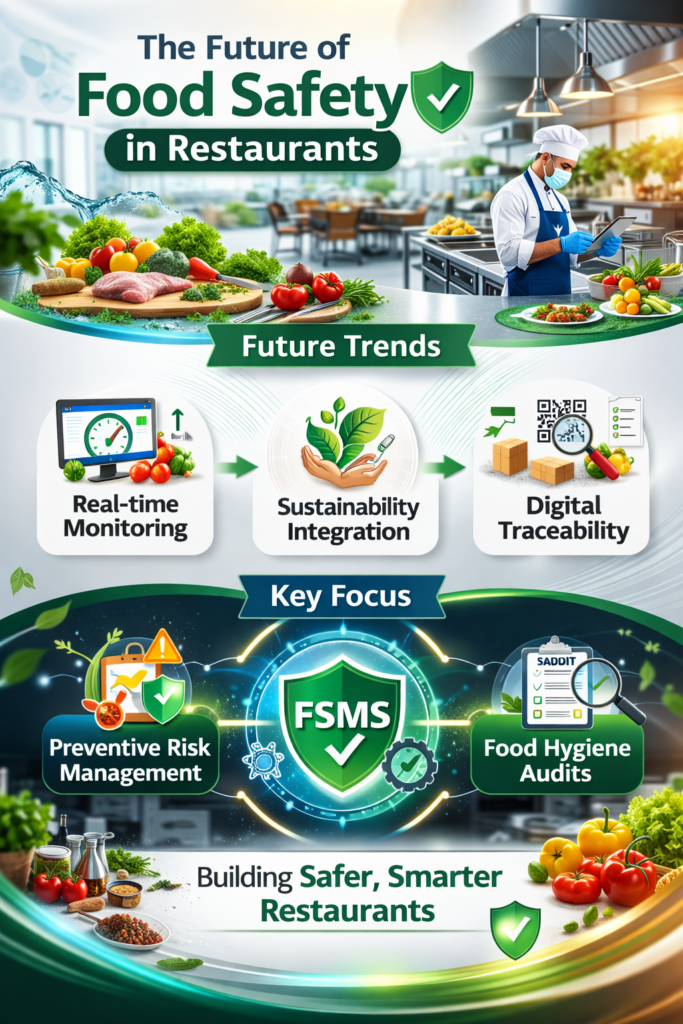
As consumer awareness grows, restaurants are expected to demonstrate transparency and accountability in food safety practices. Digital tools, automation, and data analytics are transforming FSMS implementation and audit processes.
Future trends include:
- Real-time monitoring of food safety parameters
- Integration with sustainability initiatives
- Enhanced traceability through digital platforms
- Greater emphasis on preventive risk management
Food hygiene audits will continue to play a central role in ensuring system effectiveness.
Final Thoughts
Choosing the right Food Safety Management System is a strategic decision for restaurants aiming to deliver safe, high-quality dining experiences. Whether adopting HACCP, ISO 22000, FSSC 22000, or local regulatory programs, the success of any system depends on consistent implementation and evaluation.
A structured food hygiene audit process provides the necessary oversight to identify gaps, ensure compliance, and drive continuous improvement. By prioritizing food safety management and maintaining rigorous hygiene standards, restaurants can protect their customers, strengthen their reputation, and achieve sustainable business growth in an increasingly competitive market.