
HACCP Certification Essentials: Types, Training Time & Online Access
Food safety is a critical responsibility for any organization involved in food production, processing, packaging, distribution, or service. With increasing consumer awareness and strict regulatory requirements, businesses must adopt preventive approaches to food safety rather than relying on reactive measures. One of the most recognized systems supporting this objective is haccp certification.
Hazard Analysis and Critical Control Points (HACCP) is a globally accepted methodology designed to identify, evaluate, and control food safety hazards throughout the production process. Whether you operate a restaurant, manufacturing unit, catering service, or food supply chain business, understanding HACCP certification is essential for compliance, quality assurance, and customer trust.
This comprehensive guide explains HACCP essentials, training requirements, certification types, and answers commonly asked questions to help individuals and organizations navigate the certification journey.
Understanding HACCP Certification
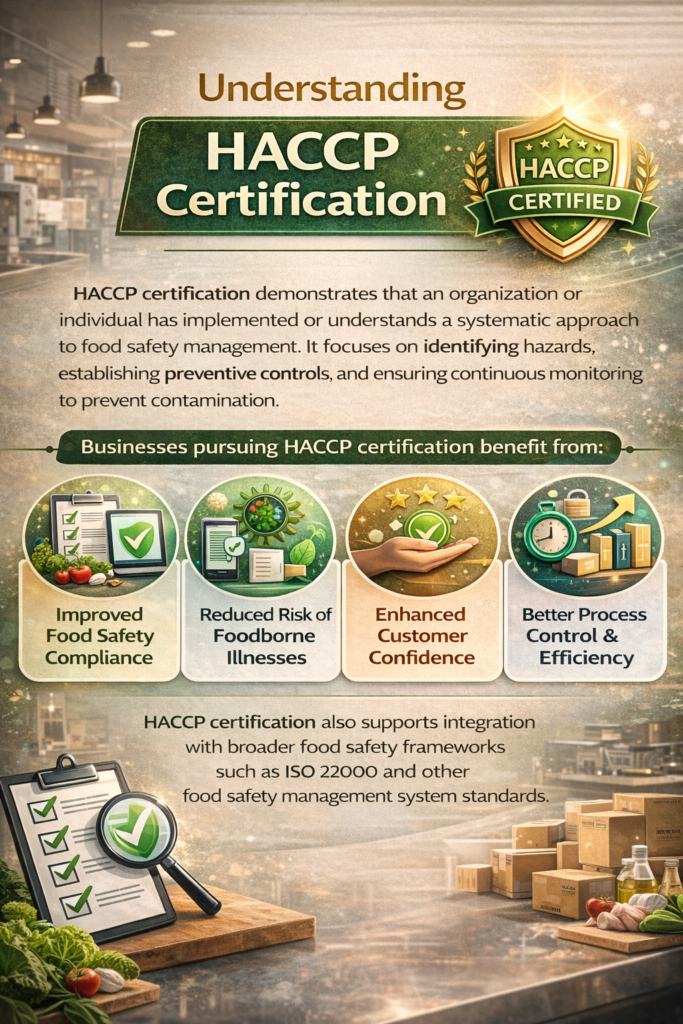
HACCP certification demonstrates that an organization or individual has implemented or understands a systematic approach to food safety management. It focuses on identifying hazards, establishing preventive controls, and ensuring continuous monitoring to prevent contamination.
Businesses pursuing haccp certification benefit from:
- Improved food safety compliance
- Reduced risk of foodborne illnesses
- Enhanced customer confidence
- Better process control and efficiency
- Increased market access
HACCP certification also supports integration with broader food safety frameworks such as ISO 22000 and other food safety management system standards.
Is HACCP a qualification?
HACCP is not a qualification in the traditional academic sense, but it is a professional certification that demonstrates competency in food safety management principles. Individuals who complete HACCP training gain knowledge of hazard identification, risk assessment, and preventive controls.
For organizations, haccp certification verifies that food safety processes align with internationally recognized HACCP principles. For individuals, HACCP training enhances employability and professional credibility within the food industry.
While HACCP certification itself is not a degree, it is widely respected as an essential competency for food safety professionals and employees working in food-related environments.
What are the 7 types of HACCP?
HACCP is built on seven core principles rather than distinct certification types. These principles form the foundation of any HACCP system.
1. Conduct Hazard Analysis
Identify biological, chemical, and physical hazards associated with food production processes.
2. Determine Critical Control Points (CCPs)
Identify stages where controls can be applied to prevent or eliminate hazards.
3. Establish Critical Limits
Define measurable parameters such as temperature or time that ensure hazard control.
4. Establish Monitoring Procedures
Implement monitoring methods to ensure CCPs remain within critical limits.
5. Establish Corrective Actions
Define steps to address deviations and restore control.
6. Establish Verification Procedures
Confirm that the HACCP system functions effectively.
7. Establish Documentation and Record-Keeping
Maintain records demonstrating compliance and system effectiveness.
Organizations implementing these principles achieve effective haccp certification outcomes.
How can i get a HACCP certificate?
Obtaining a HACCP certificate involves structured steps that demonstrate knowledge and compliance.
Training Completion
Individuals typically begin by enrolling in HACCP training courses that cover hazard analysis and critical control processes.
System Implementation
Organizations must develop and implement HACCP plans aligned with operational processes.
Documentation Preparation
Preparing documentation such as hazard analyses, monitoring records, and corrective action procedures is essential.
Audit or Assessment
Certification audits verify that HACCP principles are applied effectively.
Completing these steps successfully leads to HACCP certification for individuals or organizations.
How long is HACCP training?
The duration of HACCP training varies depending on course depth and participant experience.
Basic HACCP Training
Introductory courses may last one to two days and focus on fundamental principles.
Intermediate Training
More detailed courses covering implementation and documentation may take several days.
Advanced HACCP Training
Comprehensive programs designed for food safety managers or auditors can extend over multiple weeks.
Training flexibility allows participants to choose programs that match their roles and responsibilities. Regardless of duration, effective training supports successful haccp certification.
How much does HACCP cost?
HACCP certification costs can change based on factors like:
- Training level and course format
- Organizational size and complexity
- Certification scope
- Implementation requirements
While costs may differ, the value of haccp certification lies in improved compliance, reduced risk, and enhanced operational efficiency. Many organizations view certification as an investment rather than an expense.
Can i get HACCP certification online?
Yes, online HACCP certification options are widely available and increasingly popular. Online learning platforms provide flexible access to training materials, enabling participants to complete courses at their own pace.
Benefits of online HACCP certification include:
- Flexible scheduling
- Remote accessibility
- Cost-effective learning options
- Interactive learning modules
Online training is particularly beneficial for individuals seeking foundational knowledge or refresher courses before pursuing formal haccp certification assessments.
How can a person get HACCP Certified?
Individuals seeking HACCP certification typically follow a structured learning and assessment path.
Enroll in HACCP Training
Choose a course aligned with professional responsibilities.
Complete Coursework and Assessments
Training programs often include assignments or examinations to evaluate understanding.
Gain Practical Experience
Applying HACCP principles in real-world food operations enhances competency.
Obtain Certification
Successful completion of training and assessment leads to certification.
HACCP-certified individuals are better equipped to contribute to food safety management within their organizations.
How much is a HACCP certificate?
The cost of a HACCP certificate varies based on training provider, course level, and certification scope. Factors influencing pricing include:
- Course duration and complexity
- Delivery format (online or classroom)
- Certification body requirements
- Organizational implementation costs
Regardless of cost variations, haccp certification provides long-term benefits through improved food safety performance and regulatory compliance.
Benefits of HACCP Certification for Businesses
Improved Food Safety Compliance
Certification ensures systematic hazard identification and preventive controls.
Enhanced Brand Reputation
Customers trust businesses that demonstrate strong food safety practices.
Reduced Operational Risks
Preventive controls minimize contamination and recall risks.
Better Market Opportunities
Many clients and regulators require HACCP compliance.
Continuous Improvement
Regular monitoring and verification support ongoing process enhancement.
Common Challenges in HACCP Implementation
Organizations may encounter challenges such as:
- Limited technical expertise
- Documentation complexity
- Staff training requirements
- Resource constraints
Addressing these challenges requires leadership commitment, employee engagement, and structured training programs.
Best Practices for HACCP Success
- Conduct thorough hazard analyses
- Engage cross-functional teams
- Maintain accurate documentation
- Provide regular employee training
- Perform internal audits and reviews
Adopting best practices ensures effective haccp certification implementation and long-term system sustainability.
HACCP Certification and Regulatory Compliance
Many food safety regulations align with HACCP principles, making certification a valuable compliance tool. Organizations implementing HACCP often find it easier to meet inspection requirements and demonstrate regulatory adherence.
Future Trends in HACCP Certification
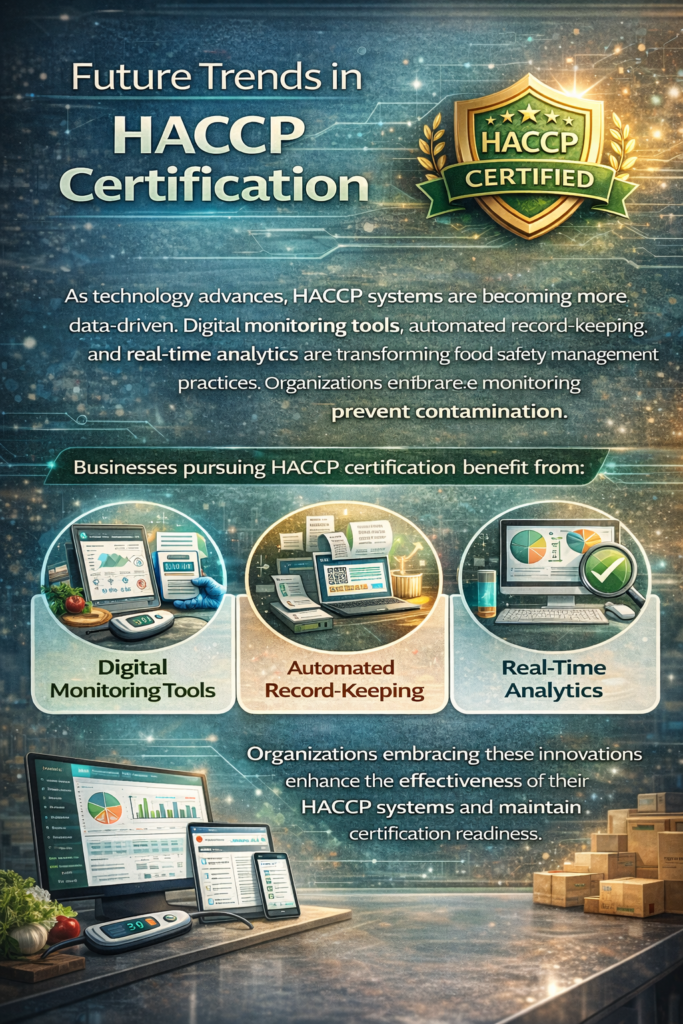
As technology advances, HACCP systems are becoming more data-driven. Digital monitoring tools, automated record-keeping, and real-time analytics are transforming food safety management practices.
Organizations embracing these innovations enhance the effectiveness of their HACCP systems and maintain certification readiness.
Final Thoughts
haccp certification plays a vital role in strengthening modern food safety practices by ensuring that hazards are identified and controlled before they impact consumers. Organizations that invest in haccp certification demonstrate a proactive commitment to food quality, regulatory compliance, and customer safety. Through structured planning and preventive controls, haccp certification enables businesses to create reliable production processes that minimize contamination risks and enhance operational consistency.
For individuals, haccp certification supports professional growth by providing practical knowledge of hazard analysis and critical control points, which are essential in food handling environments. Meanwhile, organizations benefit from haccp certification by improving traceability, maintaining accurate documentation, and preparing effectively for audits and inspections. Regular monitoring and verification activities associated with haccp certification ensure continuous improvement and long-term compliance with food safety standards.
Ultimately, haccp certification helps businesses build trust with customers, regulators, and stakeholders while reducing the likelihood of food safety incidents. By integrating haccp certification into daily operations, organizations can maintain high hygiene standards, strengthen brand reputation, and achieve sustainable growth in today’s highly regulated and quality-focused food industry.