
HACCP vs GMP Explained: Key Differences Every Business Must Know
Food safety is a non-negotiable priority for businesses operating in the food production, processing, and distribution sectors. Whether you run a small food unit or a large manufacturing facility, maintaining hygiene, quality, and safety standards is essential. Two of the most important systems that help achieve this are HACCP and GMP. For businesses exploring haccp certification in india, understanding the difference between HACCP and GMP is crucial for compliance and long-term success.
This guide will explain HACCP and GMP in detail, highlight their key differences, and help you determine which system is right for your business.
What is HACCP?
HACCP (Hazard Analysis and Critical Control Points) is a systematic approach to identifying, evaluating, and controlling food safety hazards. It focuses on preventing risks rather than reacting to problems after they occur.
Key Principles of HACCP:
- Hazard identification and analysis
- Determining critical control points (CCPs)
- Establishing critical limits
- Monitoring procedures
- Corrective actions
- Verification processes
- Documentation and record-keeping
For companies seeking haccp certification in india, HACCP provides a proactive framework that ensures food safety at every stage of production.
What is GMP?
GMP (Good Manufacturing Practices) refers to a set of guidelines that ensure products are consistently produced and controlled according to quality standards. It focuses on maintaining hygiene, cleanliness, and operational discipline within manufacturing environments.
Key Elements of GMP:
- Proper facility design and maintenance
- Equipment cleanliness
- Staff hygiene and training
- Raw material quality control
- Documentation and record-keeping
GMP serves as the foundation for safe and efficient production processes and is often a prerequisite for implementing HACCP systems.
HACCP vs GMP: Core Difference
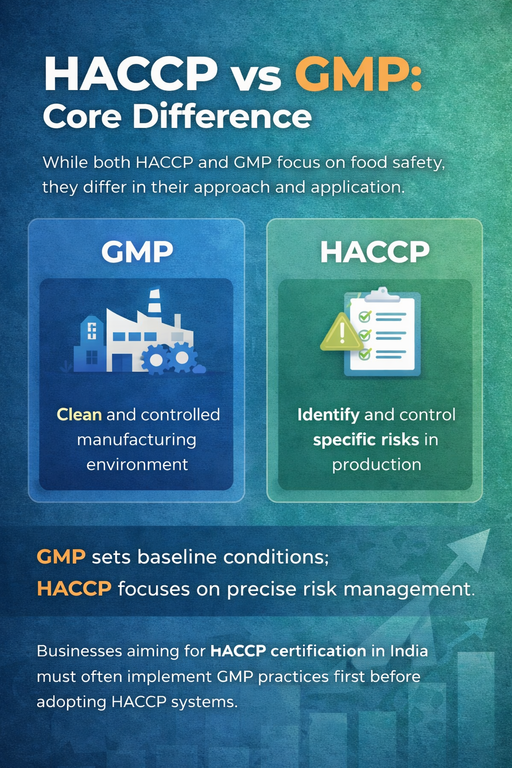
While both HACCP and GMP focus on food safety, they differ in their approach and application.
- GMP focuses on creating a clean and controlled manufacturing environment.
- HACCP helps find and control specific risks in the production process.
In simple terms, GMP sets the baseline conditions, while HACCP builds on that foundation to manage risks more precisely.
Businesses aiming for haccp certification in india must often implement GMP practices first before adopting HACCP systems.
Key Differences Between HACCP and GMP
1. Approach to Food Safety
- GMP: Preventive through general hygiene and operational standards
- HACCP: Preventive through hazard analysis and control
2. Focus Area
- GMP: Overall manufacturing environment
- HACCP: Specific risks in the production process
3. Scope
- GMP: Broad and general
- HACCP: Specific and detailed
4. Implementation Level
- GMP: Basic requirement for all food businesses
- HACCP: Advanced system for risk management
5. Flexibility
- GMP: Standardized guidelines
- HACCP: Customized based on product and process
Understanding these differences helps businesses choose the right approach and prepare for haccp certification in india effectively.
Why HACCP is Important for Food Businesses
HACCP is widely recognized as one of the most effective food safety systems globally. It helps businesses:
- Identify potential hazards before they occur
- Reduce contamination risks
- Improve product quality
- Build consumer trust
- Meet regulatory requirements
For organizations pursuing haccp certification in india, implementing HACCP ensures compliance with both domestic and international food safety standards.
Why GMP is Essential Before HACCP
GMP is often considered the first step toward achieving food safety compliance.
Benefits of GMP:
- Establishes a clean production environment
- Reduces operational risks
- Ensures consistency in production
- Prepares businesses for advanced systems like HACCP
Without GMP, implementing HACCP becomes difficult because the basic hygiene and operational controls are not in place.
Can HACCP and GMP Work Together?
Yes, HACCP and GMP are designed to complement each other.
How They Work Together:
- GMP creates a strong foundation for safe operations
- HACCP builds on that foundation to control specific risks
Businesses that implement both systems achieve higher levels of safety, efficiency, and compliance. This combination is particularly beneficial for companies aiming for haccp certification in india.
Which One Should Your Business Choose?
The choice between HACCP and GMP depends on your business type, size, and regulatory requirements.
Choose GMP if:
- You are starting a food business
- You need basic compliance
- You want to establish hygiene and quality standards
Choose HACCP if:
- You deal with high-risk food products
- You want advanced food safety systems
- You plan to expand into international markets
In most cases, businesses implement both GMP and HACCP to ensure comprehensive food safety management.
Industries That Require HACCP and GMP
Both HACCP and GMP are widely used across various industries:
- Food manufacturing
- Dairy and meat processing
- Beverage production
- Catering and hospitality
- Pharmaceutical manufacturing
For these industries, obtaining haccp certification in india is often essential for regulatory compliance and market expansion.
Common Challenges in Implementation
Many businesses face challenges while implementing HACCP and GMP systems.
1. Lack of Awareness
Understanding technical requirements can be difficult.
2. Poor Documentation
Incomplete records can lead to non-compliance.
3. Inadequate Training
Employees must be trained to follow safety protocols.
4. Resistance to Change
Adapting to new systems may face internal resistance.
Overcoming these challenges is essential for successful certification and long-term benefits.
Benefits of HACCP Certification in India
Obtaining haccp certification in india offers several advantages:
1. Improved Food Safety
Minimizes risks and ensures product quality.
2. Regulatory Compliance
Helps meet national and international standards.
3. Enhanced Brand Reputation
Builds trust among customers and stakeholders.
4. Market Expansion
Opens opportunities in global markets.
5. Operational Efficiency
Streamlines processes and reduces waste.
These benefits make HACCP certification a valuable investment for food businesses.
Steps to Implement HACCP Successfully
To achieve haccp certification in india, businesses should follow these steps:
- Conduct a hazard analysis
- Identify critical control points
- Establish monitoring procedures
- Implement corrective actions
- Maintain proper documentation
- Train employees regularly
- Perform internal audits
Following these steps ensures a smooth implementation process and successful certification.
Future Trends in Food Safety Compliance
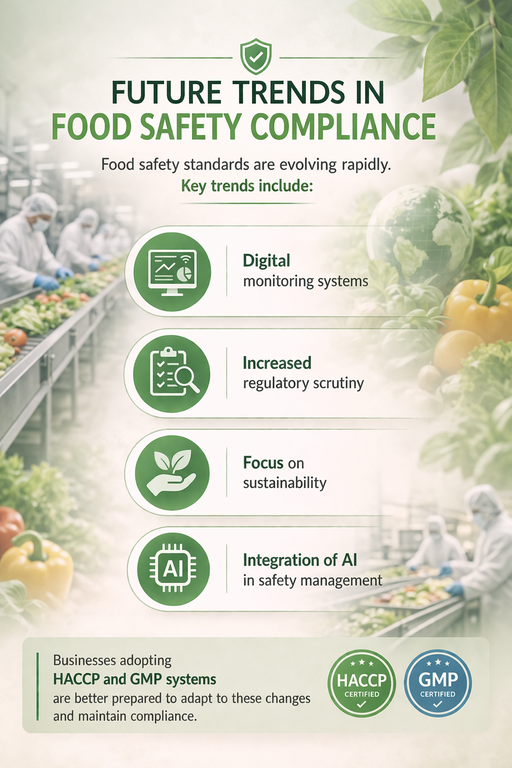
Food safety standards are evolving rapidly. Key trends include:
- Digital monitoring systems
- Increased regulatory scrutiny
- Focus on sustainability
- Integration of AI in safety management
Businesses adopting HACCP and GMP systems are better prepared to adapt to these changes and maintain compliance.
Final Thoughts
Understanding the difference between HACCP and GMP is essential for any food business that aims to maintain high standards of safety, hygiene, and product quality. GMP lays the foundation by ensuring that manufacturing environments are clean, well-maintained, and properly managed. It focuses on essential practices such as sanitation, equipment maintenance, and staff hygiene. On the other hand, HACCP takes a more advanced and structured approach by identifying potential hazards and establishing control measures at critical points in the production process.
For businesses planning to obtain haccp certification in india, implementing both GMP and HACCP together is the most effective strategy. GMP ensures that operations are consistent and compliant with basic safety requirements, while HACCP adds precision by focusing on risk prevention and control. When organizations invest in haccp certification in india, they gain a systematic framework that improves food safety and operational efficiency. Additionally, understanding the importance of haccp certification in india helps businesses align with regulatory expectations and industry best practices.
Moreover, adopting haccp certification in india strengthens consumer confidence and enhances brand reputation in competitive markets. Companies that prioritize haccp certification in india are better equipped to prevent contamination, reduce risks, and maintain consistent product quality.
In conclusion, HACCP and GMP are not competing systems but complementary approaches that work together to build a strong food safety framework. By integrating both and focusing on haccp certification in india, businesses can achieve long-term success, ensure compliance, and deliver safe, high-quality products consistently.