
From Energy Review to Certification: How ISO 50001 Works
Energy efficiency has become a strategic priority for organizations worldwide. Rising energy costs, environmental concerns, and regulatory expectations are driving businesses to adopt structured approaches for managing energy consumption. ISO 50001, the international standard for Energy Management Systems (EnMS), provides a systematic framework to help organizations improve energy performance, reduce waste, and achieve sustainability goals.
For businesses exploring certification, understanding the journey from energy review to audit approval is essential. Working with an iso 50001 Certification body in India enables organizations to align with global energy management practices and demonstrate measurable improvements in energy efficiency.
This article explains how ISO 50001 works, the key steps involved, and how organizations can successfully transition from initial energy review to certification.
What Is ISO 50001?
ISO 50001 is a global standard that gives organizations a clear and organized way to set up, use, maintain, and improve an Energy Management System. The goal is to help organizations optimize energy usage, reduce greenhouse gas emissions, and enhance operational efficiency.
Unlike one-time energy audits, ISO 50001 promotes continuous improvement. Organizations regularly monitor energy performance, set objectives, and implement initiatives to achieve long-term energy savings.
Engaging with an iso 50001 Certification body in India ensures that organizations meet compliance requirements and receive independent verification of their energy management practices.
Why ISO 50001 Matters for Organizations
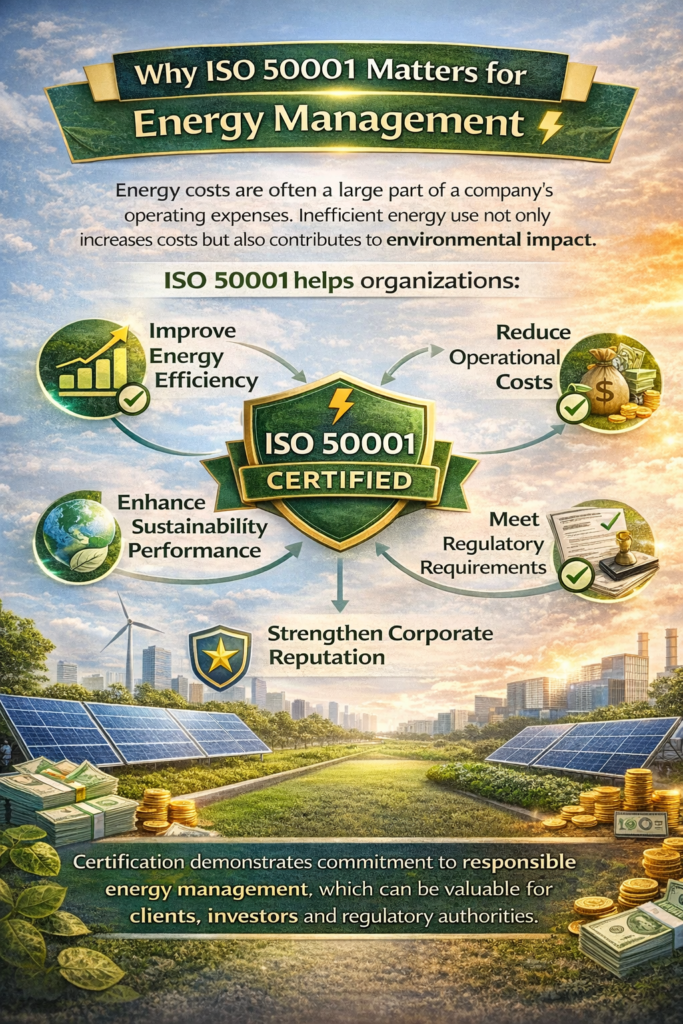
Energy costs are often a large part of a company’s operating expenses. Inefficient energy use not only increases costs but also contributes to environmental impact.
ISO 50001 helps organizations:
- Improve energy efficiency
- Reduce operational costs
- Enhance sustainability performance
- Meet regulatory requirements
- Strengthen corporate reputation
Certification demonstrates commitment to responsible energy management, which can be valuable for clients, investors, and regulatory authorities.
The ISO 50001 Framework: A Continuous Improvement Model
ISO 50001 follows the Plan-Do-Check-Act (PDCA) cycle, a proven management methodology.
Plan
Organizations conduct an energy review, identify significant energy uses, and establish objectives and targets.
Do
Energy management plans are implemented, including operational controls and awareness programs.
Check
Energy performance is monitored and measured against objectives.
Act
Management reviews results and implements corrective actions for improvement.
This structured approach ensures ongoing enhancement of energy performance rather than static compliance.
Step 1: Energy Review – The Foundation of ISO 50001
The energy review is a critical first step. It involves analyzing current energy consumption patterns and identifying opportunities for improvement.
Key activities include:
- Assessing energy sources and usage
- Identifying significant energy-consuming processes
- Evaluating operational practices
- Establishing energy baselines
The energy review helps organizations understand where energy is used, wasted, or optimized. This data forms the basis for setting realistic performance objectives.
Organizations often collaborate with an iso 50001 Certification body in India to ensure the energy review aligns with certification expectations.
Step 2: Establishing Energy Baselines and Performance Indicators
After completing the energy review, organizations define energy baselines that represent current performance levels. These baselines serve as reference points for measuring improvement.
Energy Performance Indicators (EnPIs) are also established. Examples include:
- Energy consumption per unit of production
- Electricity usage per facility area
- Fuel consumption per operational hour
Tracking EnPIs enables organizations to quantify improvements and demonstrate progress during certification audits.
Step 3: Setting Objectives, Targets, and Action Plans
ISO 50001 requires organizations to set measurable energy objectives and targets based on their review findings.
Examples of objectives include:
- Reducing electricity consumption by a specific percentage
- Improving equipment efficiency
- Increasing use of renewable energy sources
Action plans outline responsibilities, timelines, and resources needed to achieve these targets. Clear planning ensures accountability and effective implementation.
Step 4: Implementing the Energy Management System
Implementation involves integrating energy management into daily operations. This includes:
- Establishing operational controls for energy-intensive processes
- Training employees on energy-saving practices
- Improving equipment maintenance
- Promoting awareness campaigns
Leadership commitment plays a vital role in ensuring successful implementation. Employees at all levels must understand their role in achieving energy objectives.
Working with an iso 50001 Certification body in India helps organizations align implementation with certification criteria.
Step 5: Monitoring, Measurement, and Data Analysis
Monitoring energy performance is essential for evaluating the effectiveness of implemented measures.
Organizations collect data on:
- Energy consumption trends
- Equipment efficiency
- Operational performance
- Achievement of energy targets
Data analysis helps identify deviations, inefficiencies, and improvement opportunities. Accurate records also support audit readiness.
Step 6: Internal Audits and Management Review
Internal audits assess whether the Energy Management System complies with ISO 50001 requirements. Auditors evaluate documentation, operational practices, and performance results.
Management reviews analyze audit findings, performance metrics, and improvement opportunities. Leadership uses this information to make strategic decisions and allocate resources.
Internal audits and reviews ensure continuous improvement and prepare organizations for external certification assessments.
Step 7: Certification Audit Process
Once the system is implemented and internally validated, organizations undergo certification audits conducted by an iso 50001 Certification body in India.
The certification process typically includes:
Stage 1 Audit
Review of documentation and readiness assessment.
Stage 2 Audit
Evaluation of implementation effectiveness, operational controls, and performance improvements.
Successful completion of audits results in ISO 50001 certification, demonstrating compliance with global energy management standards.
Benefits of Working with a Certification Body
Partnering with an accredited certification body provides several advantages:
- Independent verification of compliance
- Expert guidance during audits
- Enhanced credibility and market recognition
- Continuous improvement recommendations
An iso 50001 Certification body in India ensures that certification aligns with national and international accreditation requirements.
Challenges in ISO 50001 Implementation
Organizations may face challenges such as:
- Lack of energy data or monitoring systems
- Resistance to behavioral change
- Resource constraints
- Complexity of integrating energy management with existing systems
Overcoming these challenges requires leadership commitment, employee engagement, and strategic planning.
Best Practices for Successful ISO 50001 Certification
Conduct Thorough Energy Reviews
Accurate data and analysis ensure effective objective setting.
Engage Employees
Awareness programs encourage energy-saving behaviors.
Integrate with Existing Management Systems
Organizations with ISO 9001 or ISO 14001 can integrate ISO 50001 more efficiently.
Leverage Technology
Energy monitoring software and automation tools improve data accuracy and performance tracking.
Maintain Continuous Improvement
Regular reviews and corrective actions ensure long-term success.
ISO 50001 and Sustainability Goals
ISO 50001 supports broader sustainability initiatives by reducing carbon emissions and promoting responsible resource use. Organizations committed to environmental stewardship often integrate energy management with sustainability reporting.
Certification demonstrates alignment with global sustainability goals and enhances corporate social responsibility.
The Role of Leadership in Energy Management
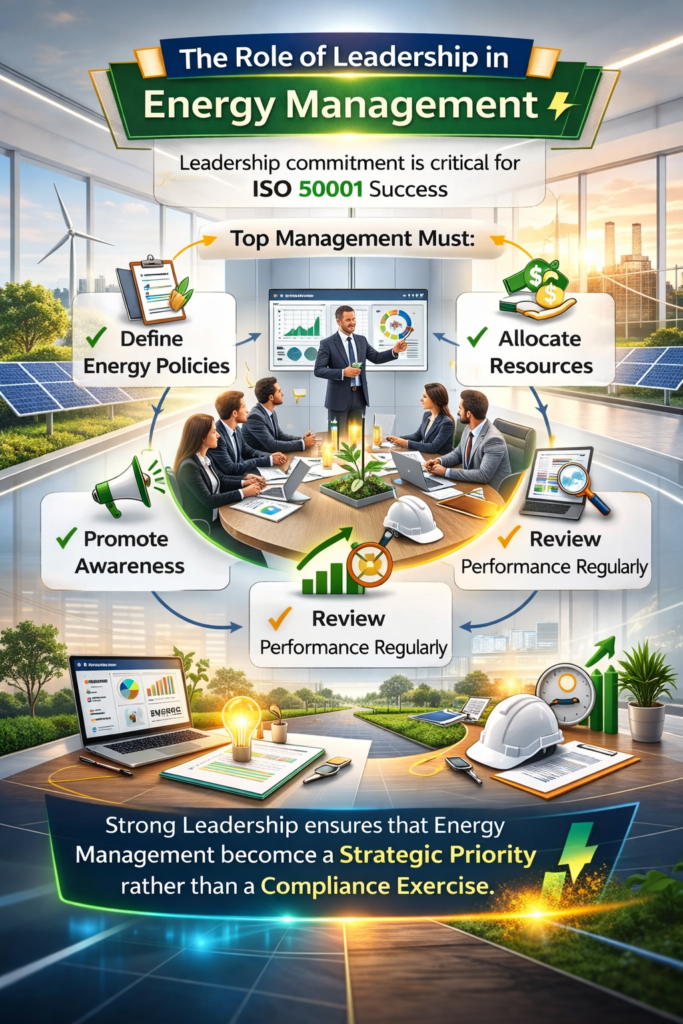
Leadership commitment is critical for ISO 50001 success. Top management must:
- Define energy policies
- Allocate resources
- Promote awareness
- Review performance regularly
Strong leadership ensures that energy management becomes a strategic priority rather than a compliance exercise.
Future Trends in Energy Management
As technology evolves, energy management systems are becoming more data-driven. Smart meters, IoT devices, and analytics platforms provide real-time insights into energy consumption.
Organizations adopting ISO 50001 are better positioned to leverage these technologies and adapt to evolving regulatory expectations.
Final Thoughts
ISO 50001 provides a structured pathway for organizations to improve energy efficiency, reduce costs, and enhance sustainability performance. From the initial energy review to certification audits, each step contributes to building a robust Energy Management System.
Working with an iso 50001 Certification body in India ensures that organizations meet compliance requirements and achieve credible certification. Beyond certification, ISO 50001 fosters a culture of continuous improvement, empowering organizations to optimize energy usage and support long-term sustainability goals.
By adopting ISO 50001, businesses not only demonstrate environmental responsibility but also gain operational advantages that contribute to competitiveness and resilience in an increasingly energy-conscious world.